A Step Towards Fusion Energy
In a bold step towards the energy future, a site and a date have been set for the first commercial nuclear fusion power plant in America.

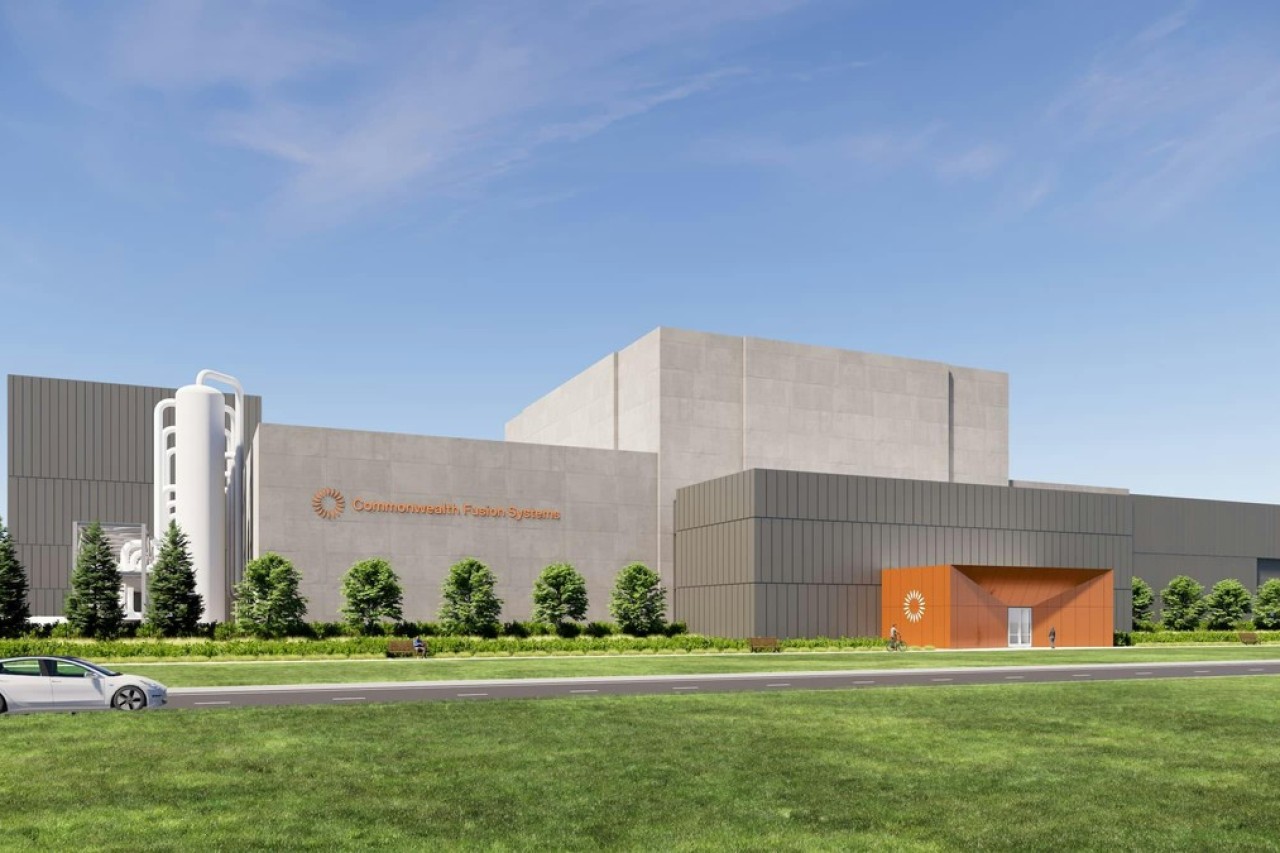
On the initiative of the Governor of Virginia and with the support of energy provider Dominion Energy, Commonwealth Fusion Systems' experimental ARC facility will be built in Chesterfield County, Virginia, on the site of a decommissioned coal-fired power plant.
Founded on the MIT campus in Boston, Commonwealth Fusion Systems (CFS) is one of the world's leading companies in the field of commercial nuclear fusion energy — the ultimate energy source for humanity, which replicates the process that forged our sun to generate emissions-free and environmentally friendly energy .
Construction Begins Before Prototype Completion
Work on the ARC facility will begin next year, before a smaller prototype reactor in Fort Devons, Massachusetts, is completed.
«Dominion will provide us with development and technical expertise, while we share our knowledge of building and operating fusion power plants with them,» said Bob Mumgaard, CEO of CFS.
Governor Youngkin said Virginia had succeeded in attracting CFS over 100 other global sites. CFS, which has been funded with an estimated USD 2 billion by approximately 60 private investors, including Google and Italian oil and gas giant Eni, has not yet announced a price for the ARC facility, but Engineering News Record cited sources suggesting USD 3 billion, which is significantly less than the ITER fusion reactor in Europe.
Tokamak Technology: Fusion Without Nuclear Waste
According to CFS, the development of Northern Virginia as a hub for artificial intelligence and data centres on the East Coast led the company to the Chesterfield site. The first component of the ARC facility will be the fusion complex, which is scheduled for completion in 2026.
The ARC facility will use a tokamak: a donut-shaped chamber enclosed by superconducting magnets, in which hydrogen isotopes are heated to 180 million degrees Celsius, causing them to form a plasma, fuse, and release energy. This process produces no nuclear waste, and the hydrogen isotopes are either isolated from seawater or obtained as a by-product of the fusion process.
400 megawatts of clean electricity from the 2030s onwards
According to CFS, a single facility can generate 400 megawatts of electricity. Unlike nuclear fission plants, fusion energy cannot cause chain reactions or meltdowns, and there is no long-lived or highly radioactivenuclear waste.
In the early 2030s, the entire facility is expected to be operational and selling clean electricity to local partners. In the long term, fusion energy could make a decisive contribution tocombating the climate crisis .