A Sad Life in Isolation: Wild Animals in Captivity
Following the death of rhinoceros Tsavo at Circus Krone, PETA calls on the German federal government to ban the keeping of rhinoceroses in circuses.

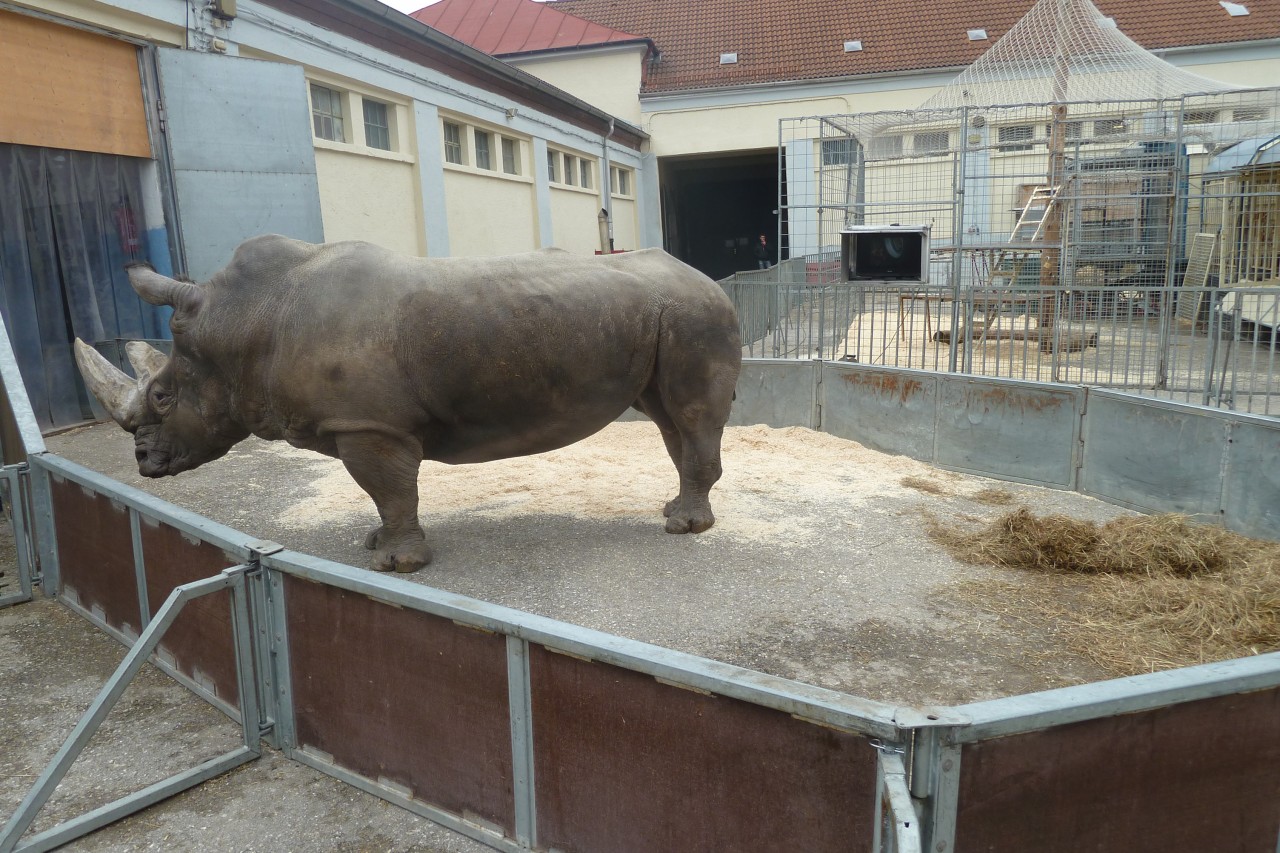
Today, the 44-year-old rhinoceros bull Tsavo died at Circus Krone in Munich. He had been suffering from digestive problems for some time and had lost 300 kilograms over the course of two months. The white rhinoceros was the last of his kind to be exhibited in a German travelling circus. For the past forty years, he was kept under inadequate conditions for the purposes of entertainment. To spare other animals this ordeal, PETA is urging the German federal government to prohibit the admission of new rhinoceroses into circus operations by means of a statutory ordinance.
Tsavo was condemned to a life of loneliness for economic reasons. As is so often the case in the circus industry, he was made to entertain audiences in the ring almost until his very last breath.
Dr. Yvonne Würz, biologist and specialist advisor on animals in the entertainment industry at PETA
«The federal government must finally put a stop to the keeping of animals in circuses, in order to spare other animals the disrespectful and inevitably animal welfare-violating treatment they are subjected to.»
Tsavo – Milestones of a Path of Suffering
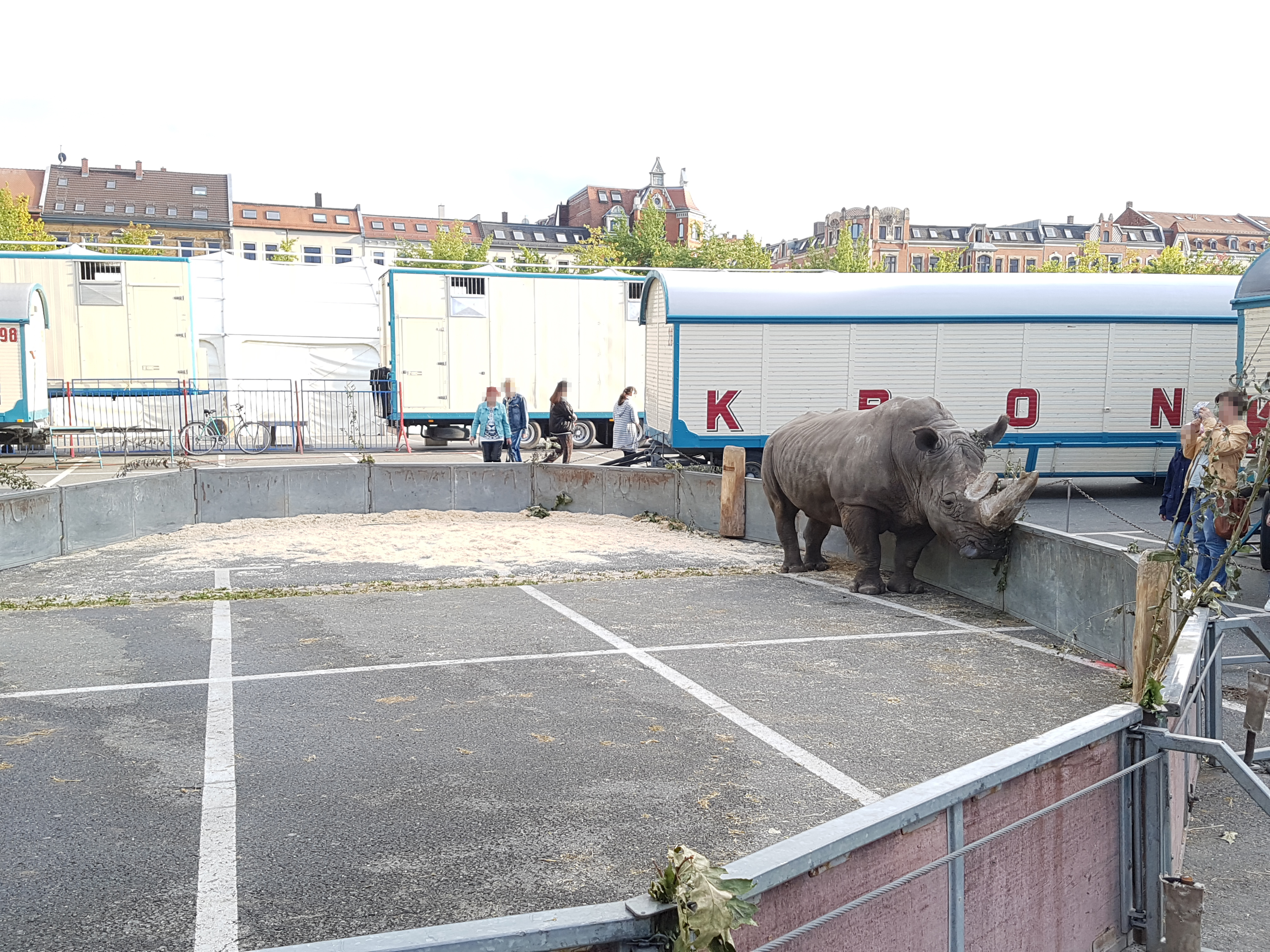
Tsavo was presumably born in the wild in a South African national park in the late 1970s, before he arrived in Germany in 1978 as a wild-caught animal . Since 2008, the rhinoceros bull had been with Circus Krone; prior to that, he had been exhibited for decades at Circus Barum. Although rhinoceroses are solitary animals in the wild, they at least have contact with members of their own species during the mating season. Tsavo, however, was kept in complete isolation for decades and deprived of all social contact – he died alone.
Keeping Rhinoceroses in Circuses Not Prohibited by Law
Part of PETA's motto is that animals are not here for our entertainment. The animal welfare organization points out that the keeping of animals in circuses is not regulated by law in Germany. In this country, circuses are permitted to keep all species of animals. Only a non-binding advisory opinion, the so-called Circus Guidelines of the Federal Ministry of Agriculture (BMEL), is intended to serve as professional guidance for official veterinarians in assessing the keeping of exotic animal species. While the advisory opinion recommends that rhinoceroses no longer be permitted, because these animals are highly sensitive to stress and transport and cannot fulfill their need for movement in a circus, many veterinary authorities barely enforce the guidelines and repeatedly emphasize that they are merely recommendations and not a legally binding regulation or law.
Federal Council and majority of Germans call for a ban on wild animals in circuses
The Federal Council called, in its already third resolution for a circus ban on wild animals, which the federal government has so far failed to implement. In 27 European countries, including Belgium, Austria, the Netherlands, and Greece, certain or all animal species are no longer permitted in circuses, while in Germany animals such as giraffes, primates, and even hippopotamuses continue to be subjected to constant stress on trucks in circus operations. According to a representative forsa survey from May 2014, 82 percent of Germans believe that wild animals cannot be kept in a species-appropriate manner in circuses. The German Veterinary Association also supports a ban.