50 Animal Welfare Organizations Criticize the WWF
50 animal welfare organizations accuse the WWF of supporting big game hunting and trophy hunting. The criticism is directed at the organization's conservation strategy.

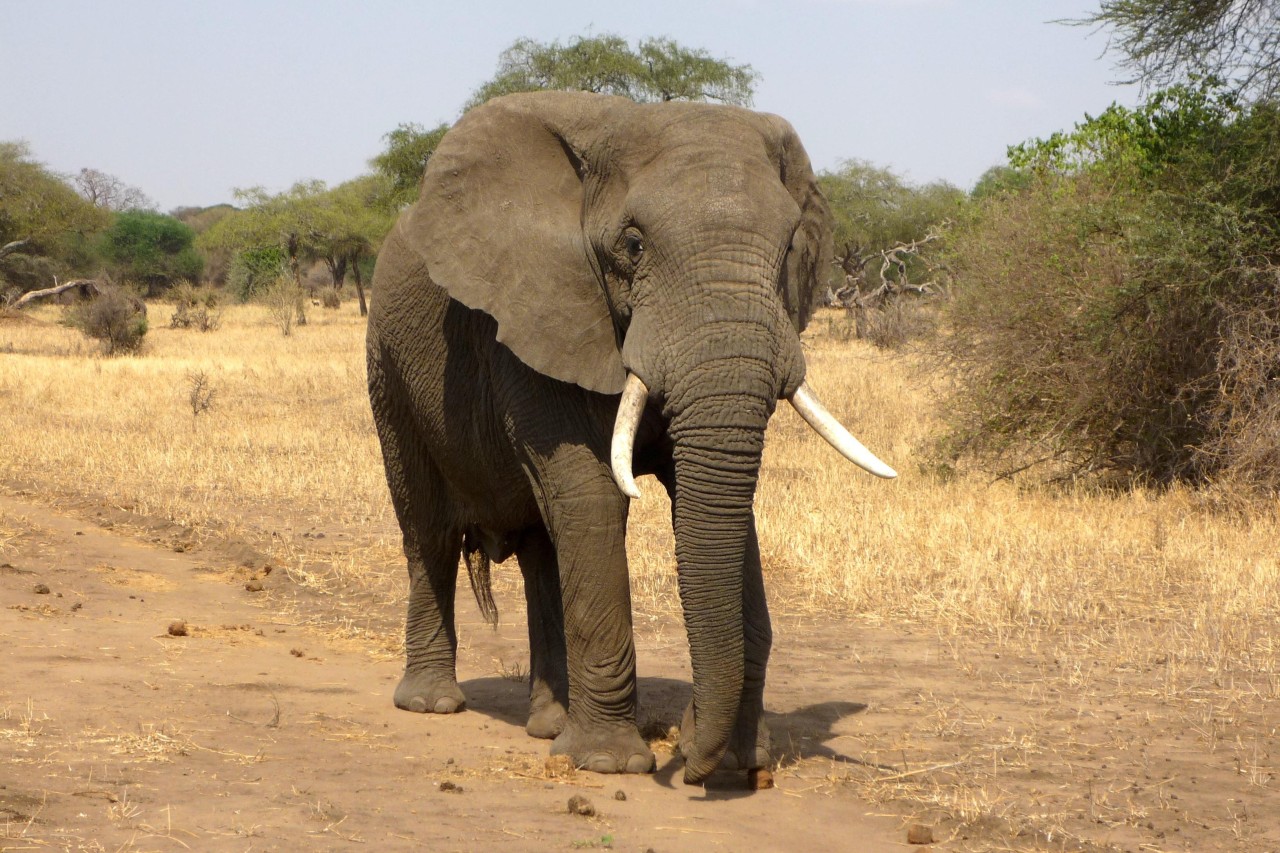
Those who dig deep enough into their pockets can not only shoot protected animals in Africa, but also bring the trophies back to Switzerland.
A motion by former GLP National Councillor Isabelle Chevalley seeks to ban this, but the WWF opposes it — having a long tradition of supporting the hunting industry worldwide.
The National Council has already approved the motion, but the Senate's Committee on Science, Education and Culture (WBK SR) has rejected it, according to a report in the «SonntagsZeitung» — citing, of all sources, the WWF.
It recently became known that the WWF has supported paramilitary forces in several countries that have committed serious human rights violations.
Killing animals for trophies is in part criminal, but always wrong — a cultural aberration. Trophy hunting, with all its animal cruelty, as a means of species preservation is an admission of failure. On average, an elephant is killed by trophy hunters every 15 minutes.
The WWF bears a share of responsibility for the failure to put an end to the slaughter of elephants.
The WWF supports exploitative hunting projects and is involved in their implementation — rather than advocating for ethical concepts of nature and wildlife management.This has been the WWF's business model for decades, because only by decimating wildlife can they position themselves as species protectors.The WWF is also not an animal welfare organization, as large parts of the public still mistakenly believe.
There are many other things that can be done to protect species. A closer analysis usually reveals that in Africa, the multimillion-dollar business primarily benefits foreignhunting tour operators benefit, while the local population, according to a recent study by the International Union for Conservation of Nature (IUCN), receives at best a “starvation wage.” The study calculated that the local population earns on average only €0.20 per person annually from hunting tourism, if they are involved at all. Hunts frequently take place on private farmland anyway — here neither the public treasury nor the impoverished population benefits; the latter is merely exploited as a fig leaf to make trophy hunting socially acceptable.
Hunting is said to create 15,000 part-time jobs in the eight most important African hunting countries — for a total population of 140 million people. Its contribution to state budgets is a laughable 0.006 percent. Photo tourism, by contrast, generates billions and creates many times more jobs.
Trophy hunters destroy the culture and traditions of indigenous peoples. Entire tribes are not infrequently displaced from their land so that their homeland can be leased out for the macabre hunts of foreign trophy hunters. Hunting is a negative role model. The vast majority of tourists want to see intact wildlife — something from which the local population also benefits in the long term.
Swiss citizens also go big-game hunting. The Swiss CITES authority recorded, for the period from 2010 to 2020, the import of 45 elephants, 22 Nile crocodiles, two alligators, and many other partly protected animals, among others. In total, this amounted to 462 animals.
According to studies, hunting promotes poaching, unethical behavior, smuggling and corruption, as well as criminal activities. By tolerating trophy hunting, one sustainably encourages violence and a macabre hunting culture. Trophy hunters destroy the social structures of wild animals and the healthy gene pool.
A scientific study on lion hunting in Tanzania reveals that legal trophy hunting — and not poaching or habitat loss — is the primary factor behind the significant decline in wildlife populations.
In a letter to members of the Council of States, WWF writes: «The income generated from this is very important for the local population in remote, rural areas. If they lose this revenue, poaching will increase in order to compensate for the loss of income and to reduce damage to agriculture.«
More than 50 Swiss animal welfare organizations see it differently and support the motion.
The WWF in England recently ended its support for trophy hunting as well.