Wolf hunting without benefit: culls harm Switzerland
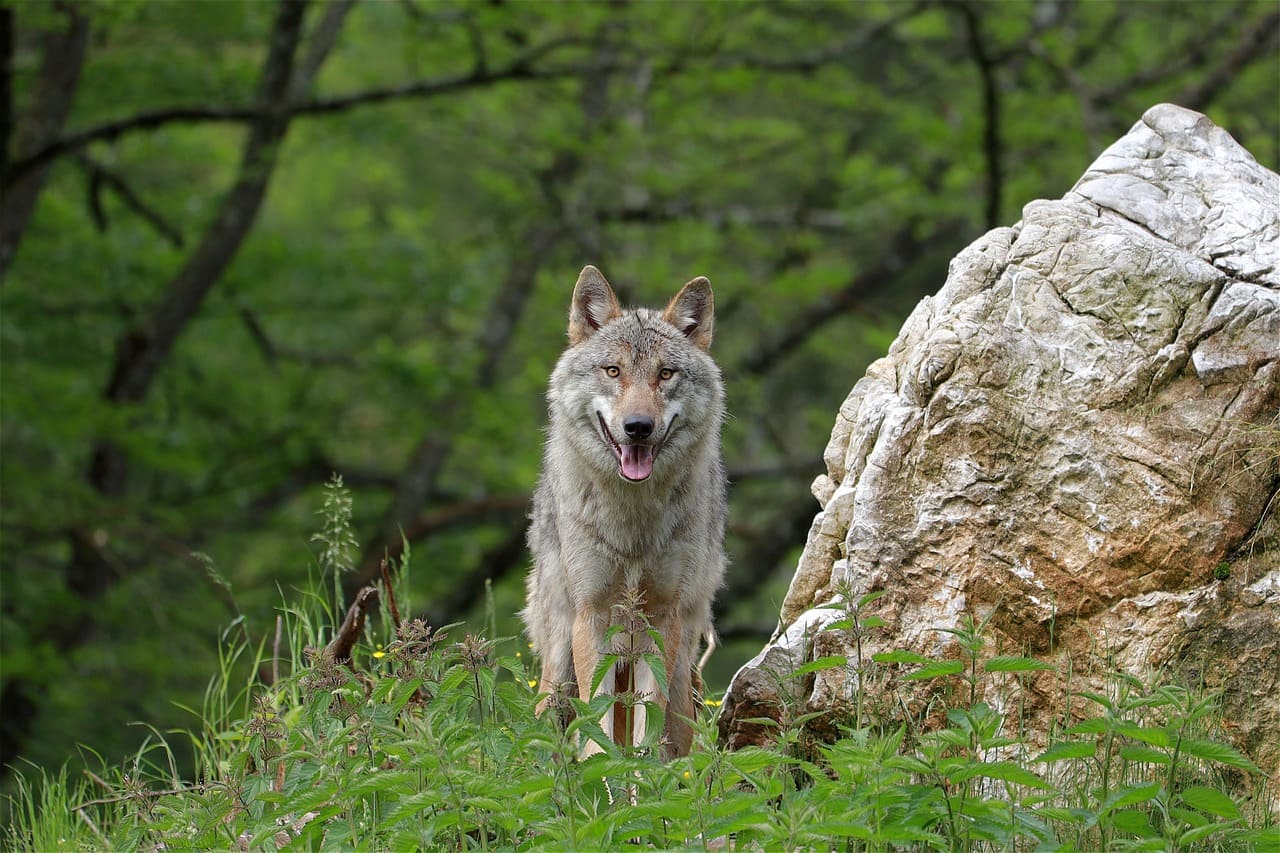
Since the mid-1990s, the wolf has been returning to Switzerland naturally. The population has grown considerably since then: according to monitoring data, wolves live primarily in forested areas of the Alps, the Pre-Alps and the Jura. The number of packs has increased: in 2023, for example, around 30 packs were recorded, with an estimated approximately 300 wolves.

With the return of the wolf, the issue of conflicts with livestock farming immediately arose.
Attacks on livestock by wolves have by now become part of everyday life in many mountain regions. Nevertheless, a nuanced picture emerges with regard to the frequency of attacks, livestock protection measures and the development of the wolf population.
For several years now, authorities, research institutes and animal welfare organisations in Switzerland have been increasingly relying on non-lethal measures. The centre KORA compiles data on wolf populations and attacks. According to KORA, livestock owners receive compensation from the federal government and cantons in cases of verified wolf attacks.
At the same time, statistics show that the number of livestock killed per wolf has decreased as the wolf population has grown. For 2022, a small proportion was recorded in Switzerland, with 1’480 reported livestock killed by wolves. Around 90% of cases involved sheep, 5% goats; donkeys, cattle or horses were only rarely attacked.
A further federal report shows that livestock protection measures in Switzerland are effective. In an annual review for 2021, it was found that herds with protective measures in place (e.g. fences, guard dogs, herd management) experienced a lower frequency of attacks, or that protection measures were subsequently improved in problematic cases. A 2025 report observed a stable or declining number of livestock killed in many cantons, despite a slight increase in the number of packs.
In combination, these data indicate that effective livestock protection can significantly reduce conflicts between humans and predators without resorting to widespread killing.
Swiss Hunting Policy: Regulation and Preventive Culling
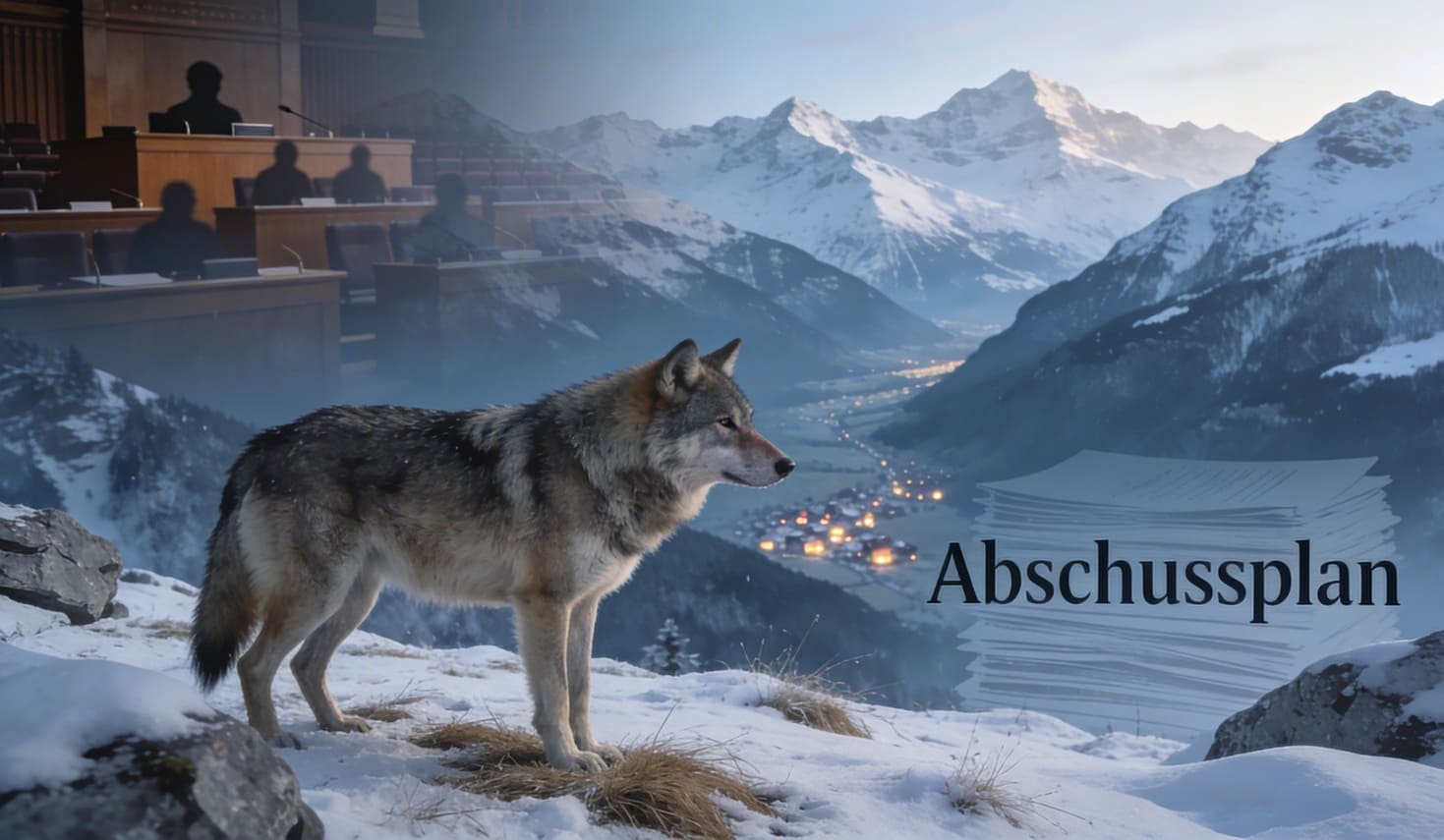
Despite the demonstrated success of protective measures, Switzerland — following the controversial inauguration of SVP Federal Councillor Albert Rösti — also relies on irrational regulation of the wolf population through culling. Within the framework of the 2024/2025 regulation period, the Federal Office for the Environment (BAFU) approved the removal of approximately 125 wolves. According to official figures, 92 wolves had been killed preventively by the end of January 2025 — that is, before any damage had been documented.
The criteria for culling were revised in 2023. Under current legislation, targeted culling or even the removal of entire packs is now permitted under certain conditions when packs are classified as problematic. Decisions on regulation are made at the cantonal level, based on applications and assessments by the BAFU.
This approach has drawn criticism: animal welfare and nature conservation organisations argue that the regulation policy can be overly hasty and too broadly applied. Critics point out that not all wolves shot were actually responsible for significant livestock losses. Reports also indicate that authorities ignored a proposed minimum of 20 packs to ensure favourable conservation status.
Connection to the Slovak Case Study
A recent analysis from Slovakia showed that public, quota-based hunting of wolves over several years did not lead to a reduction in livestock damage. In the Slovak study, no significant correlation between the number of wolves killed and reported damage was found — neither at the district level nor across various methodological approaches.
Placing Switzerland’s findings alongside this Slovak evidence allows for explosive conclusions: brutal or killing-oriented management does not guarantee a reduction in human-wildlife conflict. Environmental and animal welfare experts therefore repeatedly stress that a combination of sound monitoring and protective measures is more effective in the long term than blanket culling practices.
Criticism and Risks: What Hunting Means for the Wolf Population
The reckless regulation poses risks to the survival of the wolf in Switzerland. Wolves live in family groups with strong territorial bonds and require sufficiently large territories. According to KORA, a pack in the Alps has a home range of approximately 50–300 km².
If culling is not specifically limited to conspicuous or problematic individuals, this can affect the social structure of packs and lead to unintended consequences. A lack of transparency in culling decisions, as well as the fact that animals are regulated before any actual damage has occurred, raises ethical and scientific questions.
The policy of regulation is not based solely on population figures. It is simultaneously influenced by social tensions with livestock farmers and hunting interests. But precisely because Switzerland has strong scientific institutions and monitoring systems, decisions should be based on clear data rather than fearmongering from political and hunting circles.
Demand: For a consistently animal welfare-oriented strategy
From an animal welfare perspective and for sustainable coexistence between wolves and livestock farming, the following strategic rethinking is essential:
- Priority for herd protection measures: Electric fences, protection by livestock guardian dogs, active surveillance and training of alpine herders must be systematically and comprehensively expanded.
- Evidence-based regulation: Culling should remain limited to clearly defined and documented problem individuals or packs. Blanket or preventive regulation without prior damage undermines trust and species protection in the long term.
- Monitoring and transparency: Population data, damage statistics and decision-making processes regarding culling must be openly accessible for independent review and research.
- Dialogue with livestock farmers: Government bodies should involve indigenous and farming communities, take their concerns seriously and develop mutually viable solutions together, without reflexively resorting to the gun.
- Long-term strategy: Wolf protection, agriculture and social acceptance must not be played off against one another. Sustainable management requires planning that extends beyond individual legislative terms.
The supplementation of the Slovak case study with Swiss reality suggests that killing wolves alone is not a sufficient strategy for damage mitigation. Switzerland has already demonstrated, through the expansion of livestock protection measures and well-established monitoring, that conflicts can be alleviated when prevention is prioritized over reflexive responses.
A policy that reflexively resorts to culling, without taking into account the complex dynamics of wolf social structure, livestock farming, and landscape, is not only questionable from an animal welfare ethics perspective, but also risks long-term social and ecological harm. Wildlife management must be scientifically grounded, responsible, and conducted with regard for all stakeholders.
Dossier: Wolf in Switzerland: Facts, Politics, and the Limits of Hunting
Participatory Campaign: Demand from your municipality, in light of the catastrophic policies of Federal Councillor Albert Rösti (SVP), a tax remission request for federal and cantonal taxes on the grounds of the recently approved culling of wolves in Switzerland. You can download the template letter here: https://wildbeimwild.com/ein-appell-fuer-eine-veraenderung-in-der-schweiz/