How Switzerland Continues to Shoot Foxes at Night and What Geneva Has Long Been Doing Better
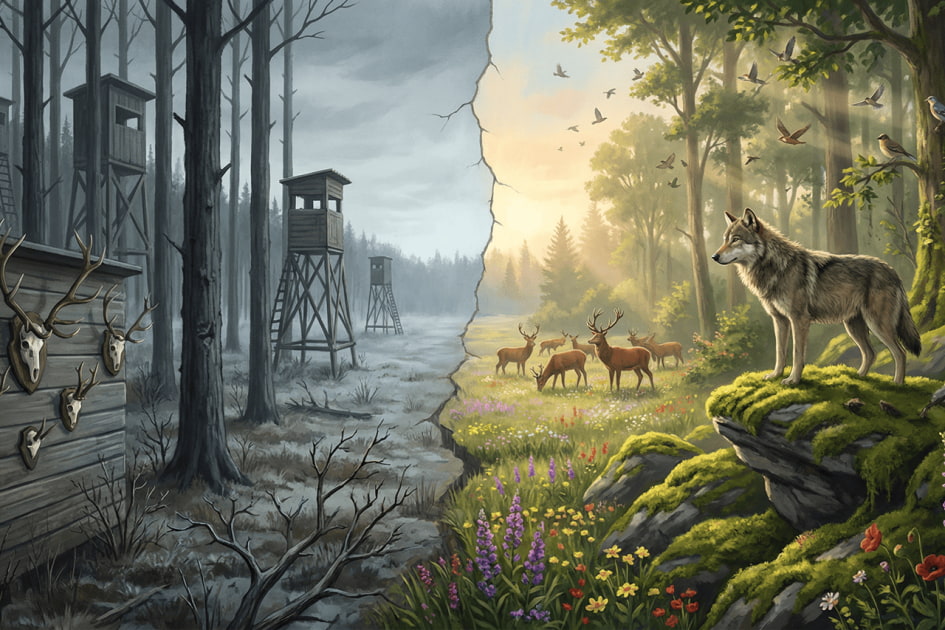
Since 1 February 2025, a nocturnal hunting ban in forests has officially been in force throughout Switzerland. The federal government promises more tranquility for wildlife, less disturbance, and greater respect for the forest habitat. In press releases, this sounds like progress for animal welfare. In practice, for foxes and other predators in particular, nothing has changed.

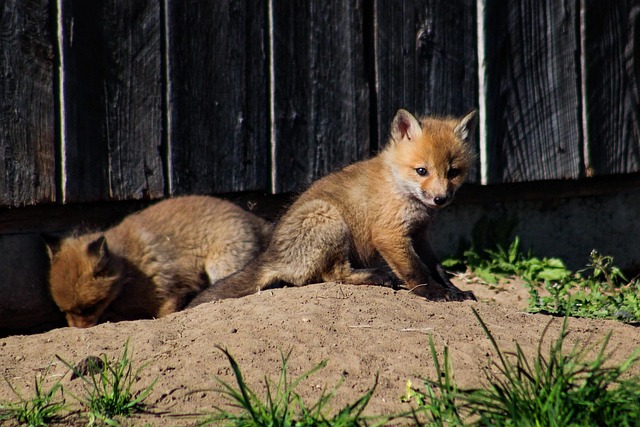
Because in the same breath in which the Federal Council bans nocturnal hunting in forests, it opens the back door: pass hunting for huntable carnivores in winter remains permitted, particularly for fox, badger, marten, and neozoa such as the raccoon.
While along the Limmat, in the Rhine Valley, or in the valleys of Graubünden, hobby hunters are still allowed to take aim at foxes at night, one small canton has been demonstrating for decades that things can be done differently: Geneva. In the last hunting season, exactly zero foxes were shot there for the pleasure of hobby hunters, simply because such recreational hunters no longer exist there.
Nocturnal Hunting Ban in Switzerland: Protection in the Title, Exceptions in the Fine Print
The Federal Council justifies the nocturnal hunting ban by noting that many wild animals were originally active during the day or at dusk, but have increasingly been pushed into the night by recreational pressure, intensive land use, and hobby hunting. A ban on nocturnal hunting in forests is intended to afford these animals at least some peace in the darkness.
Yet the same article of the Hunting Ordinance stipulates:
- Hunting in forests is prohibited at night (from one hour after sunset until one hour before sunrise).
- Exempt from this is pass hunting for huntable carnivores in winter, in particular fox, badger, marten, and raccoon.
- The cantons may also grant exceptions when they wish to prevent alleged wildlife damage.
What is sold as a protective measure is therefore a ban with a built-in loophole precisely where the hunting passion of many hobby hunters is concentrated: the fox.
Pass hunting: Swiss standard for nocturnal fox pursuit
Pass hunting is the typical form of winter night hunting for foxes in Switzerland. Wildlife protectionists describe it as follows: Animals are lured to baiting sites with food such as cat or dog food, hunting waste, and offal, habituated there to human structures, and then shot while unsuspecting.
Several cantonal regulatory frameworks make clear how broadly this practice is established:
- The canton of Graubünden explicitly lists fox, badger, and marten among the species that may be hunted during pass hunting.
- The canton of Aargau states unambiguously in a 2025 circular that while the ban on night hunting in forests applies in general, pass hunting for predatory game such as fox, badger, and stone marten in winter is exempt.
- Hunting training materials summarize the federal legal situation as follows: Night hunting in forests for wild boar as well as for fox and marten remains permissible as of February 2025.
This makes clear: not a single canton, but hunting practice across large parts of Switzerland depends on precisely the exception that excludes the fox from the promoted concept of “nocturnal rest.”
Zurich, Graubünden, the rest of Switzerland: formally quiet, factually open season
Whether Zurich, Graubünden, Solothurn, or Aargau: the pattern repeats itself.
- Officially, the ban on night hunting in forests applies everywhere.
- In the cantonal hunting regulations, hunting periods are defined such that small game hunting takes place during the day, while pass hunting covers the winter and the nights.
- Predatory game is explicitly named as the target group within the framework of pass hunting.
For foxes, this means:
- During the day, they are shot in many cantons within the framework of small game hunting.
- At night, hobby hunters sit at baiting sites in and around the forest, waiting for the “predatory game” that the regulation explicitly releases despite all its supposed protections.
Thus the fox becomes an animal in a legal no-man’s-land: publicly portrayed as a problem carrier, defined in law as an exception to protection, and permanently in the crosshairs in practice.
- Those who still hunt foxes now are not hunting in a fair and ethical manner
- Animal cruelty: fox massacre in Switzerland
- Swiss hunters: stop animal cruelty in fox hunting
Geneva: Zero foxes for hobby hunters, yet it works
The canton of Geneva has demonstrated for over 50 years that a different policy is possible.
- In 1974, the population voted in favour of a general hunting ban for private hobby hunters. The militia-based hunting system was abolished.
- Since then, there has been no hobby hunting. The regulation of wildlife populations is handled by professionally trained cantonal wardens within the framework of a state wildlife management system.
- Foxes, badgers and martens are not classified as huntable species in Geneva. No ongoing recreational hunting takes place; interventions are carried out only by the cantonal wildlife wardens when necessary, in the form of special culls.
In concrete terms, this means:
In the past hunting season, exactly zero foxes were shot for fun in Geneva, because hobby hunters have not existed there since 1974. Where intervention does occur at all, it is targeted and carried out by state wildlife wardens — not as a recreational pastime.
The record after decades without hobby hunting is clear:
- Biodiversity has increased significantly. According to assessments, Geneva is home to over 20’000 animal species despite its small area and high population density.
- Waterfowl and other wildlife visibly benefit from the absence of hunting disturbance caused by hobby hunters.
While the hunting lobby likes to dismiss Geneva as a special case, the canton is repeatedly cited in animal welfare circles as an example demonstrating that wildlife populations largely self-regulate, as long as humans do not subject them to constant pressure with rifles and dogs.
What the whole of Switzerland could learn from Geneva
Rather than decorating a night hunting ban with hunting-related exceptions, Switzerland could take its cue from Geneva. Concrete steps would be possible without the sky falling or the forests imploding.
1. Night hunting ban without a fox loophole
- Removal of the exception for pass hunting of predatory game from the federal hunting ordinance.
- A clear rule: no night hunting in forests — not even for foxes, badgers or martens.
- No special permits for problem hunters when better, non-lethal measures are available.
2. Abandoning fox hunting
Modern epidemiological and ecological findings show that fox hunting neither reliably curbs rabies nor fox tapeworm, but rather destabilises populations and intensifies migratory movements.
The logical consequence would be:
- A gradual phase-out of fox hunting in all cantons.
- Focus on hygiene, disposal of slaughter waste, protection of domestic and farm animals, and public information — instead of a shooting frenzy.
- Monitoring of fox populations by independent specialist agencies rather than by the lobby that profits from hunting.
3. Professional wildlife wardens instead of recreational hunting
Geneva demonstrates that professionally trained wildlife wardens can carry out targeted and transparent interventions when they are exceptionally necessary.
A model for the rest of Switzerland could be:
- Reduction of militia hunting and a gradual transition to cantonal wildlife wardens.
- Separation of enforcement, population surveys, and interest representation, so that the same actors are not simultaneously counting, hunting, and lobbying.
- Public reports on interventions, their necessity and effectiveness, instead of non-transparent cull lists.
4. Wildlife policy with clear objectives instead of hunters' wishes
A credible wildlife policy must be oriented towards goals such as biodiversity, animal welfare, and conflict minimisation — not towards the question of which species produce the most “attractive hunting yields.”
This would mean:
- Ecological guidelines at the federal level that are not undermined by hunting exemptions.
- Abandonment of recreational and trophy hunting, particularly of predators such as fox and badger.
- Involvement of independent experts and animal welfare organisations in the development of hunting and wildlife strategies.
Geneva proves that “zero foxes for hobby hunters” works
Since February 2025, Switzerland has prided itself on a night hunting ban in forests. For foxes, this amounts to little more than a paper exercise in many cantons. The pass hunting exemption ensures that precisely those animals most heavily persecuted continue to be shot at night at bait stations.
For half a century, Geneva has demonstrated how things can be done differently: no hobby hunting, professional wildlife wardening, clear priority for biodiversity and animal welfare. The result: in the last hunting season, exactly zero foxes were killed for sport by hobby hunters there, because this “hobby” was abolished.
If the Federal Council and the cantons are serious about tranquillity in the forest and respect for wildlife, the path is clear: less militia hunting, no night hunting of foxes, more Geneva and less pass-hunting romanticism. Everything else is marketing, not animal protection.
Luxembourg: the fox hunting ban as a reality test
Luxembourg represents another reality test for Switzerland. There, fox hunting has been banned since 1 April 2015, with the fox removed from the list of huntable species. The very horror scenarios invoked by the hunting lobby here to combat any restriction have failed to materialise. Neither a “fox explosion” nor an epidemic has swept the country. On the contrary: the responsible authorities and evaluated monitoring data confirm that population levels have remained stable and that no hunting-policy emergency exists whatsoever.
Particularly revealing is a closer look at the fox tapeworm. Before the hunting ban was introduced, around 40 percent of foxes examined were infected; a few years later, the figure had dropped to approximately 20 percent. Hunting foxes therefore did not prevent the disease, and the ban did not make it worse. In 2024, the Luxembourg government explicitly confirmed the ban and stated that developments in the health situation provide no grounds for reopening fox hunting. While in neighbouring regions such as the Saarland tens of thousands of foxes were shot during the same period without any measurable impact on population density, Luxembourg demonstrates that non-hunting can be a functioning management approach.
For the Swiss debate, this is uncomfortably clear: a permanent ban on fox hunting is possible, does not lead to chaos, and undermines the common fear-based arguments of the hunting lobby. Together with Geneva, Luxembourg proves that “zero foxes for hobby hunters” is not the dream of animal welfare advocates, but has long been established practice in a neighbouring European country, the Canton of Geneva, and numerous national parks.