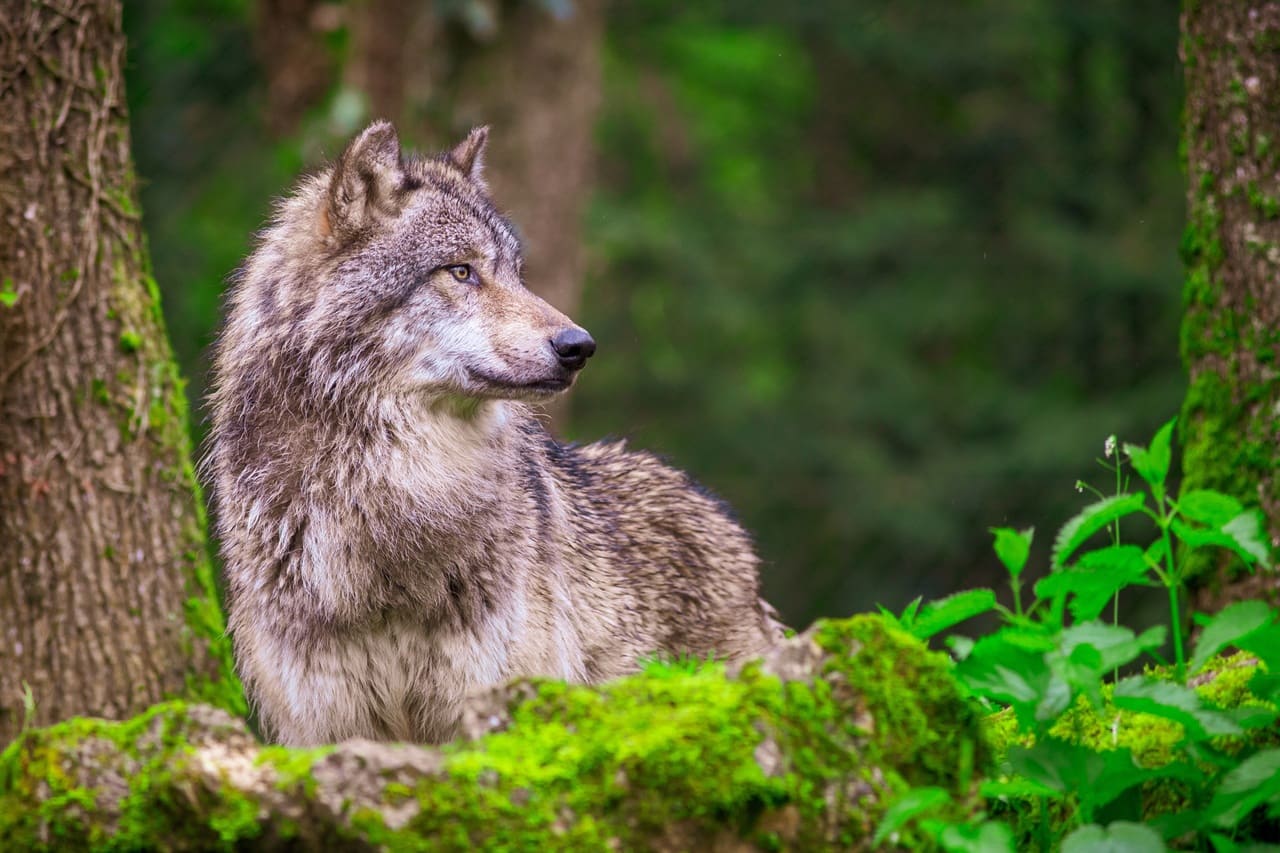
Why Recreational Hunting Can No Longer Be Justified in 2026
Recreational hunting is not nature conservation, but recreational violence: ecologically non-essential, ethically indefensible, and increasingly unacceptable to society. An analysis of what would be needed instead in 2026. Recreational hunting here refers to the voluntary practice of hunting outside of any professional necessity.

«For Fifty Years»
Recreational hunting is often marketed as nature stewardship: as necessary regulation, as a service to forest and field, as a tradition that supposedly creates order.
Those who question this narrative are typically served the same set of terms: stewardship, responsibility, population management, protection. Yet in 2026, recreational hunting stands in a very different light than it did just a few decades ago. Not because people have suddenly become "too sensitive," but because knowledge, values, and social reality have changed.
Today the question is no longer merely whether hunting "somehow" works. It is a question of proportionality: what practice can be justified when it is based on voluntary killing, causes suffering, generates risks, and must continually assert its own usefulness? And there is a second question that is often left unasked: why should a leisure activity involving weapons, power over habitats, and the taking of life be regarded as normal, when it is no longer morally or practically acceptable to a growing majority?
This article explains why recreational hunting in 2026 is no longer an indispensable tool, but rather a social and ethical problem. And it sets out what would need to take its place if we genuinely want to protect wildlife.
1. The Central Point: No One Has to Become a Recreational Hunter
Recreational hunting is not compulsory service. Nobody is required to pass a hunting exam, buy a rifle, acquire ammunition, lease a hunting territory, or go shooting for pay. Those who hunt choose to do so. It is precisely this aspect that makes the ethical assessment so clear-cut: when killing is unnecessary, it must be justified with particular rigour. The burden of justification lies with those who practise and politically defend the activity.
Recreational hunting is nonetheless frequently treated in public discourse as an indispensable tool. This leads to a distortion of perspective: wild animals are declared a 'problem' to be solved, rather than asking what conflicts humans create and what solutions are possible without violence.
2. Ecologically: Why culling cannot replace nature conservation
One of the hunting lobby's most prominent arguments is: without recreational hunters, there would be 'too much' wildlife. Yet ecosystems do not operate on the model of 'more animals = worse outcome'. Population dynamics depend on habitat, food supply, weather extremes, disease, road traffic, habitat fragmentation, and human land use. Many of these factors have been massively altered in recent decades. Recreational hunting is then presented as a corrective instrument, even though it merely treats symptoms.recreational hunters
There is also a problem that is rarely discussed openly: hunting can itself create perverse incentives. Where cull quotas, hunting pressure, and territory logic dominate, a system emerges that manages populations rather than protecting nature. Conflicts are not infrequently kept stable precisely because they provide the justification for hunting. Supplementary feeding, too — regarded as 'support' — can make animals dependent, increase disease risks, and promote unnatural concentrations. Wild beim Wild has addressed this point in several articles, because it illustrates with particular clarity how quickly 'game management' in reality means control and manipulation.
Anyone who genuinely invokes nature conservation in 2026 must therefore answer a straightforward question: why should a practice based on culling as the default solution be the primary approach, when habitat policy and prevention policy are often more effective and less conflict-prone?
3. Ethically: recreational violence remains violence, even when it is called tradition
At the heart of the matter lies an ethical incompatibility: recreational hunting is killing for recreational motives, embedded in rituals, language, and self-images. Even if proponents reframe this as 'fair chase' or 'hunter's ethics', it changes nothing about the core issue. Wild animals are sentient beings. They experience fear, stress, and pain. For them, hunting by the recreational hunters does not mean a 'quick death' as the rule, but rather frequent flight, injury, tracking, separation from groups, and the psychological stress of a more permanent state of threat — particularly in heavily hunted areas.
The moral landscape has shifted in 2026. In many areas, we no longer accept violence as normality simply because it occurred historically. We expect justifications, protection concepts, and alternatives. This same logic must apply to hunting. Tradition is not ethics. At most, it is an explanation for why something exists — not for why it should continue to exist.
4. Socially: Hunting is today a source of conflict, not consensus
Even setting ecological debates aside, the social finding remains: recreational hunting generates ever more conflicts. It affects not only animals, but also people who use forests and fields. Hikers, families, horse riders, cyclists, and nature photographers experience hunting as a restriction, a threat, or a moral imposition. Our article on 'Hunting and Human Rights' focuses precisely on this point: where does hunting touch fundamental rights and the right to experience nature without being dominated by armed recreational actors?
This is what matters in 2026: societies have become more pluralistic. Legitimacy does not arise because a small group defends a historical privilege, but because a practice is comprehensible, proportionate, and broadly accepted. It is precisely this broad acceptance that is eroding.
5. Safety: When risk becomes the norm
Another point is frequently downplayed because it is uncomfortable: weapons in a recreational context mean risk. Hunting accidents, ricochets, misidentifications, and dangerous situations in public spaces are not merely isolated incidents, but part of a system that normalises private means of violence. We have described this, with reference to fatalities and safety debates, as a warning signal: when risk is considered 'part of the deal', this is no longer a modern practice but a normalisation of avoidable danger.
In 2026, the precautionary principle applies in other areas. In hunting, the reverse is often true: only when something goes wrong is there brief discussion, then everything continues as before.
6. The knowledge problem: a licence to kill, but little oversight
A further blind spot lies in the question of what thresholds we as a society set. We have sharpened this point in our fact check : a hunting licence is more easily obtained than substantive wildlife knowledge, even though the consequences are irreversible.
Recreational hunting thus also becomes a problem of political responsibility: when state authorities delegate the killing of wild animals within the framework of a leisure practice, they must apply particularly stringent standards of oversight, training, transparency, and a culture of accountability. This is precisely what fails to happen in many places with the necessary consistency.
7. 2026: What would need to replace recreational hunting
Criticism alone is not enough. Anyone who argues that recreational hunting can no longer be justified must show how wildlife and conflict management can function without recreational culling.
First: prevention rather than remediation. Damage often arises where landscape and agricultural planning have gone wrong. Fencing, herd protection, adapted land management, traffic routing, and wildlife corridors are not ideology — they are craft.
Second: professionalisation rather than hobby logic. Where interventions are genuinely necessary, they should take place as rare, strictly controlled measures — not as a seasonal leisure programme. This means: clear state responsibility, clear criteria, clear transparency.
Third: habitat protection rather than population fixation. Those who take biodiversity seriously protect habitats, reduce fragmentation, halt disturbances, and think in terms of ecosystems. Culling figures are not an indicator of nature conservation.
Fourth: ethics as a guiding principle. Modern wildlife policy acknowledges that wild animals are not merely resources, but individuals with intrinsic value. This position is compatible with nature conservation, but not with recreational violence as a normal state of affairs. In the hunting discourse, interests are too often at the centre — not the animal.
An enlightened society does not need recreational culling as the default
By 2026, the question is no longer whether we can afford hunting, but whether we still want to afford it ethically and socially. By 2026, recreational hunting can no longer be justified, because it fails on multiple counts: it is not strictly necessary, it is ethically indefensible as a leisure practice, it generates social conflict, it normalises risks, and it clings to a model of power over habitats that is becoming increasingly unacceptable.
Those who want to protect wildlife need less hunting romanticism and more modern conservation policy. Fewer shots, more knowledge. Less tradition as an argument, more responsibility as a reality.
More on the subject of recreational hunting: In our dossiers on the criticism of recreational hunting gather fact-checks, analyses and background reports. What the research says about this is shown by Hunting fact-checked: the state of research.
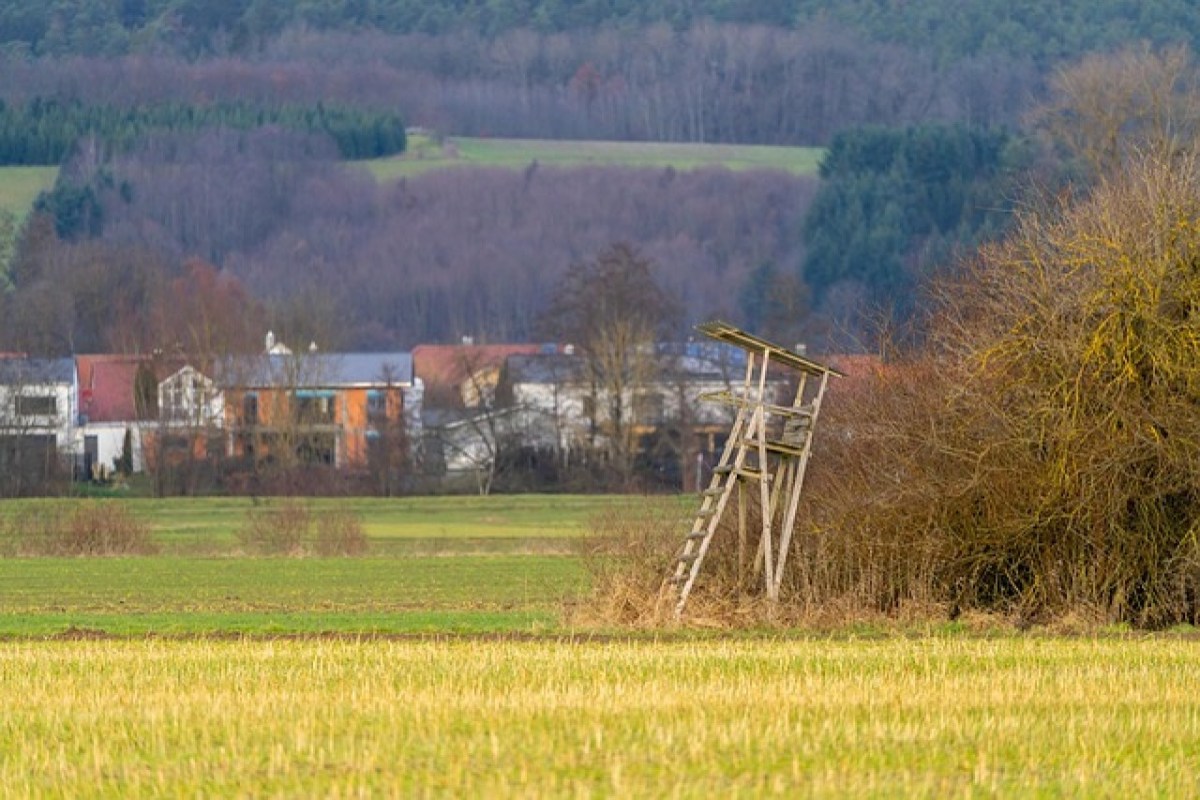
The position of IG Wild beim Wild: IG Wild beim Wild rejects recreational hunting. Our model is the canton of Geneva, which has managed without recreational hunting since 1974: without hunting seasons, without hunting dogs, without driven hunts, without high seats, without the animal cruelty and crime that go hand in hand with hunting season elsewhere. What has worked there for over fifty years disproves every position paper by JagdSchweiz. An association that bases its policy on claims it refutes in its own documents is not a professional organisation, but a factory for misinformation.