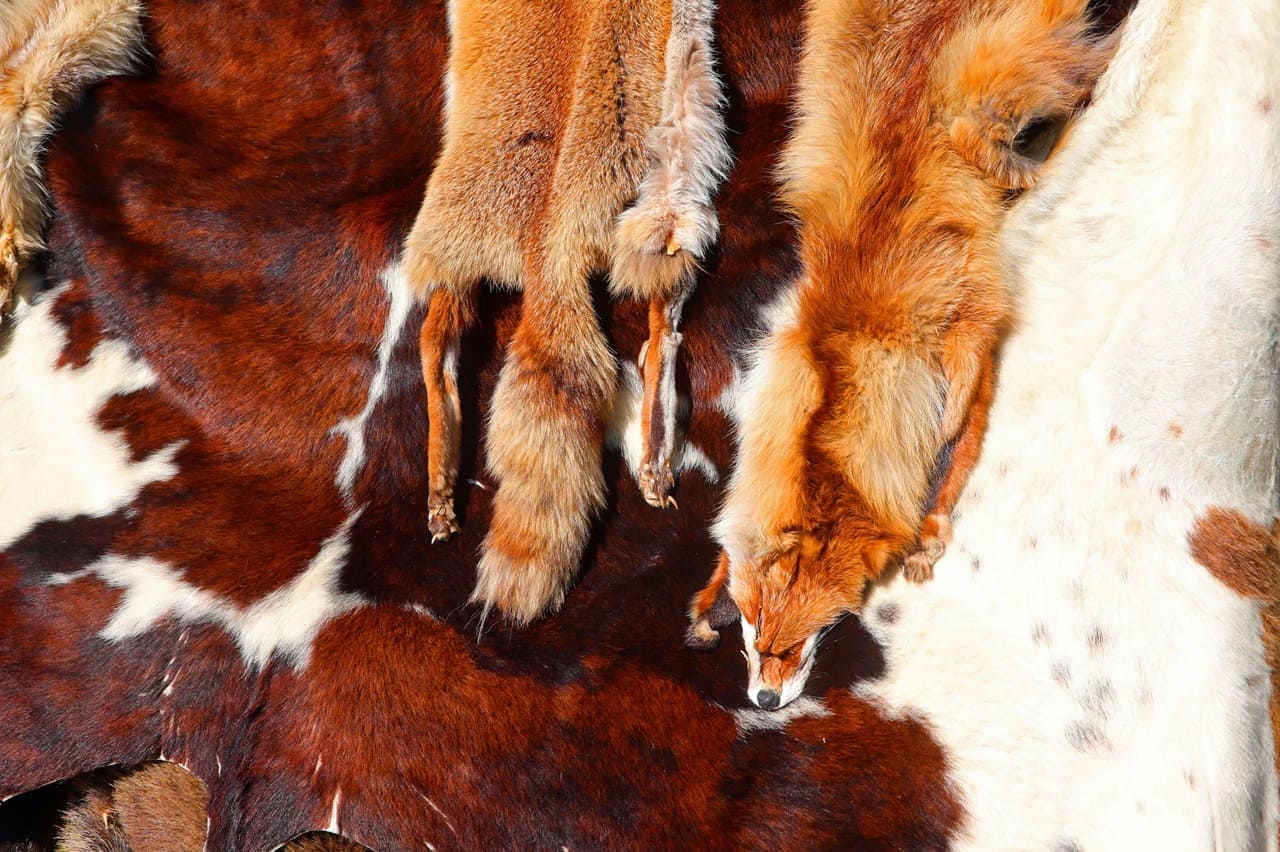
When the Church Blesses Killing at the Hubertus Mass
Hubertus masses are presented in many places as harmless tradition: hunting horns, greenery, solemn words, the blessing for “fair chase”. Yet behind this aestheticised facade lies an insular culture that romanticises violence and imbues it with spiritual meaning.

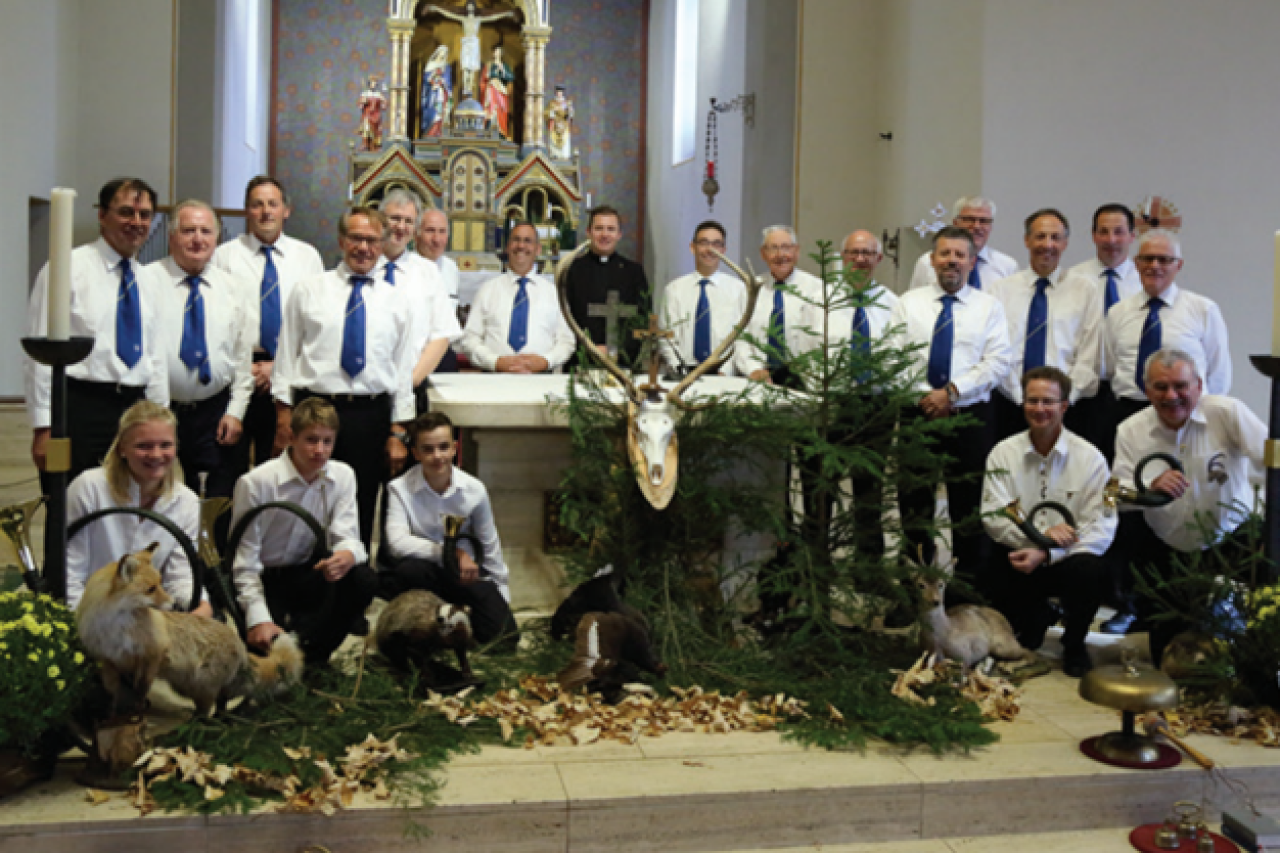
A ritual that turns animals into projection surfaces and honours those who exercise power over them.
The central question is: why does the Church bless a practice that today serves primarily as a hobby, a leisure activity, or a pointless management tool, and that demonstrably causes animal suffering? The Church does not only protect perpetrators (abuse scandals). The Church protects Hubertus masses, even when violence is attached to them. The Church provides “perpetrators with a stage”. This appears to be a betrayal of its own principles.
Over the course of decades, the Catholic Church has not merely tolerated sexual violence — particularly against minors — but has in part systematically covered it up. This concerns clergy who exploited their position, and ecclesiastical structures that protected perpetrators and abandoned victims.
This stands in complete contradiction to Christian ethics. There is nothing to relativise here. The Church has demonstrably failed on multiple counts and continues to do so with the Hubertus masses.
Hunting is often wrapped in terms like “stewardship,” “tradition,” or “protection.” Yet at its core, it is an organised form of violence, animal cruelty, and criminality. It involves the deliberate killing of individuals — often highly social and intelligent wild animals. Recreational hunting is not nature, but intervention; not harmony, but control. And to this day, it is carried out predominantly for leisure motives. Recreational hunters are not servants of nature — they are its destroyers. The killing of sentient wild animals is only permissible when a “reasonable justification” exists. Leisure and tradition motives do not meet this criterion. Driven and battue hunts demonstrably cause considerable suffering and contradict the statutory guiding principle of harm avoidance.
It is no coincidence that critics speak of a form of small-scale warfare against wildlife. The structures resemble a paramilitary culture: weapons, camouflage, strategic planning, driven hunts, kill lists. The language is militarised — “hunting pressure,” “making a haul,” “regulating stocks.” Violence becomes routine.
Many species — such as the red fox or numerous small predators — regulate their populations through natural mechanisms. Widespread hunting is ecologically unnecessary and in some cases leads to compensatory effects that actually keep or even increase population levels. Effective “population control” is not scientifically substantiated. Contemporary ethics recognises wild animals as individuals with their own interest in continued existence. The deliberate killing without compelling necessity is incompatible with this. Against this backdrop, the moral legitimacy of recreational hunting collapses entirely.
Recreational hunting is a human intervention driven primarily by tradition, leisure motives, and forestry policy interests. Many wildlife populations, such as the red fox, possess effective self-regulation mechanisms that enable stable populations without hunting interventions. Numerous ecologists point out that regulatory intervention is only necessary for a few species in specific habitats that have been heavily altered by humans. The widespread claim that comprehensive "population control" is necessary across the board is scientifically untenable. Recreational hunting corresponds neither to contemporary understanding of animal welfare nor to society's demand for a responsible approach to wildlife.
The practice of recreational hunting causes suffering, particularly in driven and battue hunts, in which botched shots, flights, and prolonged injury consequences occur. These effects are frequently omitted from public portrayal. The moral justification also remains questionable: the deliberate killing of sentient wild animals for non-essential reasons stands in tension with modern ethical approaches that regard animals as autonomous individuals rather than resources to be managed.
A critical reassessment of hunting practice is therefore necessary — ecologically, ethically, and socially.
Pain concealed by liturgy
Hubertus masses create an atmosphere of solemnity. Hunting horns, songs, candlelight. Yet this ceremonial backdrop conceals what recreational hunting actually means: shots, injuries, panicked flight, blood, senseless death.
In driven and battue hunts, animals are driven into stress and fear before frequently being struck by non-immediately fatal shots. Injured animals flee, die in agony later, or must be tracked down. This aspect is entirely absent from the masses. They celebrate the hunters, but not the victims. The liturgical language symbolically purifies the act; violence is transformed into “huntsmanship”.
A church between morality and tradition
The Church likes to emphasize that it stands for the stewardship of creation. At the same time, it provides space for a custom demonstrably associated with suffering and death. The moral contradiction is obvious: a ritual that spiritually elevates violence contradicts any credible ethic that emphasizes compassion and protection for the vulnerable.
The Church thus finds itself in a tension between tradition and moral responsibility. Yet tradition alone is no argument when it comes at the expense of living beings. The past is no carte blanche for structurally entrenched violence.
The blind spot: Power
Recreational hunting is an act of power. It orders the world into top and bottom: humans as those who dispose, animals as those who are disposed of. Hubertus masses reinforce this order by providing symbolic backing to those who exercise violence. The Church does not bless the forest, not the wildlife, not peaceful coexistence — it blesses those who carry weapons, the perpetrators of violence.
The ecclesiastical ritual creates a stage on which the hunting community is not questioned but celebrated. Criticism finds no place. The Church thus unwittingly sides with the more powerful and legitimises a practice that is increasingly contested in society in the 21st century.
Time for a new understanding of “Creation”
A modern ecological ethic recognises wild animals as sentient, autonomous individuals and not as resources. It does not understand nature as something that must be “regulated,” “managed,” or “kept under control.” It sees animals as subjects, not as backdrop.
If the Church wishes to credibly advocate for Creation, it must ask itself: Why does it offer a ritual that honours those who kill weaker living beings? Why are these acts of violence ceremonially elevated rather than critically examined?
Hubertus masses are not a harmless custom, but the sacralized accompaniment of a practice that is fundamentally rooted in violence. Recreational hunting is not romantic communion with nature, but a structural intervention in the lives of the most vulnerable. The Church faces the decision of whether it will continue to place the preservation of tradition above ethics, or whether it will stand on the side of the living beings who have no voice.
If Christian values such as compassion, protection, and responsibility are genuinely meant, then there is only one consequence: the Hubertus mass belongs in the past.
Recreational hunting is an unnecessary practice that is insufficiently justified under animal welfare law and ethics. A reduction to clearly defined cases of necessity or the phasing out of leisure hunting is consistent with the legal framework, ecology, and societal expectations.
Further articles
- Are recreational hunters psychopaths?
- Recreational hunters on the psychological pendulum
- Aggression: Understanding Recreational Hunters Better
- Sadism: Understanding Recreational Hunters Better
- Trophies: Recreational Hunting for Pleasure
- Alcohol: Recreational Hunters and the Drinking Problem
- Hunting and Hunters: Psychoanalysis
- Recreational Hunters and Violence in Our Society
More on the subject of recreational hunting: In the dossier The Role and Criticism of Recreational Hunters we shed light on the training, power and self-image of recreational hunters. The scientific evidence is presented in the overview Studies on the Effects of Recreational Hunting.
The position of IG Wild beim Wild: IG Wild beim Wild rejects recreational hunting. Our model is the canton of Geneva, which has managed without recreational hunting since 1974: without hunting seasons, without hunting dogs, without driven hunts, without high seats, without the animal cruelty and crime that go hand in hand with hunting season elsewhere. What has worked there for over fifty years disproves every position paper by JagdSchweiz. An association that bases its policy on claims it refutes in its own documents is not a professional organisation, but a factory for misinformation.