When people are mistaken for wildlife
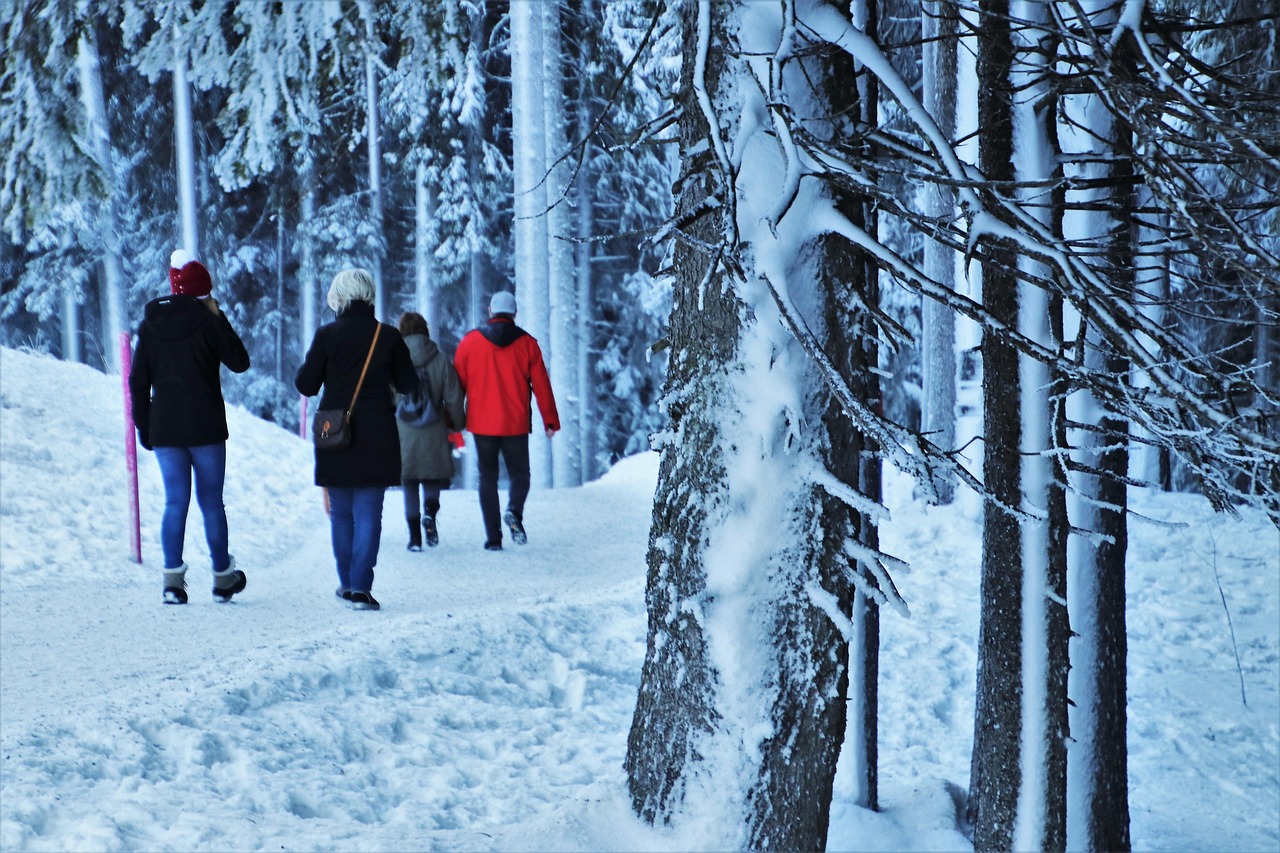
On 7 January 2026, a family goes for a walk at the edge of the forest in Beckeln (Lower Saxony, south of Delmenhorst). Snow, early evening, an everyday situation. Then a shot is fired. A 58-year-old female walker is hit in the thigh and seriously injured because a 77-year-old hobby hunter allegedly mistook her for an animal, according to police reports. The weapon is confiscated, investigations are ongoing.

A second case appears different at first glance, but follows a frighteningly similar risk logic.
During a driven hunt in Michaelnbach in the Grieskirchen district of Upper Austria, a 62-year-old hobby hunter aims at a hare. The shot is allegedly fired, two pellets hit a 67-year-old hunting colleague at a distance of around 120 metres. Here too, emergency medical response, hospitalisation and police investigations follow.
Such incidents are often treated in public debate as regrettable isolated cases. Yet taken together, they reveal a structural problem that is frequently ignored in hunting discussions: The use of firearms in publicly accessible areas creates a permanent residual risk. This risk affects not only recreational hunters among themselves, but also uninvolved people. Walkers, families, cyclists, mushroom foragers, forestry personnel. And sometimes it affects precisely those who have nothing to do with recreational hunting.
The core of the problem: Errors are part of the system
In the Beckeln case, an uncomfortable question arises: How can a human being be mistaken for wild animals from a hunting stand, when a targeting decision is made over several seconds and the trigger is pulled? What exactly happened is being investigated. Regardless of the outcome of the proceedings, one fundamental fact remains: Whoever pulls the trigger decides not only about a wild animal, but also about the physical safety of people.
The case in Michaelnbach shows another known risk. Even when the target is clearly an animal, the behavior of projectiles remains not fully controllable. Ricochets, deflections, unclear terrain and the dynamics of driven hunts increase the danger additionally. Yet precisely such situations are an integral part of hunting practice.
Why these cases are also relevant for Switzerland
In Switzerland too, recreational hunting takes place in landscapes that are simultaneously used intensively as recreational areas. The conflict line runs not only between recreational hunters and animal protection, but between two competing uses of the same spaces. Recreation on one hand, shooting operations on the other.
Incidents abroad are therefore not distant exceptions, but warning signals. The risk logic remains the same. People move on paths, at forest edges and in forests. Weapons are in use. Visibility conditions, stress and misjudgments play a role. Errors happen. And when errors happen, the consequence can be serious injury or death.
What must change: Distance, transparency, consequences
When recreational hunting takes place in immediate proximity to walking paths, forest edges and residential areas, voluntary recommendations are not sufficient. Clear and binding rules are necessary:
- Binding protective distances to officially signposted paths, forest edge zones and proximity to settlements, with clear specifications on when hunts must be abandoned or areas temporarily closed
- Mandatory information to the public before hunts, including digitally, with location, time window and contact point
- Consistent investigation and legal consequences for violations or injuries to people, including transparent communication of results
- Public, independent statistics on hunting accidents, endangerments and near-miss incidents, so that risks become visible
The decisive question is not whether an act was intentional. What matters is why a system is accepted in which uninvolved people can be injured by hunting weapons.
Assessment
Those who present recreational hunting as necessary wildlife management must also name the real costs. This includes risks to third parties, the normalization of firearm use in recreational areas, and language that trivializes incidents.
Two injured people in two hunting incidents are not abstract statistics. They are human beings. And they represent a structural problem that can no longer be ignored.
From these risk factors emerges a second debate: Who bears responsibility, who is controlled how, and what minimum standards apply for the use of firearms in recreational areas?
According to IG Wild beim Wild, recreational hunters annual medical-psychological fitness assessments following the Dutch model as well as a mandatory upper age limit. The largest age group among hobby hunters today is 65+. In this group, age-related impairments such as declining vision, slower reaction times, concentration weaknesses and cognitive deficits increase statistically significantly. At the same time, accident analyses show that the number of serious hunting accidents with injuries and fatalities rises significantly from middle age onwards.
The regular reports of hunting accidents, fatal misconduct and misuse of hunting weapons highlight a structural problem. The private possession and use of deadly firearms for recreational purposes largely escapes continuous control. From the perspective of IG Wild beim Wild, this is no longer acceptable. A practice based on voluntary killing that simultaneously creates considerable risks for humans and animals loses its social legitimacy.
Recreational hunting is also based on speciesism. Speciesism describes the systematic devaluation of non-human animals solely based on their species membership. It is comparable to racism or sexism and is neither culturally nor ethically justifiable. Tradition does not replace moral examination.
Critical examination is particularly essential in the field of recreational hunting. Hardly any other field is so characterized by embellishing narratives, half-truths and deliberate disinformation. Where violence is normalized, narratives often serve as justification. Transparency, verifiable facts and an open societal debate are therefore indispensable.
Support our work
With your donation you help protect animals and give voice to their concerns.
Donate now →