When Recreational Hunters Shoot, Walkers Become Targets
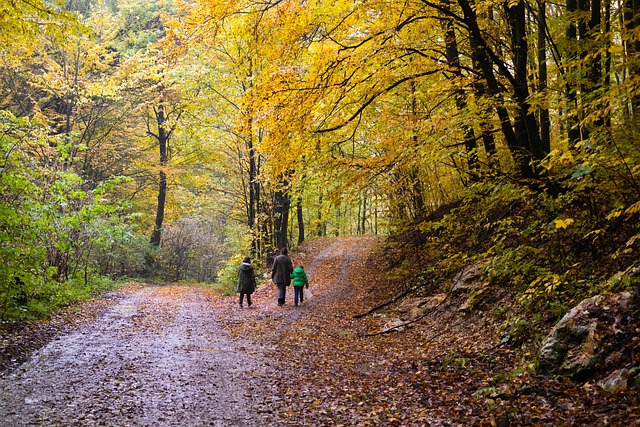
In Grossefehn in the district of Aurich in East Frisia, on a Saturday afternoon on 22 November 2025, two people out walking their dog are struck by shotgun pellets. The woman is hit in the head, the man in the arm. A driven hunt is underway.

A 40-year-old hobby huntress admits to having fired the shot; police are investigating on suspicion of negligent bodily harm.
The authorities describe it as a hunting accident, and the victims are considered “slightly injured.”
The very choice of words already encapsulates the problem: what is being downplayed here as an “accident” is the logical consequence of a hobby in which people armed with firearms roam a landscape that simultaneously serves as a recreational space for the general public.
According to police, the shotgun pellets “did not penetrate the body.” That sounds bureaucratically sober, almost reassuring. In reality, it means: the projectiles were close enough to strike a woman in the head and a man in the arm. They were close enough to cause pain, wounds, and severe shock.
Those who walk across fields with their dog are seeking fresh air, tranquillity, and exercise. They do not expect to suddenly have to duck because someone in the vicinity is firing live rounds. Imagine the same situation with a pram or a school group. As it happened, those involved were adults — purely by chance.
The fact that no ambulance was required, as reported by the media, changes nothing: innocent people were here reduced to near-victims of a leisure pursuit that calls itself “the hunting craft” and is fondly romanticised as tradition and heritage.
Not an Isolated Incident, but a Systemic Pattern
Anyone who considers the report from Aurich to be a tragic anomaly need only look back a little further. Hunting accidents occur repeatedly in Germany, and not all of them end without serious consequences. The t-online report on the current case already notes that in 2025 alone, two people have been killed during hunts in Germany, in Mecklenburg-Vorpommern and North Rhine-Westphalia.
Animal welfare and hunting-critical organisations have been documenting a whole series of serious incidents for years:
- PETA points out that recreational hunters kill or injure several dozen people every year and that hundreds of thousands of animals are caused considerable suffering through stray shots.
- The initiative «Abschaffung der Jagd» collects cases in which recreational hunters hit fellow humans, domestic animals or other “non-targets,” including fatal incidents involving hunting weapons.
- In 2019, a jogger on a public path was shot in the leg during a driven hunt in Schneverdingen.
- In 2023, a recreational hunter in Thuringia struck his colleague in the face during a harvest hunt. The man was airlifted to hospital with serious injuries.
- etc.
Aurich fits seamlessly into this pattern: people go about their daily lives while live ammunition is being fired at animals in their immediate vicinity. And time and again, it is not only the animals that are hit.
Driven hunting: A dangerous concept in a densely used landscape
Particularly problematic is the type of hunt involved in the Aurich district: the driven hunt. In this format, animals are flushed from cover by beaters and dogs while shooters stand in a line or at fixed positions and fire at fleeing animals. In a cultivated landscape criss-crossed by paths, fields, farmsteads, and riding and cycling routes, this concept represents a permanent safety risk.
In the present case, those who were subsequently shot were out “in the fields” with their dog when the shot was fired. This is therefore not a cordoned-off shooting range, but a landscape used simultaneously for agriculture, hunting, and recreational purposes.
Even when warning signs are posted, recreational hunting unilaterally shifts the risk onto the general public: those seeking recreation are apparently expected to give wide berth the moment recreational hunters announce their presence — otherwise they bear "personal responsibility." This is an inversion of cause and effect. The cause is the deliberate choice to pursue a leisure activity with lethal weapons in a space that recreational hunters share with everyone else.
The Fairy Tale of Safe Recreational Hunting
The hunting lobby likes to emphasize how high its safety standards are, how rigorous the training, how responsibly firearms are handled. The German Hunting Association publishes extensive statistics on harvests, wildlife accidents, and hunting license holders. What is conspicuously absent from this PR narrative, however, is an honest, readily accessible comprehensive record of hunting accidents involving humans and domestic animals as victims.
The figures that animal protection organizations must piece together typically come from local media and police reports — not from any transparent official registry. This lack of transparency alone is a warning sign. Anyone genuinely convinced that their hobby is safe and socially beneficial would proactively document and analyze every incident.
Instead, hunting accidents repeatedly surface under "miscellaneous" items, accompanied by phrasing such as "mistook walkers for game" or "a shot discharged accidentally." The same pattern recurs in other cases in which people were struck during hunts.
Firearms Law and Reality: Live Ammunition in Everyday Life
The Grossefehn case once again illustrates how little the theoretical hurdles of firearms law do to contain the practical danger. Following the incident, police checked the huntress's firearms documentation and her shotgun. She was evidently in lawful possession of the weapon, had completed the required training and examinations, was a member of a hunting association — and still managed to hit two uninvolved walkers.
Legality is no substitute for harmlessness. A system in which private individuals routinely handle firearms as part of a hobby in the vicinity of footpaths, residential buildings, and playgrounds creates a structural hazard that can never be fully controlled. Every driven hunt is a gamble: one hopes that projectiles will not go astray, that no one happens to be in the wrong place at the wrong moment.
Animals, Too, Pay the Price
Understandably, public attention focuses on human victims. But recreational hunting also causes enormous harm to animals that goes far beyond the “hanimal kill count.” Wild beim Wild draws attention to the fact that countless wild animals are injured every year by missed shots and die in agony because they are only wounded and never found.
If clearly visible people are being hit in daylight on open paths, what does that mean for a roe deer in dense undergrowth or a fox fleeing in the half-dark? Recreational hunting produces suffering on a continuous basis — not only at the moment of the fatal shot, but also in the form of long-term injuries, stress within animal families, and orphaned young animals.
The fact that this suffering is obscured by terms such as “wildlife management” and “population regulation” makes it, from an ethical standpoint, worse rather than better.
Politics in the Line of Fire: Time for Clear Consequences
The incident in the district of Aurich raises questions that go far beyond a single recreational hunter:
- Why is it permitted at all to conduct driven hunts in areas that are regularly used by walkers, horse riders, joggers, and families?
- Why are there no nationwide uniform, generously defined minimum distances from paths, residential buildings, and other public areas that are consistently monitored and sanctioned?
- Why does no centralized, publicly accessible database exist to this day that records all hunting accidents — including those involving injured and killed people and domestic animals?
Anyone who takes these questions seriously can hardly reach any other conclusion: recreational hunting, as practiced in Germany, is not viable for the future.
In the short term, at least the following steps are long overdue:
- A ban on driven hunts near residential areas, popular walking paths, and local recreational areas.
- Significantly greater minimum distances for every shot fired in the direction of paths, houses, and other areas in use, combined with severe penalties for violations.
- A nationwide mandatory reporting requirement for all hunting accidents, with centralized recording and publication of the data.
In the long run, there is no avoiding the question of whether a private hobby involving firearms can still be justified in the 21st century. Models of professional, state- or municipally organised wildlife and traffic management already exist; they would be transparently accountable and could be shaped according to animal welfare and safety criteria — rather than recreational interests.
The bullets that struck a woman's head and a man's arm in Grossefehn could have been fatal. That it ended without serious harm is a matter of chance, not a credit to the system.
As long as forests and fields are understood as hunting grounds in which everyone else must “be considered,” humans and animals will continue to be collateral damage of a dangerous hobby.
A truly modern understanding of nature looks different: forests and fields as safe spaces for animals and people, not as a backdrop for shooting practice. The hunting accident in the Aurich district is not an occupational hazard. It is further evidence that recreational hunting itself is the problem.
More on the subject of recreational hunting: In the dossier Poaching and hunting crime in Switzerland we document cases, legal questions and recurring patterns. The scientific evidence is presented in the overview Studies on the Effects of Recreational Hunting.
The position of IG Wild beim Wild: IG Wild beim Wild rejects recreational hunting. Our model is the canton of Geneva, which has managed without recreational hunting since 1974: without hunting seasons, without hunting dogs, without driven hunts, without high seats, without the animal cruelty and crime that go hand in hand with hunting season elsewhere. What has worked there for over fifty years disproves every position paper by JagdSchweiz. An association that bases its policy on claims it refutes in its own documents is not a professional organisation, but a factory for misinformation.