Hobby Hunters Under the Influence with Illegal Firearms
On 23 October, the criminal court of Cahors in France handed down a landmark ruling: three years in prison for a 45-year-old hobby hunter who shot and killed his companion during a driven hunt — under the influence of drugs, with an illegal weapon, and in flagrant disregard of basic safety rules.

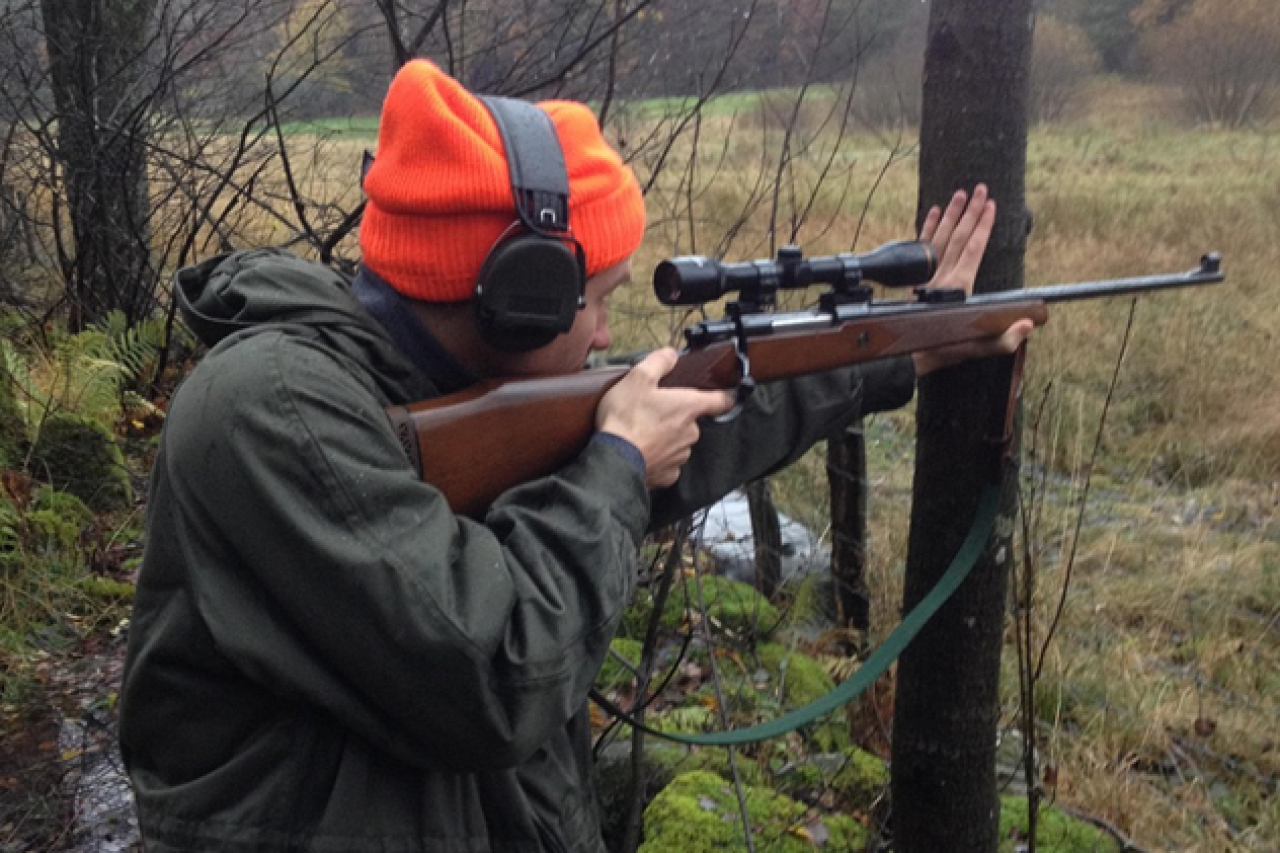
For the first time in France, a hobby hunter is being sent to prison following an “accidental” shot. And one cannot help but ask: why only now?
A violent individual was hunted down by a violent individual. This case illustrates the extent to which hunting in France — and in other countries as well — is tolerated as a law-free zone. A hobby hunter consumes cannabis, carries an unregistered weapon, ignores the prescribed firing angle, and is nonetheless permitted to stand side by side with others, armed, shooting at people and animals.
Imagine the same scenario on the road: driving under the influence of drugs, without a licence, in an unregistered vehicle. Unthinkable! Yet in hunting, this has been tolerated for decades.
Hunting Associations: Silence and Looking the Other Way
Even more outrageous is the collective failure of the hunting community. No hunt master, no association, no fellow hunter intervened — despite the fact that drug and alcohol consumption during hunts is no secret. The hunting lobby regularly soothes concerns with the argument of “tragic isolated incidents.” Yet the figures tell a different story:
- In France, according to the ONCFS (Office for Hunting and Wildlife), as many as 78 hunting accidents were recorded in the 2022/23 season alone, including 7 fatalities. In the 2023/24 season, there were even 11 deaths.
- In Germany, approximately 30 to 40 firearms accidents during hunting are reported each year, also with fatalities. Frequently affected are other hobby hunters or uninvolved walkers.
- In Switzerland, an average of 3 to 5 hunting fatalities occur per year, as analyses by the Suva and cantonal authorities show.
These are therefore not “isolated incidents”, but a structural safety problem. Wild beim Wild repeatedly observes similar patterns in Switzerland as well: hobby hunters who are intoxicated by cannabis or alcohol before, during and after recreational hunting.
The Fairy Tale of the “Accident”
When someone shoots while under the influence of drugs, with an illegal weapon and in complete disregard of basic rules, that is not a mishap. That is deliberate irresponsibility. The fact that such cases are still labelled as “hunting accidents” is part of a systematic downplaying of the issue. In reality, these constitute negligent homicide by design.
The sentence handed down in Cahors is severe: three years, of which one year is a custodial sentence, a fine of 10’000 euros, revocation of the hunting licence, and a weapons ban. Yet in proportion to the gravity of the matter, the verdict remains almost lenient: a person is dead. The central question is: will this ruling prompt a rethink? Or will it remain an exception, while further people die every year because recreational hunting, with all its animal cruelty, is regarded as an untouchable tradition?
Hunting = A Safety Risk
The bare statistics confirm it: recreational hunting is dangerous — for animals, for bystanders, and even for the perpetrators of violence themselves. Where else do we accept dozens of deaths and injuries every year for a hobby that primarily serves the pleasure of killing?
Anyone who still defends recreational hunting today is defending blood, death and lawbreaking. It is time to consistently question this relic of a bygone era — and finally to place the protection of people, animals and nature above the pleasure of a minority.
In the view of IG Wild beim Wild, hobby hunters require annual medical-psychological fitness assessments modelled on the Dutch system, as well as a binding upper age limit. The largest age group among hobby hunters today is 65+. Within this group, age-related impairments such as declining visual acuity, slowed reaction times, lapses in concentration and cognitive deficits increase statistically and significantly. At the same time, accident analyses show that the number of serious hunting accidents involving injuries and fatalities rises significantly from middle age onwards.
The regular reports of hunting accidents, fatal negligence, and the misuse of hunting weapons highlight a structural problem. The private ownership and use of deadly firearms for recreational purposes largely escapes continuous oversight. From the perspective of IG Wild beim Wild, this is no longer justifiable. A practice based on voluntary killing that simultaneously generates considerable risks for humans and animals forfeit its social legitimacy.
Hobby-hunting is furthermore rooted in speciesism. Speciesism describes the systematic devaluation of non-human animals solely on the basis of their species membership. It is comparable to racism or sexism and can be justified neither culturally nor ethically. Tradition does not replace moral scrutiny.
Critical scrutiny is indispensable particularly in the field of hobby hunting. Hardly any other field is so thoroughly shaped by euphemistic narratives, half-truths, and deliberate disinformation. Where violence is normalised, narratives frequently serve as justification. Transparency, verifiable facts, and an open public debate are therefore essential.