Valais Recreational Hunter Shoots Wolf
A Valais hunter accidentally shot a female wolf last week during a fox hunt. After the 56-year-old hotelier and gourmet chef Peter Gschwendtner from Blitzingen realized his mistake, he immediately reported the kill to the wildlife wardens. The remains of the female wolf were taken to the animal hospital in Bern for further examination, as the canton of Valais announced on Monday. The animal in question is the female


A Valais recreational hunter accidentally shot a female wolf last week during a fox hunt.
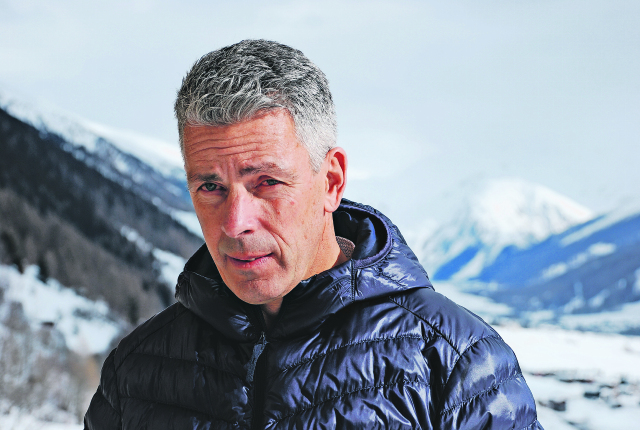
After the 56-year-old hotelier and gourmet chef Peter Gschwendtner from Blitzingen realized his mistake, he immediately reported the kill to the wildlife wardens.
The remains of the female wolf were taken to the animal hospital in Bern for further examination, as the canton of Valais announced on Monday. The animal in question is female F28, which had first been recorded in the Turtmann Valley a year earlier in the summer. The wolf had subsequently moved via the Nanz Valley into the Upper Goms. She was last documented on 27 October in Reckingen.
Public Prosecutor Opens Proceedings
Following the accidental shooting of the wolf, the Valais cantonal office for hunting, fishing and wildlife (DJFW) informed the public prosecutor's office. The latter has since opened proceedings.
The accidental shooting occurred during the fox pass hunt, which remains open until the end of February, on the night of Friday, 2 February, to Saturday, 3 February 2018. This is a typical winter hunt for fox, in which the animals are lured to bait stations. The recreational hunters once again distinguish themselves as despoilers of nature and animal abusers.
I identified the animal too poorly and fired too quickly, says Peter Gschwendtner
Peter Scheibler from the Office of Hunting and Fishing says the accidental shooting could be explained by the fact that this type of hunting takes place exclusively at night. Naturally, visibility conditions at night are not the same as during the day.
Normally, this should of course not happen. However, depending on the circumstances — such as deep snow or hollows in the terrain — a mix-up may be possible, Scheibler speculates in an interview with Swiss Radio and Television. At the same time, however, he makes clear: "I don't know the conditions and wouldn't want to pass judgment on them."
Pass hunting: The most despicable form of hunting
This type of hunting takes place exclusively at night. It is one of the most despicable forms of hunting altogether and reveals the true character of a person. In this underhanded and cowardly method, foxes, badgers, martens, and others are lured during the winter period of hardship to so-called bait stations with food (cat and dog food, hunting scraps, offal, etc.), accustomed to the presence of humans, and deceived — all just to be killed senselessly and for sport. Wildlife often leave a clearly visible trail known as a "pass." This is also where the term "pass hunting" comes from, in which recreational hunters lie in wait for the animal along its regular route.
Shots are fired from bedrooms, alpine huts, and small hunting blinds fitted with a camouflaged window — regardless of whether the target is a healthy male fox or even possibly the mother of cubs lying in a den. Foxes are hunted continuously from 15 June through to 1 March. The recreational hunters' motto “Only a dead fox is a good fox” is contemptuous of animals.
Scientific studies have shown that even when three-quarters of a population is shot, the same number of animals will be present again the following year. The same applies, for example, to raccoons. The more intensively foxes are hunted, the more offspring they produce — any form of “regulation” of fox populations is neither necessary nor achievable through hunting methods. The fact that recreational hunting fails as a means of population control is scientifically proven.
According to the federal hunting ordinance, night-vision devices used as aiming aids are prohibited. The canton of Valais also does not grant permits for such devices during regular hunts.
Thermal imaging devices, however, are permitted, provided they have no connection to the weapon.
Similar case in Graubünden in 2014
«During my time in service, I have no knowledge of a case in which a wolf was shot during a fox drive hunt», said Peter Scheibler. However, such a case did occur in the canton of Graubünden in 2014.
There too, the recreational hunter immediately reported himself to the game wardens after realising his mistake. The shooting took place in the Domleschg area in central Graubünden. The wolf that was killed was a young male animal at the time. More on Crime and Recreational Hunting.
More on the subject of recreational hunting: In our dossiers on the criticism of recreational hunting gather fact-checks, analyses and background reports. What the research says about this is shown by Hunting fact-checked: the state of research.
The position of IG Wild beim Wild: IG Wild beim Wild rejects recreational hunting. Our model is the canton of Geneva, which has managed without recreational hunting since 1974: without hunting seasons, without hunting dogs, without driven hunts, without high seats, without the animal cruelty and crime that go hand in hand with hunting season elsewhere. What has worked there for over fifty years disproves every position paper by JagdSchweiz. An association that bases its policy on claims it refutes in its own documents is not a professional organisation, but a factory for misinformation.