Violence against animals should also be punishable on the internet
The depiction of animal cruelty on the internet is set to become a criminal offence. A new law in France is targeting videos of violence against animals.


Photos and videos of violence against animals are spreading – like everything else – at lightning speed on the internet.
And just as with other topics, the inhibitions in the digital world appear to be significantly lower. “This is already taking on enormous proportions”, says Martina Klausmann from the State Animal Welfare Association of Baden-Württemberg. People regularly contact the Karlsruhe office to report such content.
Perpetrators often come from abroad
The problem is: animal welfare advocates are largely powerless so far. The perpetrators are often based abroad, says Klausmann. As are the servers through which the images are distributed. And there is no legal recourse even against people in Germany who share such material. This is because the Criminal Code does provide for penalties against those who disseminate “cruel or otherwise inhumane acts of violence against humans or human-like beings” (such as in video games). However, in Germany this does not apply to animals.
Changing this is the goal that the World Animal Protection Society has set itself. It is calling for the paragraph to be extended to cover animals and has launched the campaign “Stop Animal Suffering on Social Networks”. While the Animal Welfare Act prohibits inflicting pain, suffering, or harm on animals without justification, “recordings of these cruel acts of violence against animals that express glorification or trivialisation can be both depicted and distributed”, according to the Berlin-based organisation.
The activists are quite clear about what they are concerned with. The association condemns, for example, photos of cats trampled to death, videos of dogs set against each other or mistreated, as well as entire profiles of wild animals kept as pets that are subjected to recurring and significant suffering over a long period of time.
Hunting
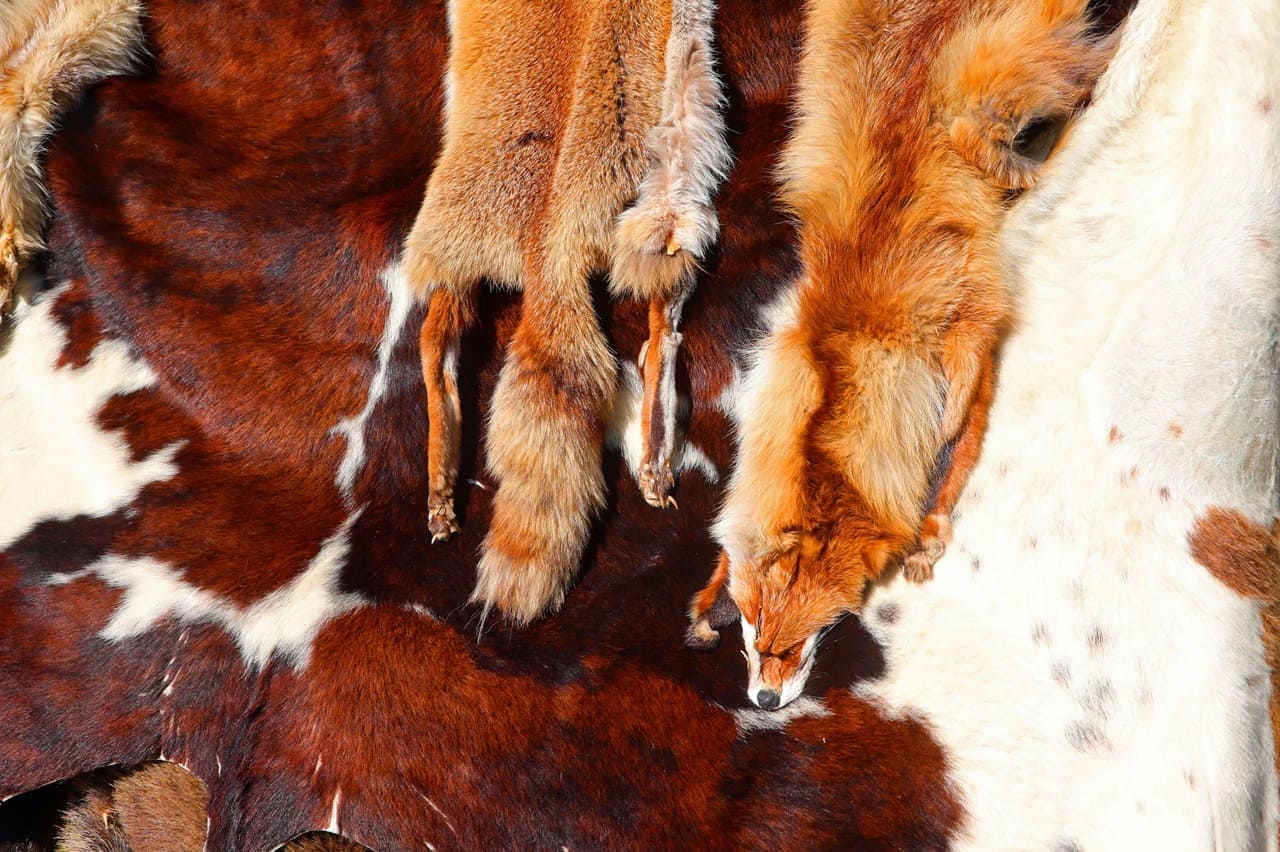
The hunting videos regularly feature foxes, hundreds of bird species, and wild boar, as well as animal fights.
These videos often depict prolonged deaths, extreme suffering, and both legal and illegal hunting methods used by hunters.
The availability of thousands of hunting videos on social media platforms promotes this cruelty. It is actively encouraged and normalised, while the activity is marketed as "fun and exciting" — at an extreme cost to wildlife.
No criminal offense, no statistics
If such acts were treated on a par with depictions of violence against humans, those who distribute them could face prison sentences of up to one year or fines. Exceptions would include documentary depictions used, for example, to expose grievances.
The scale of the problem is difficult to estimate. The Federal Criminal Police Office refers to the official police statistics and the state police forces. These only record violations of the Animal Welfare Act — amounting to 7,930 cases in 2020 alone. Some of these end up in court, as was recently the case with a veterinary assistant in Saarland who tortured and killed horses. Or last year, a man in Weiden in the Upper Palatinate who sadistically tormented rats to death and filmed his acts on his mobile phone. He sent the footage to an acquaintance, who went to the police.
As a rule, however, the authorities are unable to determine whether recordings of such acts were made or distributed, according to a spokesperson for the State Criminal Police Office of Baden-Württemberg. No criminal offense, no statistics. Unlike the distribution of such images, penalties already exist for people who kill a vertebrate without reasonable cause or cause it significant pain or suffering. It is also prohibited to use an animal for sexual acts, thereby forcing it into behaviour contrary to its nature.
Social networks must no longer provide a platform for animal cruelty
The social networks themselves refer to their policies and standards. These also address animal welfare, explained a spokesperson for Meta, the parent company of Facebook and Instagram, among others. Prohibited content is to be removed as quickly as possible. A YouTube spokesperson for German-speaking countries said: «Content depicting violence and abuse toward animals has no place on YouTube, now or in the future.» Earlier this year, the guidelines were expanded to more explicitly prohibit content involving intentional physical suffering or injury to animals, including staged animal rescues. Videos are regularly removed and channels closed for violations.
Unfortunately, implementation and enforcement of what is written on paper leaves much to be desired, explains Wiebke Plasse of the World Animal Protection Society. Often there is no response at all, or only after countless attempts to report — usually with the notice that the content does not violate community standards. «In our experience, reports of animal suffering content were only successful in very severe cases — for example, when brutal violence is inflicted on an animal. But that is only the tip of the iceberg.» This is also connected to the fact that animal suffering is insufficiently defined.
But would a change in the law actually help? Klausmann from the Animal Welfare Association of Baden-Württemberg says there is a lack of resources. «We already have enough to do on the ground. We cannot also take care of the digital realm.» And the World Animal Protection Society also acknowledges that an amendment to Section 131 would apply exclusively in Germany, and networks generally do not adapt their standards on a country-specific basis. «Through the legal obligation here at home, we want to provide the impetus to address the issue from a global perspective», explains Plasse. «The goal must be that networks no longer provide a platform for animal suffering — regardless of where.»
Networks could also be required to cooperate. They would then need not only to remove criminally relevant content, but also to involve law enforcement authorities — and in doing so, pass on the information they hold about those responsible.
The association is placing its hopes in the new federal government. One encouraging sign, among others, is that according to the coalition agreement, the SPD, the Greens, and the FDP intend to appoint a Federal Animal Welfare Commissioner. The Network Enforcement Act, which sets requirements for platform operators, is also to be revised. The association hopes that animal welfare will be taken into account in this process. A spokesperson for the Federal Ministry of Agriculture reports that one of the coalition's further plans is to transfer parts of animal protection law into the Criminal Code and to increase the maximum sentencing range. The new minister Cem Özdemir (Greens) also made clear upon taking office that he is the “chief animal protector of this country”.
HOBBY HUNTER RADAR
On the trail of concealed animal welfare offenses, poaching, and/or criminal activity? Report suspected cases to us! Help with the great Hobby Hunter Radar.