PETA Video: The Horrors of Fur Production in Russia
Part of PETA's motto states: Animals are not ours to wear or to exploit in any other way. The organization campaigns against speciesism — a worldview that classifies humans as superior to all other living beings.

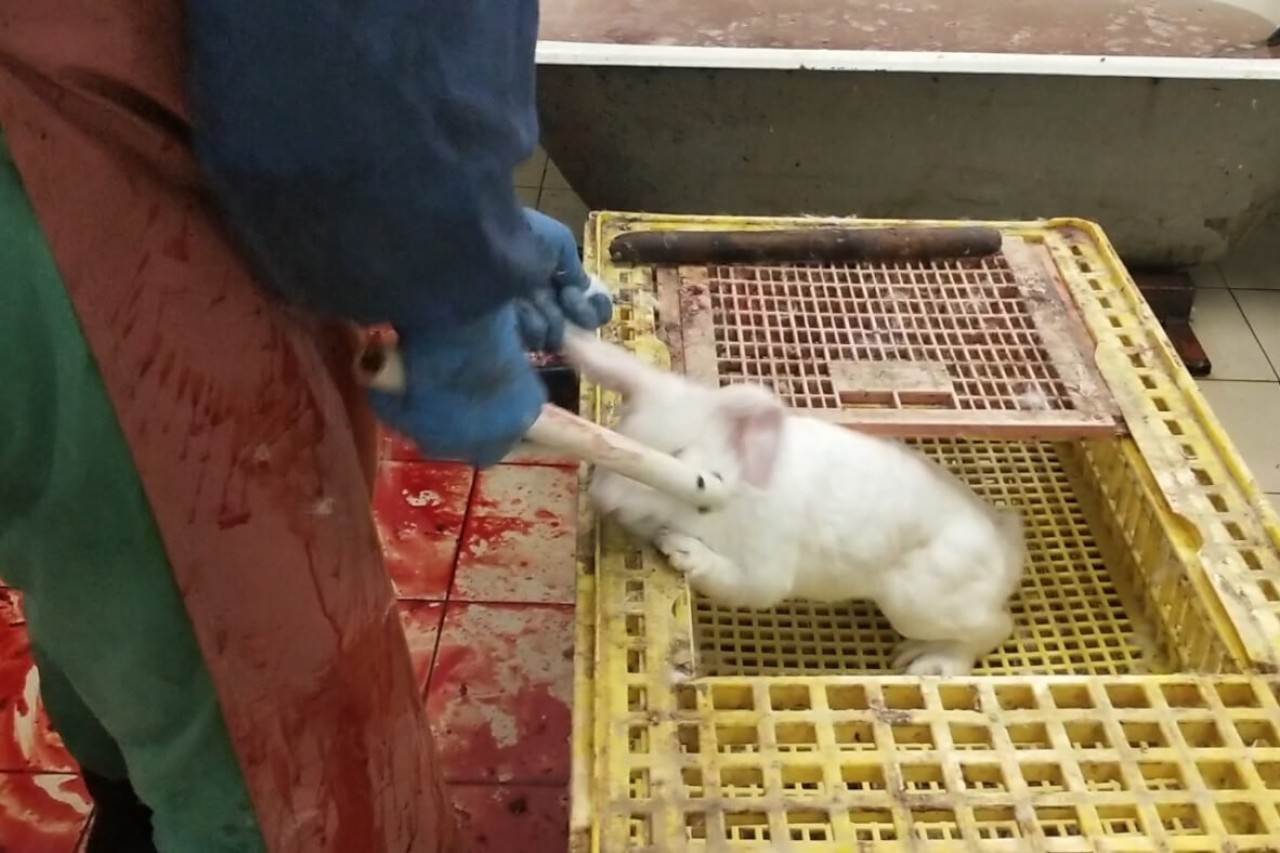
As the Christmas shopping season begins, PETA is publishing its first exposé on the Russian fur trade. Footage recorded by PETA Asia's eyewitnesses reveals acts of cruelty at five different fur production farms.
According to an employee at one facility, the farm sells to Kopenhagen Fur, which claims to be the world's largest fur auction house. Another farm investigated supplied pelts to the auction house Saga Furs.PETA and its international partner organizations have repeatedly exposed animal cruelty on fur farms around the world for decades. The latest exposé shows that nothing has changed in the fur production industry.
«Consumers should bear in mind that behind every coat, collar, and trim made of fur stands a screaming animal, a filthy metal cage, and a slaughterhouse floor covered in blood.»
Melanie Hellige, specialist adviser on animals in the clothing industry at PETA Germany.
Cruel slaughter methods documented
Some of the rabbits were still conscious and twitching as a worker decapitated them. Their blood splattered onto the floor and their heads were tossed into a basket filled with other heads. All of this happened while other rabbits watched and trembled with fear. One employee failed to correctly apply the electrodes to a chinchilla: the animal screamed, convulsed, and spasmed for over a minute before finally going still. The worker then broke its neck.
Psychological suffering in cramped cages
Minks and sables paced relentlessly back and forth in their cages — a sign of psychological distress — while a fox, with nowhere to hide, cowered in the corner of its cage in fear.
A chinchilla appeared to be blind but was nonetheless forced to breed. According to statements from an employee, animals that relieve themselves in the “wrong” corner of their cage are killed. “The animals have to be clean,” he said. “If you produce dirty fur, it drives the price down.”