Using Cameras to Combat Animal Cruelty in Northern Germany
A large number of recreational hunters gathered in the early morning of January 18, 2025, at the Forstverwaltung Graf von der Schulenburg, in the Gifhorn district in eastern Lower Saxony for a driven hunt.

Günther Graf von der Schulenburg invited around 150 recreational hunters to the joint driven hunt targeting wildlife on private forest land and charged handsomely for the privilege.
Recreational hunters paid several hundred euros for a day's hunting.
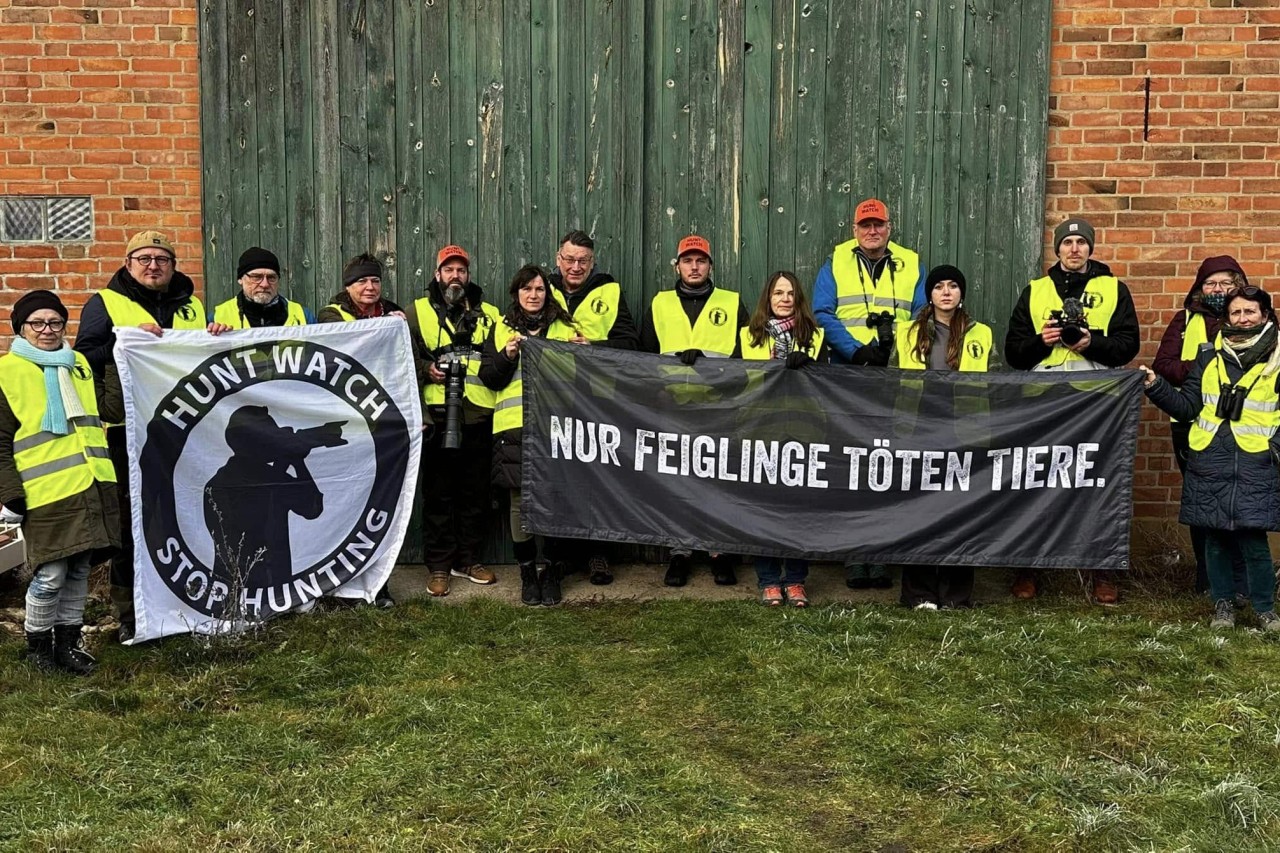
The anti-hunting activists of Hunt Watch in Lower Saxony were also on site and documented events from outside the hunting area.
Notably, according to the hunting observers present, dozens of vehicles from the Netherlands and Poland were on site.
Foreign hunting tourists apparently help with the stewardship and care of Lower Saxony's natural landscape.
The number of active recreational hunters in Gifhorn is approximately 2’042. In relation to the population, that means one in every 86 residents holds a hunting licence (Lower Saxony: one in 132; Germany: one in 214).
On the Count's website it states that red and fallow deer are hunted during the rutting season in September and October, which cannot be classified as ethical hunting practice. “The allocation of individual shots at trophy-bearing animals is a further hunting option. Whether during the roebuck season, the rut, or in winter, the solo high seat is a special experience,” the hobby hunts are advertised. More on the psychological background of recreational hunting.
Those who torture and kill animals automatically come under the scrutiny of Hunt Watch.
Animal welfare advocates file charges
Based on tip-offs, it was established that large quantities of feed — primarily maize and sugar beet — had been spread across the hunted area, which is a designated biosphere reserve and UNESCO World Heritage Site. This is illegal and was reported to the authorities. A case of criminality linked to recreational hunting.
Because according to Lower Saxon Hunting Law are the on-site documented quantities far greater than legally permitted. Tonnes instead of kilograms of feed were poured into this sensitive ecosystem to attract wildlife. Transported using heavy machinery, as there would have been no other way to handle this massive quantity of feed. The illegal wildlife baiting was detected and documented as evidence prior to the large driven hunt on the Saturday in question. The reason and stated objective of this crime against nature: the killing of as many wild animals as possible in the Biosphere Reserve.
The driven hunt was called off
The recreational hunters were distributed among the shooting stands and elevated hides in the morning, despite the dense fog.
After the attempt to keep Hunt Watch activists away from the driven hunt by alerting the police had failed miserably, the hobby hunt was suddenly called off.
This, despite the fact that the summoned police could establish neither any criminal acts on the part of the activists nor any other form of hunt disruption. The police communicated to Hunt Watch that they saw no reason to call off the hobby hunt on these grounds.
Recreational hunters seek to prevent documentation
Once again, it is evident that the recreational hunters wish to prevent at all costs the documentation and public disclosure of their acts of violence against innocent animals.
When two police patrols arrived at the scene, a Dutch recreational hunter harassed several Hunt Watch activists.
The incident commander, in consultation with the Gifhorn police station, approved Hunt Watch's hunt observation. Two police units were additionally stationed on-site to provide protection until Hunt Watch had concluded its work.
Thanks to the effective work of the police, Hunt Watch was able to correctly assess the situation at all times and continue its hunt observation.
The work of Hunt Watch is always peaceful and entirely legal. Any commission of criminal acts — including hunt disruption — is clearly rejected by Hunt Watch. Nevertheless, recreational hunters regularly attempt, with limited success, to criminalise the important work of hunt observation.
Hunt Watch has never been linked by police to any criminal activity. Several police forces have attested to Hunt Watch's consistently peaceful and lawful working methods.
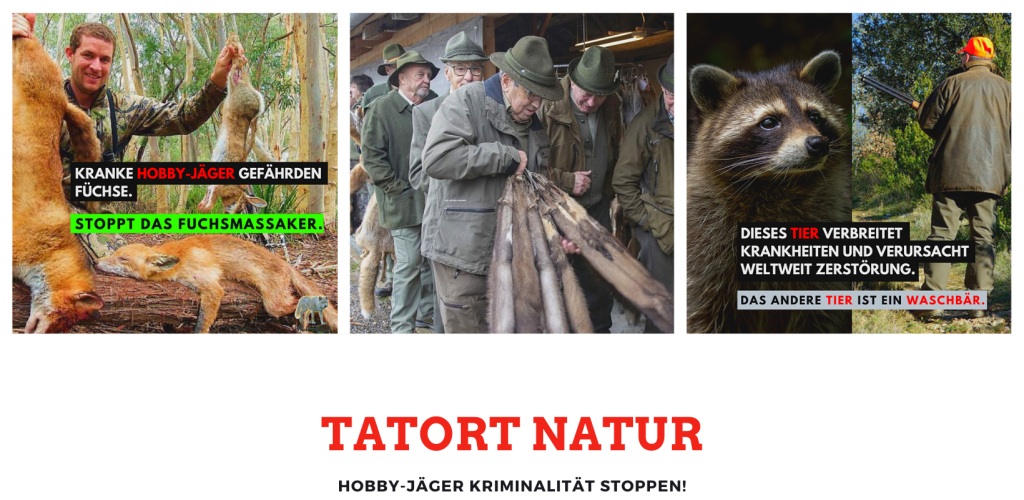
More on the subject of recreational hunting: In the dossier The Role and Criticism of Recreational Hunters we shed light on the training, power and self-image of recreational hunters. The scientific evidence is presented in the overview Studies on the Effects of Recreational Hunting.
The position of IG Wild beim Wild: IG Wild beim Wild rejects recreational hunting. Our model is the canton of Geneva, which has managed without recreational hunting since 1974: without hunting seasons, without hunting dogs, without driven hunts, without high seats, without the animal cruelty and crime that go hand in hand with hunting season elsewhere. What has worked there for over fifty years disproves every position paper by JagdSchweiz. An association that bases its policy on claims it refutes in its own documents is not a professional organisation, but a factory for misinformation.