USA: Hundreds of thousands of cases of meat allergy following tick bite
In the USA, over 110,000 cases of Alpha-Gal Syndrome following tick bites have been recorded. In Europe, too, ticks are increasingly carrying new viruses.

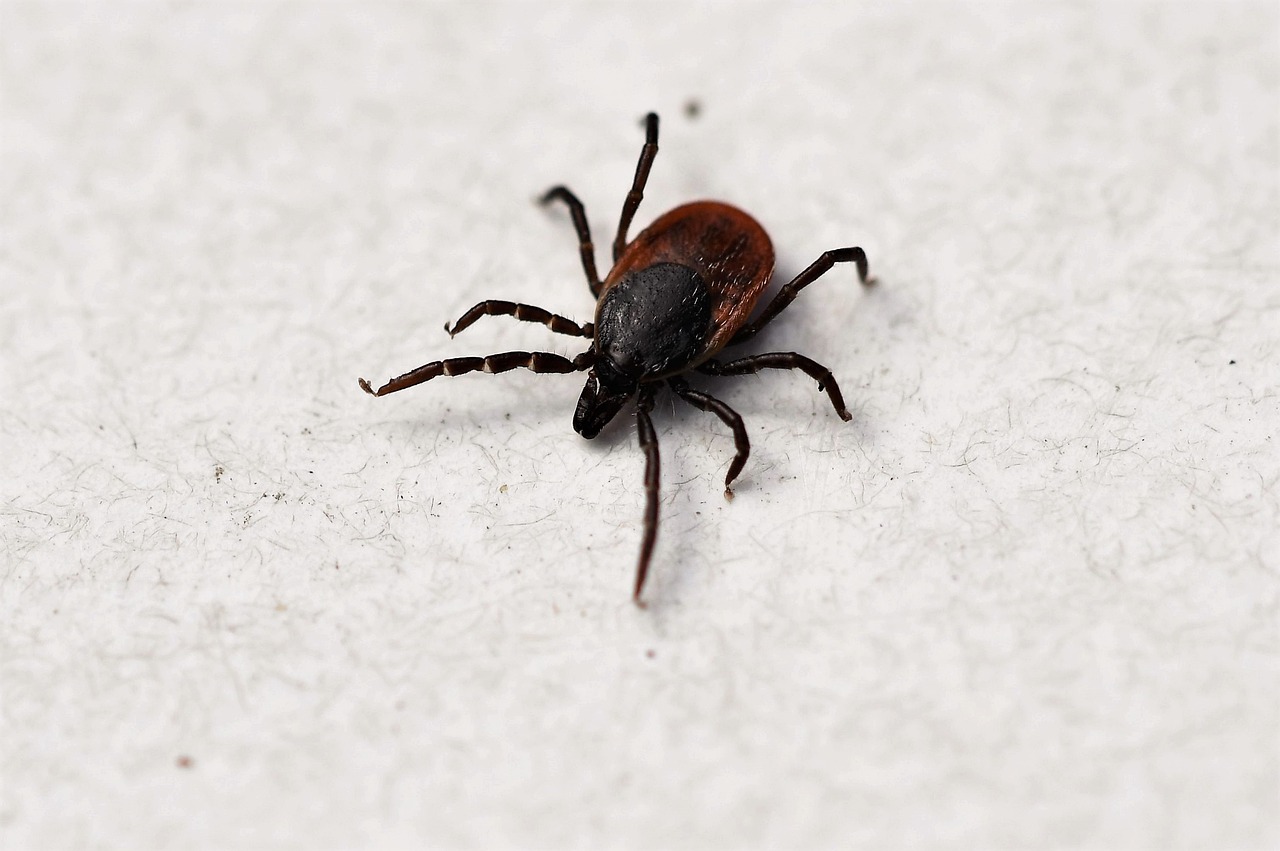
In the USA, more and more people are developing a meat allergy following the bite of a particular tick species.
Between 2010 and 2022, more than 110’000 suspected cases of the so-called Alpha-Gal Syndrome (AGS) were identified.
This was announced by the US health authority CDC. In Europe and also in Switzerland, ticks are increasingly carrying a virus first detected in China several years ago.
The US authority CDC emphasized that in the USA possibly as many as 450’000 people could be affected by Alpha-Gal Syndrome. The reason for this suspicion: the disease may be unknown to many healthcare workers and patients, which is why testing for it is frequently not carried out.
“Alpha-Gal Syndrome is an important and expanding public health concern,” said CDC scientist Ann Carpenter. Healthcare workers should be aware of it in order to properly examine patients, make diagnoses, provide care and also teach them how to prevent tick bites.
Allergic to a sugar molecule
According to the CDC, the syndrome is likely triggered mainly by a particular tick species prevalent in the USA – the so-called Lone Star tick (Amblyomma americanum). Those affected react allergically to a specific sugar molecule found in most mammals, which can be present in meat and meat products. Symptoms may include dizziness, diarrhoea or rash.
In European ticks, by contrast, the Alongshan virus (ALSV), discovered six years ago in China, is spreading. The pathogen has since been found in ticks in Finland, France, Russia and Switzerland, as reported by the Center for Travel Medicine (CRM), based in Düsseldorf.
No vaccine or detection method
In 2022, the Alongshan virus, first discovered in China in 2017, was detected for the first time in tick samples from several regions of Switzerland. It appears to be widespread and causes symptoms similar to those of the well-known tick-borne encephalitis virus (TBEV). Patients suffered from fever and headaches following such a tick bite.
Researchers at the Institute of Virology at the University of Zurich expressed surprise last year that ALSV viruses had been detected far more frequently in tick samples than TBE viruses. Although the new virus had gone unrecognized until now, it could therefore already be relevant to public health in Switzerland.
However, there is currently neither a vaccine nor a detection method for it, as is the case with the TBE virus. Researchers in Zurich are therefore developing a serological test that can detect ALSV infections in patients' blood.
Severe illnesses going beyond flu-like symptoms have not yet been associated with an ALSV infection, according to the Center for Travel Medicine. More on the topic Nutrition and Wildlife.
| You can help all animals and our planet with compassion. Choose empathy on your plate and in your glass. Go vegan. |
Unterstütze unsere Arbeit
Mit deiner Spende hilfst du, Tiere zu schützen und ihrer Stimme Gehör zu verschaffen.
Donate now→