Uri: People's Initiative Against Wolf, Bear and Lynx
In Uri, a people's initiative against wolf, bear and lynx was submitted with 3,302 signatures. The canton is to issue regulations for protection against predators. More on the wolf in Switzerland.

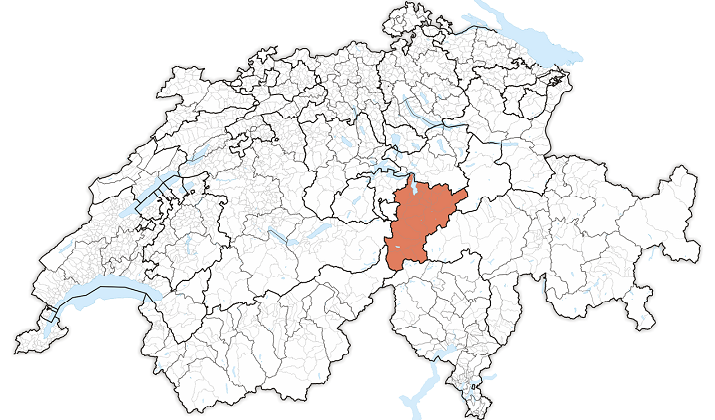
In Uri, there is widespread discontent towards wolves, bears and lynx.
An initiative demanding that the canton issue regulations for protection against predators was submitted on Wednesday with 3’302 signatures. The minimum required for the initiative to be valid is 600 valid signatures.
Raphael Bissig, managing director of the Uri Farmers' Association, confirmed an online report by the «Urner Wochenblatt» upon request. The initiative committee had hoped to collect 2’000 signatures, he said. They were very satisfied with the result.
The people's initiative demands that the canton issue regulations for protection against predators and for limiting and regulating their populations. The importation and release of predators, as well as the promotion of predator populations, should be prohibited.
The initiative was launched in March by the Farmers' Association. The initiative committee has broad support. Its members include Council of States members Josef Dittli (FDP) and Isidor Baumann (CVP), as well as National Councillor Beat Arnold (SVP) — all three of Uri's representatives in the federal chambers.
«Hesitant Government»
In the view of the Uri Farmers' Association, the cantonal government is acting too hesitantly. The consequences that predators have had on livestock farming and wildlife populations have become increasingly severe. In particular, wolf attacks have caused problems and costly additional burdens on the Uri alpine pastures. The lynx has had a major impact on its primary prey species — chamois and roe deer — and has drastically reduced their populations in many areas.
Already at the launch of the initiative in March, WWF Uri had criticized it. The approach of the farmers' association violated common sense, the Swiss spirit of solidarity, and good faith in several respects. For example, the initiative text claimed that there were imports and releases of predators. However, there were no such occurrences for either wolves or bears. The farmers' association was thus falling for a nationally orchestrated disinformation campaign by opponents of predators.
The Uri cantonal government rejects wolf-free zones and advocates for coexistence between predators and alpine farming. Anything else would amount to the extermination of the wolf. However, it wants to improve herd protection and the wolf management concept.
After 160 years without a wolf presence, a wolf was shot during a two-week hunt in 2016. This hunt for the wolf cost taxpayers 43’500 francs (Wild beim Wild reported).
In Valais, a similar initiative had been submitted in January by representatives from the CVP and CSP Oberwallis. This initiative would allow the population of predators to be regulated. The canton could decide for itself how many wolves or lynxes in the canton's forests would be tolerated for a balanced fauna. However, the proposal contradicts the Bern Convention, which protects certain wild animal species such as the wolf due to their low numbers.
Figures on herd protection
The federal government invests 43 million francs annually in sheep farming. 830’000 francs are made available by the federal government for herd protection.
1. Compensation: Assessment table for breeding sheep
- For every sheep killed by a wolf, a farmer is compensated by the federal government. The amount ranges from 200 francs for a lamb to 2’000 francs for a breeding dairy sheep.
- «For exceptionally valuable breeding rams, prices of up to CHF 3’000 may be paid in exceptional cases.»
2. Subsidies FOEN
Support contributions for a maximum of 3 livestock guardian dogs per farm operator:
- One-time start-up assistance for purchase of CHF 500/dog
- Flat rate: CHF 1’000/dog/year for maintenance costs
- Care allowance of CHF 1’000–2’000 for unherded alpine pastures
Support for fencing materials as start-up assistance in the first year:
- Night enclosures with permanent herding
- Electrification of agricultural land
Various measures:
- Feed compensation of max. CHF 3,500 for alpine pastures with fewer than 30 standard livestock units, in principle in the first year of damage in the event of destocking
- Support contribution of CHF 500 per documented wolf attack on alpine pastures with all appropriate prevention measures in place
- Reimbursement of transport costs for animal carcasses in the event of more than 10 animals killed in a wolf attack
3. Federal Office for Agriculture (FOAG) subsidies
The alpine farming contribution is calculated based on the established standard stocking rate and amounts to:
a.) per standard livestock unit for sheep, excluding dairy sheep:
- with permanent herding: 330 francs
- with rotational grazing: 250 francs
- with other pastures: 120 francs
b.) per RLFU for milked cows, dairy sheep, and dairy goats with an alpine grazing period of 56–100 days: 330 francs
c.) per standard livestock unit for other RLFUs: 330 francs
600,000 francs in subsidies for sheep wool (2009)
Abbreviations:
Standard livestock unit: One standard livestock unit corresponds to the alpine grazing of one RLFU for 100 days.
RLFU: Roughage-consuming farm animals.
| You can help all animals and our planet with compassion. Choose empathy on your plate and in your glass. Go vegan. |