USA: Trump lifts import ban on elephant trophies
On November 17, the U.S. Fish and Wildlife Service lifted the import ban on elephant trophies from Zimbabwe into the USA, which had been imposed under Obama. It is claimed that hunting elephants would contribute to the protection of the endangered animals. This means that American big game hunters are now permitted to import trophies from elephants shot there, including retroactively. The

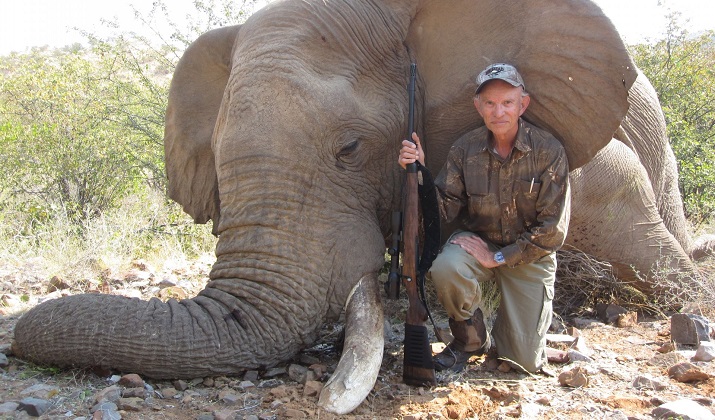
The U.S. Fish and Wildlife Service lifted the import ban on elephant trophies from Zimbabwe into the USA on November 17, a ban that had been imposed under Obama.
It is claimed that recreational hunting of elephants would contribute to the protection of the endangered animals. This means that American big game hobby hunters are now permitted to import trophies from elephants shot there, including retroactively. The U.S. wildlife conservation authority is thus reversing its own 2014 decision, when it imposed import bans on hunting trophies from elephants from Zimbabwe and Tanzania due to serious concerns. A possible lifting of the import ban from Tanzania is currently also under review.
«We are shocked by the U.S. government's decision to once again allow the import of elephant trophies. Africa's elephants are endangered, populations have been decimated massively in recent years, and Zimbabwe's government in particular is notorious for selling off the country's wildlife,» says Daniela Freyer of Pro Wildlife.
Zimbabwe: 500 elephant culls per year
Zimbabwe approves trophy hobby hunters to shoot 500 elephants per year – by far the highest hunting quota on the entire continent of Africa. The population of savanna elephants in Africa has fallen by one third in just eight years. In Zimbabwe, it has declined by around six percent overall, with catastrophic drops of up to 74 percent recorded in certain areas. “Zimbabwe is one of the most corrupt countries in the world, and it has been known for years that political elites and corrupt officials enrich themselves through hunting concessions as well as illegal wildlife trade. It is utterly absurd for the US government to now claim that trophy hunting in Zimbabwe of all places serves the protection of endangered species,” said Daniela Freyer of the wildlife protection organization Pro Wildlife.Poaching and population declines are affecting precisely those areas where trophy hunting is permitted.
“The import permit is the latest politically motivated decision in the Trump administration’s campaign against conservation. It is tragic that the protection of endangered species is now also being sacrificed to Trump’s clientele politics,” said Freyer. Both US Interior Secretary Ryan Zinke, who oversees the US Fish and Wildlife Service, and Donald Trump’s sons are passionate hobby hunters – the photo of Donald Trump Jr. posing with a severed elephant tail made headlines two years ago. It is also telling that the news of the lifting of the import ban was circulated by the hunting association Safari Club International before the decision was officially announced. The US big-game hobby hunters had been unsuccessfully suing against the import ban since 2014, together with the gun organization National Rifle Association. The Trump administration has also put further US initiatives to protect endangered species from the Obama era on ice. Instead, Interior Secretary Zinke announced just days ago a new committee intended to promote hobby hunting as a contribution to species conservation.
Poaching and illegal wildlife trafficking are rampant
The list of illegal and questionable wildlife dealings under Mugabe's regime in Zimbabwe is long and could go on indefinitely: Two years ago, the unauthorized killing of the lion Cecil in Zimbabwe by an American trophy hobby hunter caused worldwide outrage. Years before that, scientists reported how high hunting quotas were decimating the country's lion populations. Currently, the long-serving head of Zimbabwe's wildlife protection authority is on trial, accused of embezzling poached, confiscated rhino horn. In 2016, it emerged that employees of various national park authorities in Zimbabwe had stolen ivory from poached elephants out of government stockpiles and sold it using forged documents. There have been no convictions to date. For years, elephants in Zimbabwe have been poisoned with cyanide in order to sell their tusks to ivory smuggling rings. The Zimbabwean government has also faced criticism for years for having elephants, lions, and other endangered species captured in national parks to be sold abroad in exchange for foreign currency.