The Wild Boar Paradox Finally Solved
Even decades after the Chernobyl nuclear disaster, wild boar meat remains surprisingly highly radioactive. The solution to the mystery: an important alternative cause had been overlooked.

Late Effects of the Nuclear Weapons Tests of the 1960s
The Chernobyl nuclear disaster of 1986 also had major effects on forest ecosystems in Central Europe.
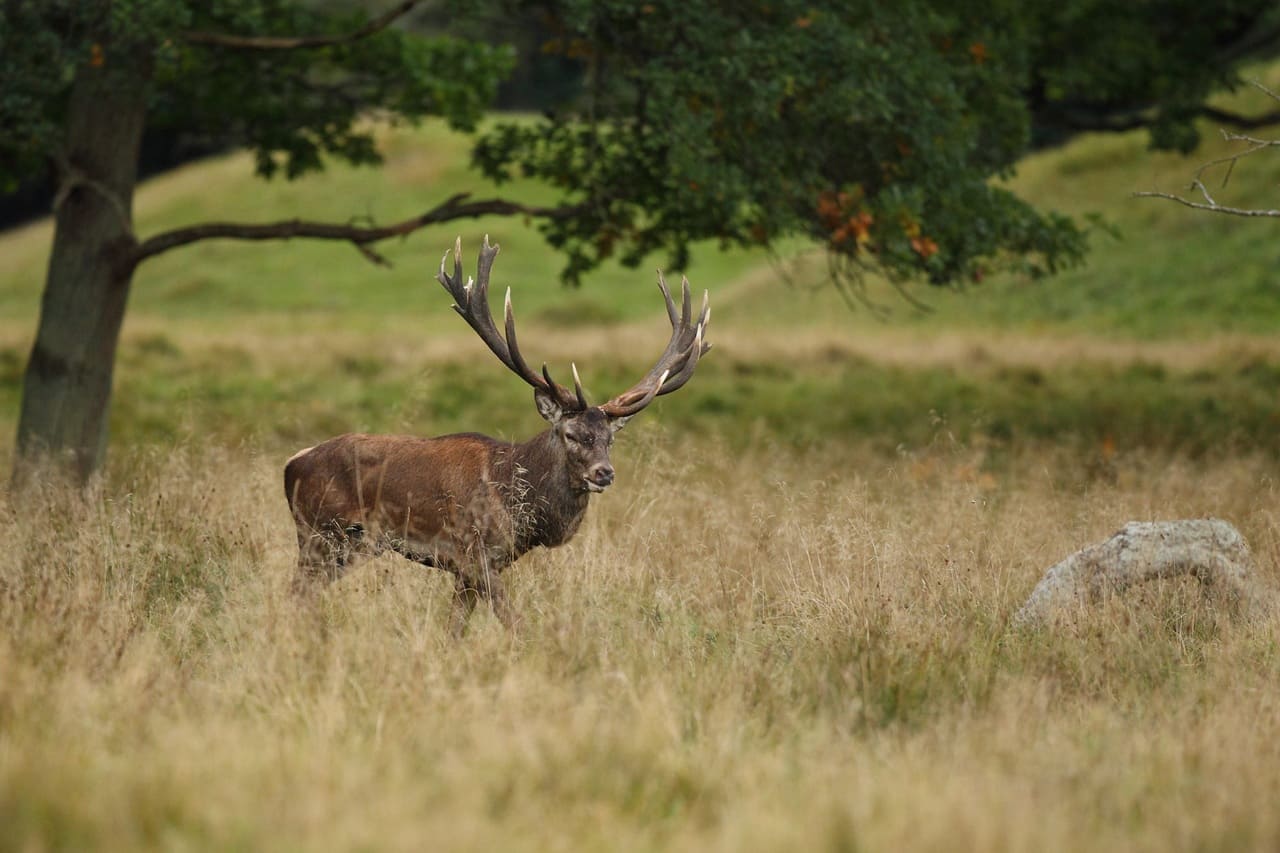
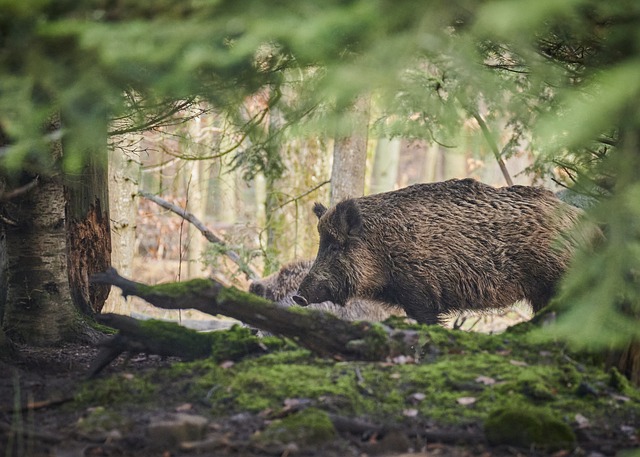
While the contamination levels in deer and roe deer declined over time as expected, the values in the meat of wild boar changed surprisingly slowly. Significant exceedances of limit values are still being measured. Until now, this “wild boar paradox” had remained unsolved; through extensive measurements by TU Wien and Leibniz University Hannover, an explanation has now been found: it is a late effect of the nuclear weapons tests of the 1960s.
More Radiation Than Physics Allows?
“The decisive factor for the radioactivity of the samples is caesium-137, with a half-life of around 30 years,” says Prof. Georg Steinhauser of TU Wien. In wild boar meat, the radiation exposure remained almost constant, declining significantly more slowly than would be expected from the natural radioactive decay of caesium alone.
To this day, wild boar meat samples are being measured across Europe that are unsuitable for consumption because their radiation levels significantly exceed the permitted limit values.
In Search of the Caesium Fingerprint
Prof. Georg Steinhauser and his team got to the bottom of this mystery: through new, more precise measurements, the aim was to determine not only the quantity but also the origin of the radioactivity.
The findings revealed: While approximately 90% of caesium-137 in Central Europe originates from Chernobyl, the proportion found in wild boar samples is significantly lower. Instead, a large share of the caesium in wild boar meat is attributable to nuclear weapons testing, in some samples as much as 68%.
The deer truffle is to blame
The cause lies in the highly specific dietary preferences of wild boars: they are particularly fond of digging deer truffles from the ground, and in these underground-growing fungi, radioactive caesium accumulates with a considerable time delay. “The caesium migrates very slowly downward through the soil, sometimes only about one millimetre per year,” says Georg Steinhauser.
Accordingly, there is little expectation that the contamination levels in wild boar meat will decline significantly in the coming years. “Our work shows how complex the relationships in natural ecosystems can be,” says Georg Steinhauser, “but also that answers to such puzzles can be found if one measures with sufficient precision.”
Original publication: F. Stäger et al., Disproportionately High Contributions of 60 Year Old Weapons-137Cs Explain the Persistence of Radioactive Contamination in Bavarian Wild Boars, Environ. Sci. Technol (2023).