Trophy Hunting: Black Rhinos in Danger
American recreational hunters are pushing to import trophies from two critically endangered black rhinos killed in Namibia.

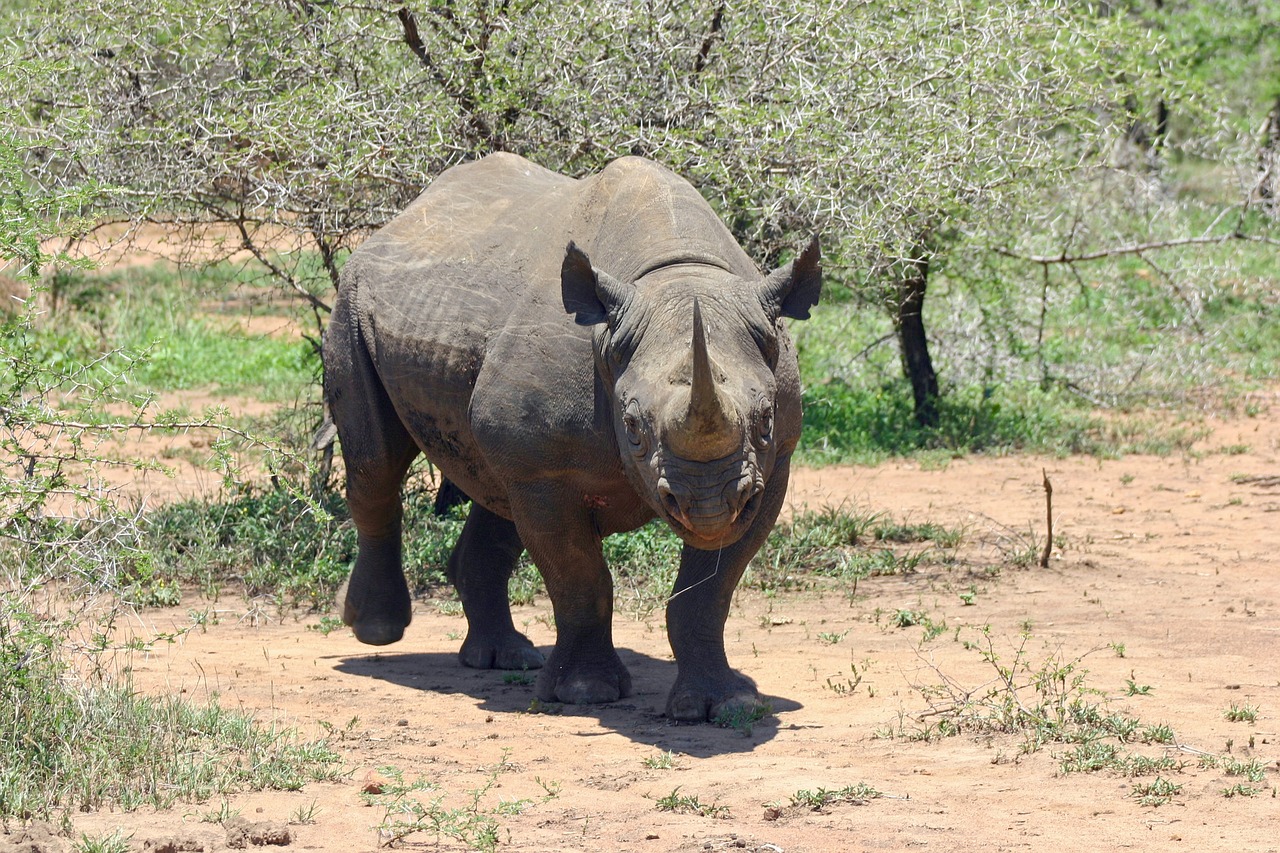
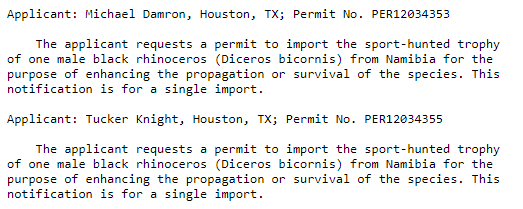
The U.S. Fish and Wildlife Service (USFWS) has informed the public about two applications from recreational hunters from Texas who wish to import hunting trophies from black rhinos.
The rhinos – Lippie and Willem, aged 28 and 31 – were killed in Namibia.
Black rhinos are classified as critically endangered by the International Union for Conservation of Nature (IUCN). Across Africa, only an estimated 6’400 individuals remain. Although the population is growing, black rhinos remain severely threatened due to poaching for their horns, habitat loss, and hunting – including “pseudo-hunting” to obtain horns and trade in them, which would otherwise be illegal.
“It is tragic that trophy hunters pay enormous sums for the luxury of killing such critically endangered animals, when the focus should be on recovering the species,” said Tanya Sanerib, international legal director at the Center for Biological Diversity. “This pay-to-slay system maintains rarity, which suits wealthy recreational hunters seeking exotic prey, but does nothing to help critically endangered animals like Lippie and Willem.”
Both rhinos were killed in 2022 – one at a private game reserve, Erindi, and the other in Mangetti National Park. According to the application documents, the recreational hunters each paid approximately a quarter of a million US dollars in hunting fees.
The US permit applications and accompanying documents were disclosed on 24 September. This complies with a provision of the Endangered Species Act that requires public notice and the opportunity to comment on import applications for endangered species such as black rhinos.
Black rhinoceroses were listed as endangered in 1980 under the Act and are subject to a trade ban imposed by the Convention on International Trade in Endangered Species (CITES). Permits are required under both the Act and the CITES agreement for the importation of a black rhinoceros trophy.
To issue the permits, the USFWS must not only determine that trophy hunting is not detrimental to the survival of the species, but also that it “promotes” or enhances its survival. The public has 30 days to submit evidence that such findings should not be made. The last import permit for trophy hunting of black rhinoceroses was issued in 2019.
The United States, along with the EU, is one of the world’s largest importers of hunting trophies. Between 2014 and 2018, over 650’000 wildlife trophies were imported into the United States, accounting for nearly half of all wildlife trophies traded globally during that period. These imports frequently involve species listed under CITES, such as lions, elephants, leopards, and rhinoceroses.
“Given the biodiversity crisis that is upending life as we know it, it is remarkable that authorities are still spending their limited resources on approving the killing rather than focusing on conservation,” said Sanerib. “I wish these applications were about creative ways to combat rhino poaching and other threats, rather than about whether trading in parts of critically endangered animals taken for the thrill should be permitted.”
“When it comes to saving endangered species, we are capable of far better solutions than hunting plaques. It is extremely sad and frustrating that funding has to be ripped from the lives of such iconic species,” said Mike Veale, CEO and founder of Global Conservation Force.
It is heartbreaking that people are still willing to pay thousands of dollars to kill magnificent, endangered species, when our primary focus should be on their protection. At a time when we are confronted with an unprecedented loss of biodiversity, the notion of spending vast sums to kill these animals for sport is more than tragic.
Instead of glorifying their death, we should come together to preserve these irreplaceable creatures for future generations and ensure that they thrive in the wild, where they belong.
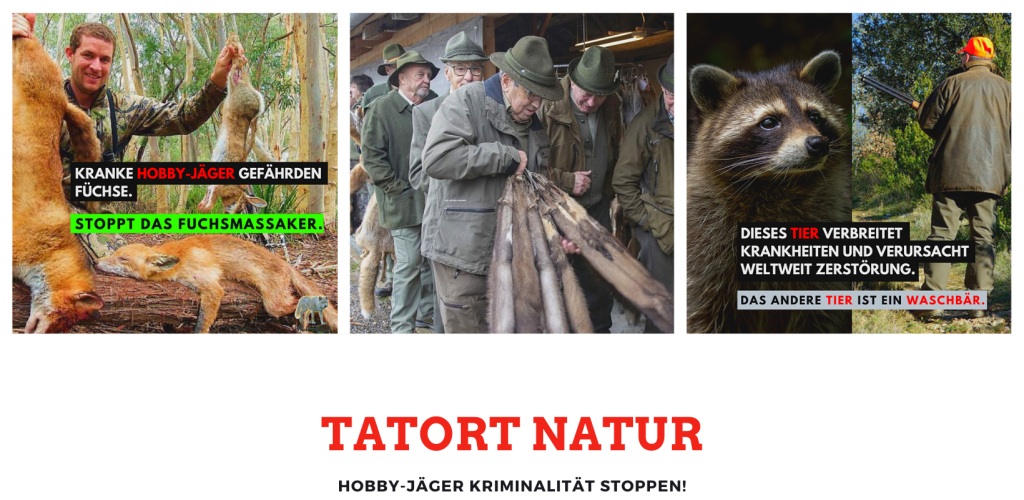
More on the subject of recreational hunting: In our dossiers on the criticism of recreational hunting gather fact-checks, analyses and background reports. The scientific evidence is presented in the overview Studies on the Effects of Recreational Hunting.
The position of IG Wild beim Wild: IG Wild beim Wild rejects recreational hunting. Our model is the canton of Geneva, which has managed without recreational hunting since 1974: without hunting seasons, without hunting dogs, without driven hunts, without high seats, without the animal cruelty and crime that go hand in hand with hunting season elsewhere. What has worked there for over fifty years disproves every position paper by JagdSchweiz. An association that bases its policy on claims it refutes in its own documents is not a professional organisation, but a factory for misinformation.