The Protective Power of Animals
Living with animals likely has profound effects on our immune system – it may reduce the risk of allergies, eczema, and even autoimmune diseases.

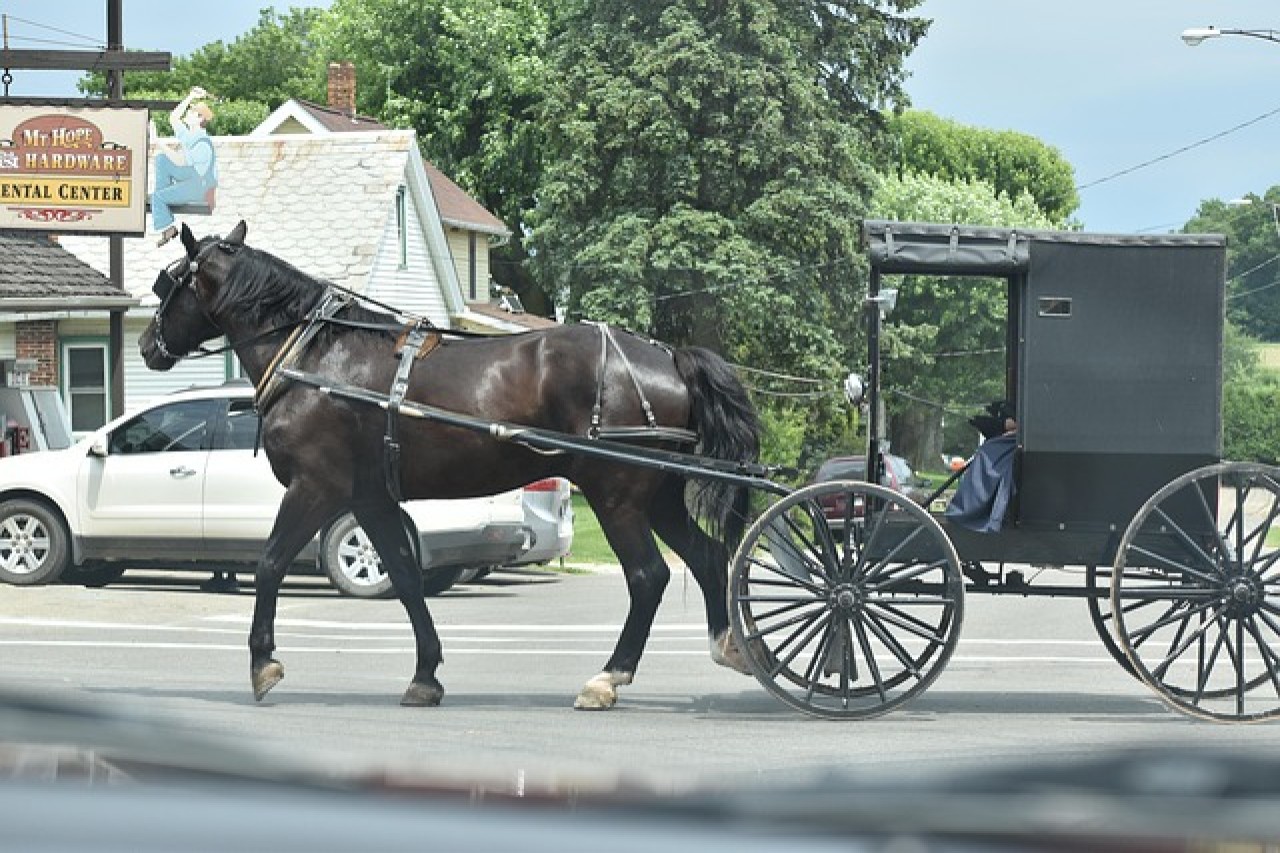
Since their emigration from Central Europe to North America in the 18th century, the Amish have been known for their unique way of life.
Even today, they continue to follow the same traditions of dairy farming and horse-drawn transport that their ancestors have practised for centuries.
The Amish have fired the imagination of Hollywood screenwriters, documentary filmmakers, and sociologists for decades. Over the past 10 years, however, their way of life has also attracted the interest of the medical world, as it appears to defy a particularly alarming modern trend. While the incidence of immune-related conditions that begin in childhood – such as asthma, eczema, and allergies – has risen sharply since the 1960s, this is not the case among the Amish.
The reason for this offers revealing insights into how our immune system functions – and the profound influence that the animals in our lives have upon it.
A Diverse Community
To understand why the Amish exhibit lower rates of certain immune disorders, a group of scientists spent time in 2012 with an Amish community in the state of Indiana and with another farming community, the Hutterites, in South Dakota. In both cases, they took blood samples from 30 children and examined their immune systems in detail.
There are many similarities between the two groups. Like the Amish, the Hutterites live from agriculture, have European ancestry, are exposed to minimal air pollution, and eat a diet consisting predominantly of unprocessed foods. However, their rates of asthma and allergies in children are four to six times higher than among the Amish.
One difference between the two communities is that the Hutterites have fully adopted industrialized agricultural technologies, whereas the Amish have not. This means that from an early age they live in close contact with animals and the numerous microbes these animals carry.
"If you look at aerial photographs of Amish settlements and compare them with Hutterite communities, you can see that the Amish live on the farm with the animals, while the Hutterites live in small hamlets and the farm may be several kilometres away," says Fergus Shanahan, emeritus professor of medicine at University College Cork in Ireland.
In 2016, a team of scientists from the United States and Germany published a now landmark study in which they concluded that Amish children face a lower risk of allergies due to the way their environment shapes their immune system. In particular, the researchers found that the Amish children in their study had better-calibrated, so-called regulatory T-cells than children from a Hutterite background. These cells help to suppress unusual immune responses.
When the researchers examined dust samples from the homes of Amish and Hutterite children for signs of bacteria, they found clear evidence that Amish children were exposed to more microbes, likely from the animals with which they lived.
Around the world, other scientists have obtained similar results. A group of immunologists reported that children who grow up on Alpine farms, where cows typically sleep in close proximity to their owners, appear to be protected against asthma, hay fever and eczema. Other research has found that a child's risk of allergies at the age of seven to nine years appears to decrease proportionally with the number of pets present in the household during the first years of life, a phenomenon referred to as the "mini-farm effect".
"It's not a magic bullet, and every time I give a talk about it, someone says: 'Well, I grew up on a farm and I have allergies,' but we know that if you grow up in physical contact with livestock, you have about a 50% lower risk of developing asthma or allergies," says Jack Gilbert, professor at the University of California San Diego, who was involved in the Amish study and also co-founded the American Gut Project — a citizen science project that examines how our lifestyle affects our microbiome. "Even if you just grow up with a dog in the house, the risk drops by 13 to 14%," he says.
Protective pets
Since the publication of the Amish study, the potentially protective effect of animal contact during childhood has been a subject of great fascination. The New York Times even published an article asking whether pets were the new "probiotic."
So what is going on? Given the tactile nature of humans and our fondness for stroking and cuddling our pets, it is perhaps not surprising that microbes from their fur and paws end up on our skin — at least temporarily.
This has led to speculation that the "microbiome" could be colonised by bacteria from our pets. This refers to the accumulation of vast colonies of microbes living on our skin, in our mouths, and above all in the gut, where a significant concentration of our body's immune cells resides. According to Nasia Safdar, professor of infectious diseases at the University of Wisconsin in the United States, this concept has attracted the interest of the pet food industry. The idea would be to develop products that could be marketed as beneficial for the growth of useful bacteria in cats and dogs and then transferred to their owners, she tells the BBC.
"This approach is attractive to funders because most of us are interested in human health," says Safdar. "What role can animals play in that?" she asks.
Safdar is considering conducting a study in which stool samples are collected from pets and their human owners when they come in for repeated veterinary appointments, to see whether their gut flora becomes microbially aligned over time. She also wants to find out whether she can identify similar bacterial species that might carry health benefits.
Others, however, consider the notion that microbes from dogs, cats, or other non-human animals are incorporated into our microbiome to be doubtful. "There is no evidence for this at all," says Gilbert. "We do not find any long-term accumulation of dog bacteria on our skin, in our mouths, or in our gut. They do not really stay there."
Safdar nevertheless considers the study to be highly worthwhile and finds it plausible that gut microbes can be transferred from pets to their owners and vice versa. "It is worth investigating, and it has not been studied closely until now," she says.
Gilbert believes that pets play a different but equally important role. His theory is that our immune system evolved, due to the domestication of various animal species by our ancestors, to be stimulated by the microbes they transmitted. These microbes do not remain permanently in our bodies, but our immune cells recognize the familiar signals as they travel through our body, allowing the immune system to continue developing properly.
"Over many thousands of years, the human immune system has become accustomed to seeing bacteria from dogs, horses, and cows," says Gilbert. "And when you see these things, it triggers a beneficial development of the immune system. It knows what to do," he says.
Studies have also shown that people who live with a pet end up having gut microbiomes that are more similar to one another, and Gilbert suspects that the animal likely functions as a vehicle for transferring human microbes between its owners. At the same time, regular contact with the pet's microbes also stimulates the immune system to remain more active and to better control bacterial populations in one's own gut and skin microbiome, thereby keeping pathogens at bay and encouraging the growth of beneficial bacteria.
Ancient Microbes
All of this is good news for animal lovers, as research continues to suggest that living with pets throughout our lives can be beneficial for our immune system.
After reading the study on the Amish and Hutterites, Shanahan was inspired to conduct his own research on Irish Travellers, a marginalized population that typically lives in close quarters with multiple animals — from dogs and cats to ferrets and horses.
Shanahan sequenced their gut microbiomes and compared them with those of Irish people living a more modern lifestyle today, as well as with microbiomes from indigenous populations in Fiji, Madagascar, Mongolia, Peru, and Tanzania, who still maintain a way of life similar to that of our hunter-gatherer ancestors. He found that the microbiome of Irish Travellers more closely resembled that of the indigenous groups. He noted that their microbiome also showed similarities to that of people from the pre-industrial world, which other scientific groups have been able to study by collecting ancient fecal samples preserved in caves.
“The Irish Travellers have preserved an ancient microbiome,” says Shanahan. “It resembles much more what you see in tribes in Tanzania who still live as hunter-gatherers, or in Mongolian horsemen living in yurts, very close to their animals.”
Shanahan believes this could explain the low rate of autoimmune diseases in the Irish Traveller population: conditions such as inflammatory bowel disease, Crohn’s disease, ulcerative colitis, multiple sclerosis, and other diseases that, like asthma and allergies, have become increasingly common in recent decades.
“That doesn’t mean they are healthy,” says Shanahan. “Irish Travellers die much earlier than the settled population. But they die from alcoholism, suicide, and accidents, caused by poverty and marginalization and the loss of their culture. However, if you ask an Irish rheumatologist whether they have ever seen a Traveller with systemic lupus [an autoimmune disease], they will tell you they have never seen a case.»
Researchers are now investigating whether reintroducing animals into our lives can benefit our health in various ways across the lifespan. Researchers at the University of Arizona in the USA have examined whether placing unwanted dogs with older adults can help improve their physical and mental health by strengthening their immune systems. And the findings of an Italian research group that established an educational farm where children from pet-free households can regularly stroke horses under supervision suggest that the children's gut microbiomes have begun producing more beneficial metabolites.
Gilbert considers it plausible that this could be a means of improving children's immunity. “When you are exposed to more species of bacteria, the immune system is stimulated in more diverse ways, which can then improve its ability to combat the microbes on the skin and in the gut,” he says. “But you are not colonised by animal bacteria — that does not happen.”
Researchers point out that keeping pets throughout one's life can also promote more microbial interactions with the immune system in other ways. Having a dog, for instance, makes one more likely to go for regular walks, notes Liam O’Mahoney, Professor of Immunology at APC Microbiome Ireland, a microbiome research centre at University College Cork.
“If you have a pet, you are out in nature and walking in the park,” says O’Mahoney. “This also brings you into contact with microbes from the park, the soil, and everywhere else, all of which can be beneficial.”
More on the subject of recreational hunting: The scientific evidence is presented in the overview Studies on the Effects of Recreational Hunting.
The position of IG Wild beim Wild: IG Wild beim Wild rejects recreational hunting. Our model is the canton of Geneva, which has managed without recreational hunting since 1974: without hunting seasons, without hunting dogs, without driven hunts, without high seats, without the animal cruelty and crime that go hand in hand with hunting season elsewhere. What has worked there for over fifty years disproves every position paper by JagdSchweiz. An association that bases its policy on claims it refutes in its own documents is not a professional organisation, but a factory for misinformation.