The brutal trade in cat meat in Vietnam
In Vietnam alone, one million cats are killed for the meat trade every year. VIER PFOTEN exposes the scale of this hidden trade.


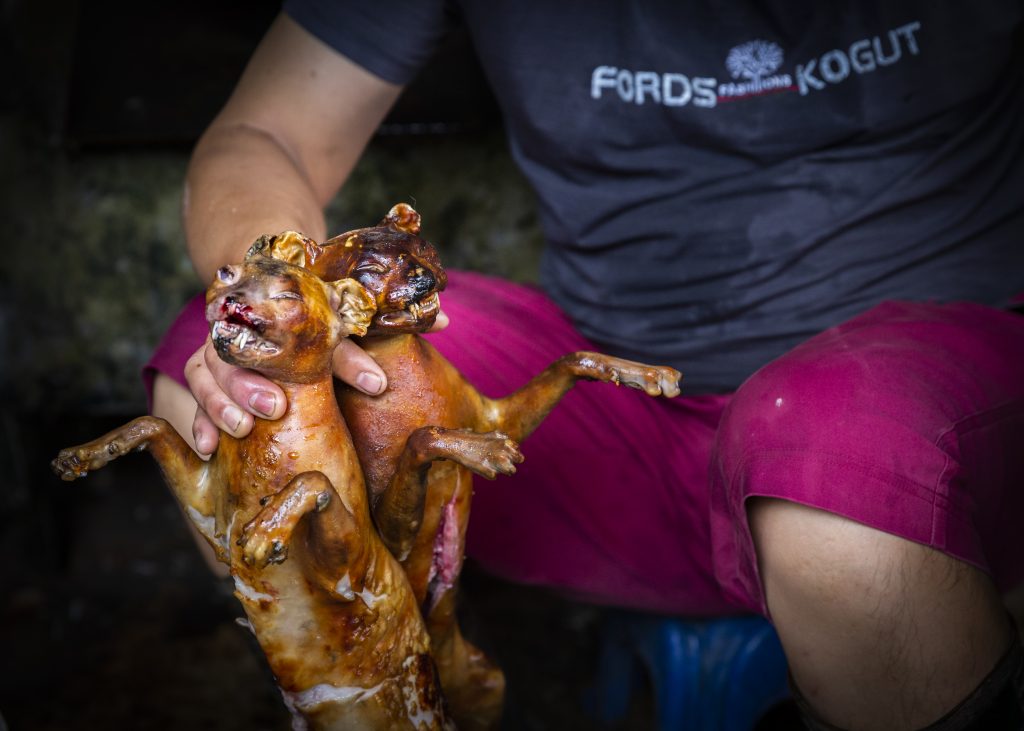
While the trade and consumption of dog meat in Asia is being discussed publicly with increasing frequency, the equally brutal business of cat meat is fading into the background. New research by the global animal welfare organisations VIER PFOTEN and Change For Animals Foundation now reveals the true extent of this hidden trade: in Vietnam alone, an estimated one million cats — including strays and pets — are captured every year, transported across the country for days on end, and slaughtered in cruel conditions. Known as “Little Tigers”, they appear on menus primarily in the north of Vietnam.
At the same time, locals are increasingly keeping cats as pets, leading to sometimes deadly confrontations with cat thieves.Outbreaks of rabies and zoonotic diseases make the trade an additional threat to public health.VIER PFOTEN and Change For Animals Foundation are therefore calling on the Vietnamese government to reinstate previously applicable laws that expressly prohibited the trade in cat meat.
The brutal trade in cat meat in Vietnam 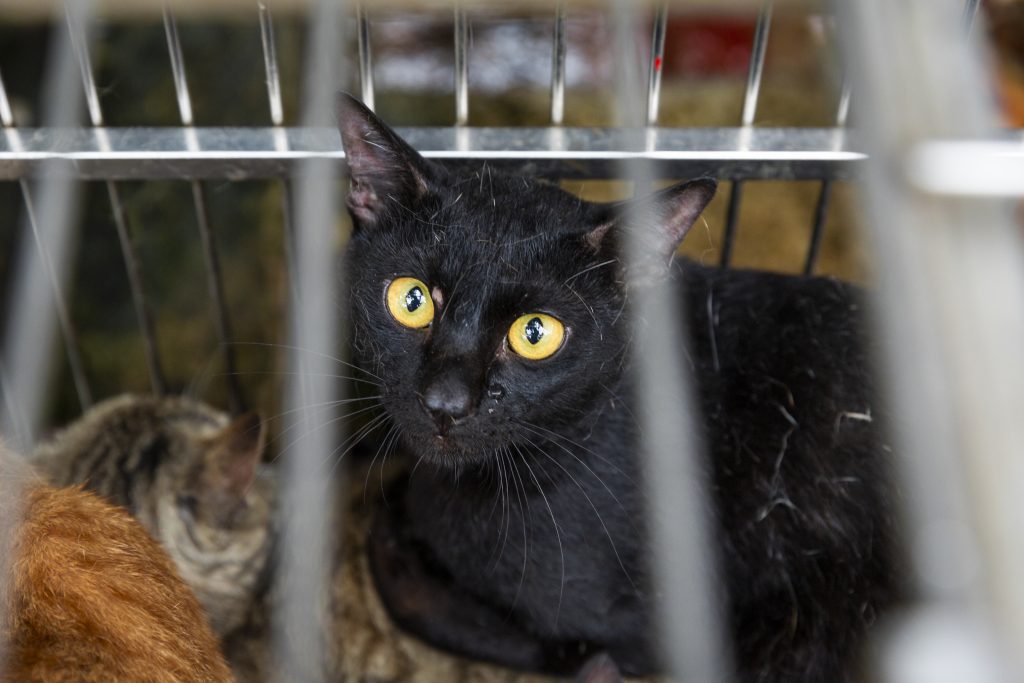
The brutal trade in cat meat in Vietnam 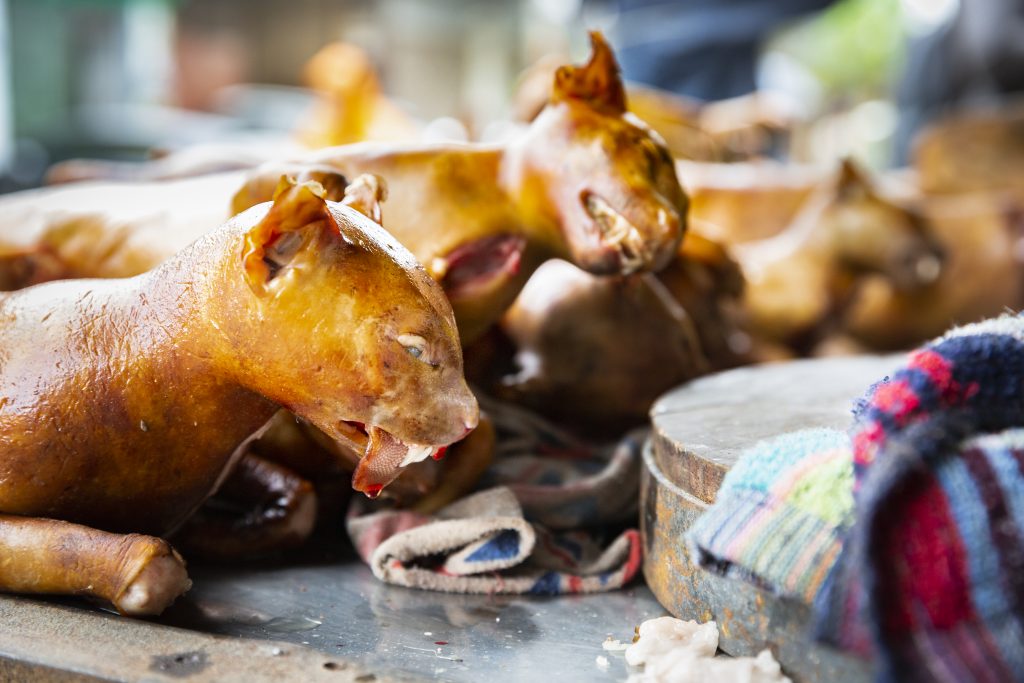
The brutal trade in cat meat in Vietnam 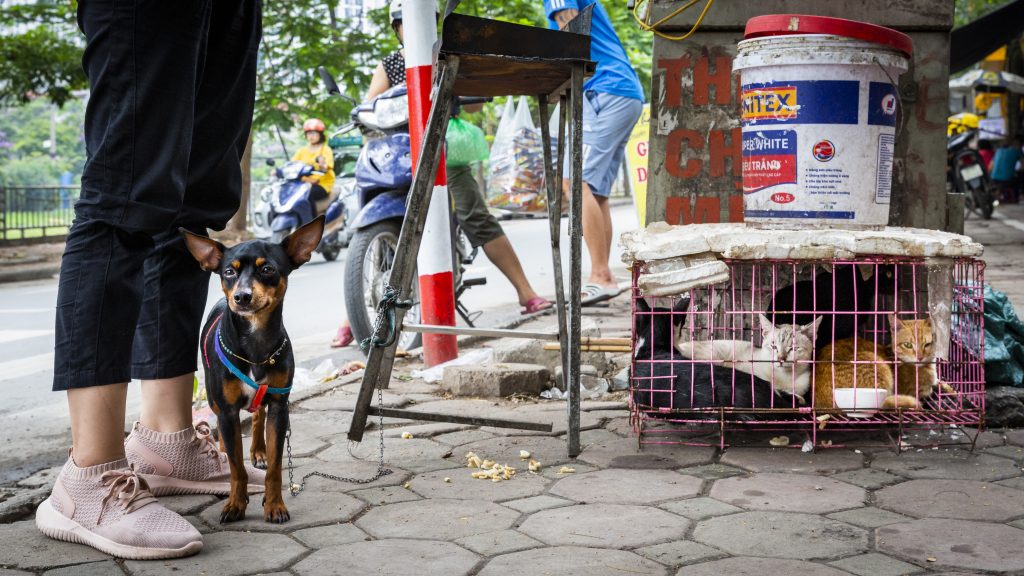
The brutal trade in cat meat in Vietnam 
The brutal trade in cat meat in Vietnam
Unlike the local dog meat trade, the hunting, slaughtering and consumption of cats in Vietnamexplicitly banned until January 2020. However, the law was abolished and cat meat is more in demand than ever – particularly in the north of the country. VIER PFOTEN and Change For Animals Foundation identified Hanoi as well as the Thai Binh Province, with their numerous restaurants and slaughterhouses, as Vietnam's cat meat hotspots. To meet growing demand, free-roaming strays and domestic cats are captured and sold alive to wholesalers or directly to restaurants. According to the research, there are no farms in Vietnam where cats are specifically bred for the meat trade.
«At the wholesalers, we discovered numerous cats wearing collars – a clear indication that they had been pets. In the course of our investigations, we also met many pet owners desperately searching for their stolen cats. The authorities mostly turn a blind eye. They are often themselves involved in the cat meat trade, profit from bribes, or are simply consumers.»
Katherine Polak, veterinarian and head of VIER PFOTEN stray animal care in Southeast Asia.
Theft, transport, slaughter: animal cruelty at every stage
Some restaurants source the animals directly from cat catchers and slaughter them on-site themselves, but most work together with wholesalers and slaughterhouses. According to VIER PFOTEN and Change For Animals Foundation, the coastal cities of Da Nang and Hoi An in central Vietnam – popular with domestic and international tourists – are considered extremely important hubs for the procurement and delivery of cats.
«At distribution centers, wholesalers keep the stolen cats crammed into small cages for days until they have collected enough animals to cover the cost of transport. The cats are transported hundreds of kilometres, without water, food, or adequate ventilation, to slaughterhouses scattered across Vietnam. Some wholesalers even use the luggage compartments of regular passenger buses for this purpose.»
Lola Webber, co-founder of Change For Animals Foundation.
In slaughterhouses, cats are typically drowned — provided they have not already died from exhaustion, heatstroke, or injuries sustained during brutal capture. The two animal welfare organizations have also documented that cats are sometimes beaten to death with a hammer, boiled alive, or killed by electric shocks. The animals are then skinned, and their hides are burned. Only after that are the cats gutted and, if they are to be transported further, frozen.
Black cats as premium cat meat
The cat meat trade is a profitable business. A live cat sells for around USD 6.50 (EUR 5.70) per kilogram, while a kilogram of its meat fetches USD 8.50 (EUR 7.50). Restaurants offer dishes prepared with cat meat for approximately USD 6.50 (EUR 5.70). According to the latest research by VIER PFOTEN and Change For Animals Foundation, black cats are worth even more. Traders sell them live for USD 8.50 (EUR 7.50) per kilogram, and their raw meat can fetch up to USD 21.50 (EUR 18.90) per kilogram. Younger generations regard cat meat as an exotic delicacy. Among older people, consumption is usually tied to customs, superstition, and the lunar calendar. Some locals are convinced that eating cat meat wards off bad luck. Others eat the meat — particularly that of black cats — because they believe it has healing properties, although there is no scientific evidence to support this.
Cat meat: A threat to public safety and health
In recent years, cats have become a popular pet in Vietnam — despite the growing demand for their meat. Stray cats alone can no longer meet the demand. As a result, cat catchers do not hesitate to steal pets. Violent confrontations between cat thieves and pet owners have repeatedly occurred, some of which have ended fatally in the past. According to FOUR PAWS and the Change For Animals Foundation, the cat meat trade is also linked to outbreaks of rabies and the emergence of zoonotic diseases, similar to COVID-19. With no controls whatsoever, the animals — whether healthy or sick — are transported across the entire country. The unhygienic conditions in distribution centers and slaughterhouses, which often house a wide variety of animal species, facilitate the emergence of dangerous viruses.
FOUR PAWS's fight against the dog and cat meat trade
FOUR PAWS works in Vietnam with the Change For Animals Foundation as well as with local animal welfare organisations Paws for Compassion in Da Nang and Vietnam Cat Welfare in Hoi An. To sustainably end the brutal dog and cat meat trade in Southeast Asia, FOUR PAWS has launched a campaign at both international and national level. «Through awareness-raising and cooperation with the responsible authorities and tourism associations, governments are to be encouraged to introduce strict animal welfare laws that prohibit the catching, slaughtering and eating of dogs and cats. This protects not only the animals, but also the people», explains Dr. Karanvir Kukreja, veterinarian and project manager of the FOUR PAWS campaign. In addition, FOUR PAWS supports local animal welfare organisations and communities with humane and sustainable dog and cat population management programmes. FOUR PAWS is also part of the animal welfare coalitions DMFI (Dog Meat Free Indonesia) and ACPA (Asia Canine Protection Alliance), which lobby against the trade in Southeast Asia.