Spreitenbach only replies once oversight comes knocking
For six weeks the municipal council of Spreitenbach left the request for information from IG Wild beim Wild unanswered. Then the platform filed a request for conciliation and a complaint to the supervisory authority. One day after both cantonal oversight bodies became active, the municipality's reply arrived. It is thin, evasive and inadvertently confirms the criticism.
Sometimes a carbon-copy line says more than an entire letter.
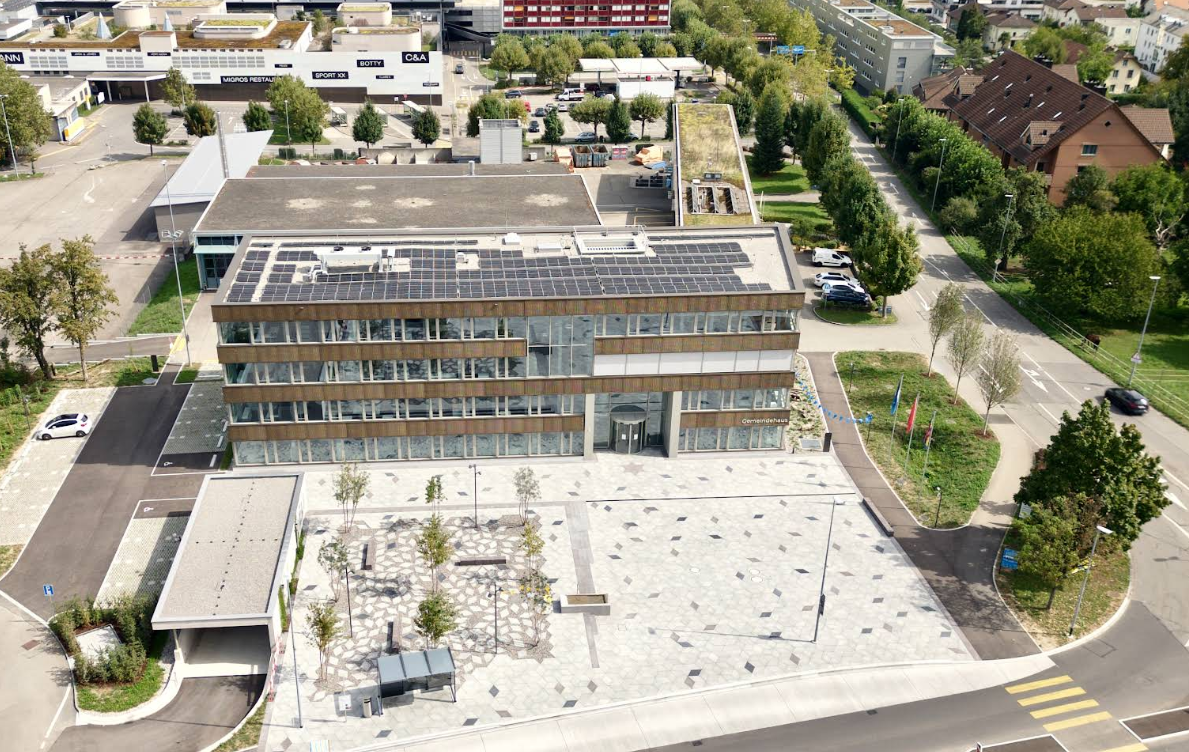
On 9 June 2026 the municipal council of Spreitenbach replied for the first time to the request for information under the freedom of information act that IG Wild beim Wild had filed on 27 April 2026. At the foot of the letter two recipients are listed in copy: the Municipal Division of the Department of Economic Affairs and the Interior and the Commissioner for Openness and Data Protection.
It was precisely these two bodies that, one day earlier, on 8 June 2026, had delivered post to the municipality. The Commissioner for Openness and Data Protection, in response to our request for conciliation, opened a mediation attempt under § 31 IDAG. The Municipal Division forwarded our supervisory complaint for denial of justice to the municipal council and set it a deadline of 6 July 2026 to submit a statement together with the files.
The chronology speaks for itself. From 27 April to 8 June: silence. The 10-day deadline under § 19 para. 1 VIDAG lapsed, the deadline of 27 May set in the request lapsed, no acknowledgement of receipt, no extension of deadline, nothing. On 8 June the supervisory authorities became active. On 9 June the municipality replied. The justification for the delay: «public holidays and holiday-related absences».
What the municipality admits
In terms of content the letter is, for large stretches, an admission. According to the municipality, no municipal event permit was required for the Jagdmesse Schweiz, the Terra Expo and the Sport Fishing Fair. Safety and traffic matters were not examined per event, but flatly within the building permit procedure at the time. No advertising permits were issued. And, verbatim: «Aspects of animal welfare law were not examined by the municipality.»
With this the municipality confirms what the Veterinary Service of Aargau had already put down in writing: The hobby hunters' hunting fair passed through all levels of oversight. No report to the veterinary service, no on-site inspection, no file record, and now officially confirmed, no municipal review of any kind either. An event involving weapons, trophies and animals took place within a system in which every level declares itself not responsible.
Living animals that nobody knew about
The state of the records becomes particularly explosive due to a detail from the fair programme itself: hunting dog demonstrations took place several times at the hunting fair. The veterinary service stated, however, that it had «no knowledge of any demonstration of living animals». Living animals were therefore demonstrably presented at a commercial fair without the competent authority knowing about it, let alone being able to check whether the requirements of the Animal Welfare Ordinance were met or whether an authorisation requirement existed under Art. 13 of the Animal Welfare Act, which makes the use of living animals for advertising purposes subject to authorisation. In its letter, the veterinary service expressly asked to be provided with concrete information. We have complied with this request.
What the municipality refuses
On the set of questions surrounding the criminal complaint against our platform, the municipal council refuses to provide any information, blanketly citing «ongoing criminal investigations». This also leaves unanswered questions that have nothing to do with the criminal proceedings themselves: Is there a formal municipal council decision on the petition under Art. 33 para. 2 of the Federal Constitution? How many individual emails actually arrived? Were opinions obtained from OFCOM or from data protection bodies before the criminal complaint was filed? Was there any external legal advice? These are questions about the municipality's administrative conduct, not about the criminal proceedings. Regarding the petition with its 170 signatories, the terse response is: «Your petition has been noted.» How this petition even turned into a criminal complaint against the critics we have documented in detail.
The levers the municipal council did not touch
The municipality takes the position that animal welfare is solely the responsibility of the cantonal veterinary service. That is an oversimplification. Research into Aargau legislation shows: the municipal council had at least four instruments of action of its own and used none of them.
First: municipal animal welfare tasks. The cantonal ordinance on the enforcement of animal welfare legislation (SAR 393.111) explicitly assumes that municipal councils carry out animal welfare tasks. The veterinary service supervises the municipal councils in this area and may delegate tasks to them. Anyone who claims that, as a municipality, they have nothing to do with animal welfare has not read their own legal basis.
Secondly: reporting and administrative assistance. At the latest since the petition of November 2025, the municipal council was aware of substantiated indications of grievances, based on the STS survey of around 60’000 reptile keepings in Switzerland that violate animal welfare law and are therefore punishable, with the Umwelt Arena as the hub. A simple forwarding to the veterinary service would have sufficed to activate the specialist authority. This never happened: the veterinary service confirmed to us in writing that it had received no report whatsoever concerning the hunting fair. Under Art. 24 TSchG, the competent authority intervenes without delay when grievances are identified. Authorities that look away cannot escape this duty through ignorance that they themselves have organised.
Thirdly: their own police. In Aargau's dual security system, the regional police is the enforcement body of the municipal council. The municipal council could have instructed its regional police to be present at the hunting fair or the reptile markets and to make findings. This too did not happen, not even after, on 8 March 2026, an animal welfare activist was physically assaulted on the neck.
outside the Umwelt Arena.Fourthly: building law. The municipality itself writes that the events took place «within the framework of the existing building and operating permits». That is precisely where its very own competence lies: as the building permit authority, it could examine whether recurring commercial animal markets and a fair for hobby hunters are covered by the designated purpose of a hall that is conceived and marketed as a beacon of environmental education. How the Umwelt Arena plays its sustainability brand off against animal welfare
is documented. No one has yet asked it the building-law question, least of all its own municipality.
Taking stock, a remarkable finding remains. In a conflict over animal welfare, public safety and the credibility of an institution marketed as sustainable, the Spreitenbach municipal council took exactly one documented action over several months: the criminal complaint against the platform that made the wrongdoing public. Responsible for this are the full municipal council, mayor Markus Mötteli (Die Mitte), deputy mayor Doris Schmid-Hofer (FDP) as well as the independent councillors Adrian Mayr and Mike Heggli. The same four people to whom the protest emails were addressed also left the three letters from our platform unanswered, until the supervisory authorities intervened. No report, no inspection, no review, no police operation, no answer to three letters, until the supervisory authorities intervened. But a criminal complaint over allegedly 850 protest emails, a misleading portrayal, because behind them stand 170 senders whose emails merely went to five municipal addresses each.
That the municipality can now, as soon as the ÖDB and the municipal department come knocking, reply within a single day, incidentally proves one thing: they could always have managed it, with all three letters. They only chose to when they had to.
How things proceed
The conciliation procedure with the Commissioner for Public Access and Data Protection continues, because the municipality's answer leaves the central sets of questions open. By 6 July 2026 the municipal council must also submit its position to the municipal department DVI and hand in its files. We have sent our supplementary submissions to both offices. The municipal council remained silent for six weeks when it could have replied voluntarily. Now it replies because it has to. We are staying on it.
LET'S STAY IN TOUCH!
We would like to send you the latest news and offers in our newsletter.
Support our work
With your donation you help to protect animals and give their voice a hearing.
Donate now →