Snakes in the Garden: No Need to Fear These Sensitive Souls
Snakes are very special garden visitors; you have to go out of your way to make them feel welcome. Someone who knows what these shy divas desire is Moritz Franz-Gerstein from the Deutsche Wildtier Stiftung. «Snakes love natural gardens«, he says. «Anyone who provides habitat for native snakes in their garden makes a valuable contribution to biodiversity and

Snakes are very special garden visitors; you have to go out of your way to make them feel welcome. Someone who knows what these shy divas desire is Moritz Franz-Gerstein from the Deutsche Wildtier Stiftung. «Snakes love natural gardens,» he says. «Anyone who provides habitat for native snakes in their garden makes a valuable contribution to biodiversity and species protection.»
Native Snake Species in the Garden
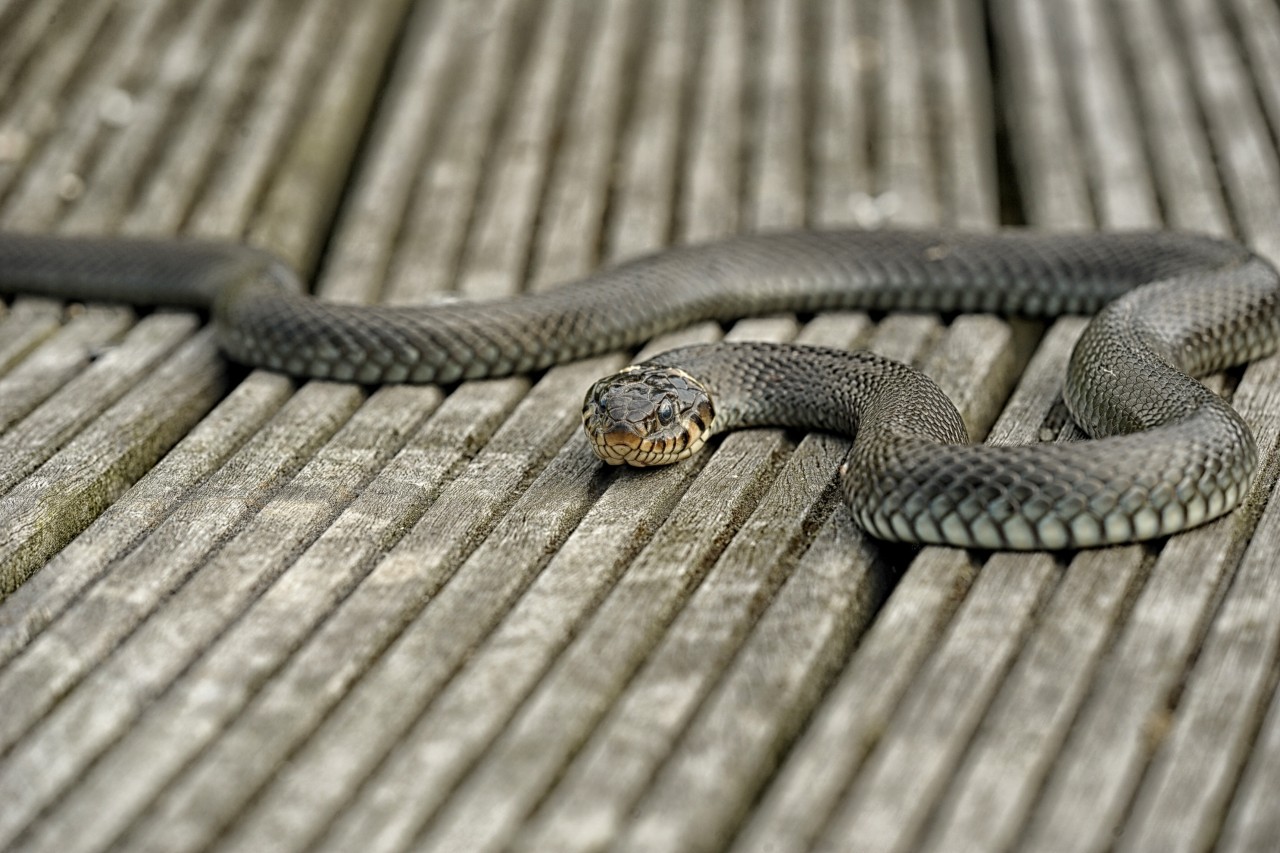
July and August are good months to encounter a snake. It might be a black-spotted grass snake (Natrix n. natrix), with a pale belly and yellow patches on its head. The closely related barred grass snake (Natrix n. helvetiva) was only classified as a separate species three years ago. «It is very rare in Germany and can only be found in the western part of the country,» says Franz-Gerstein. Or you might even spot the largest of the native snakes: an olive-green to grey-black Aesculapian snake (Elaphe longissima), which lays its oval eggs in warm, moist compost or grass heaps. This increasingly rare species has its roots in Greek mythology and remains to this day the symbol of physicians and pharmacists. The smooth snake (Coronella austriaca) is a small, slender snake that is often confused with the common viper.
All five native colubrid species found in Germany are non-venomous. Venomous species are the common viper (Vipera berus) and the asp viper (Vipera aspis). «Bites are rare, however, and usually have mild outcomes,» says the snake expert. As a rule, these wild animals quickly slither away as soon as you approach them. «Snakes are sensitive creatures — they perceive even the slightest vibration in the ground and then make themselves scarce,» says Franz-Gerstein.
Useful Garden Visitors and Elegant Loafers
These garden visitors are also useful. “Where a snake lives, you'll find fewer mice and far fewer rats,” says the wildlife conservationist. Even the scent left behind by a snake's shed skin drives away rats and mice. Snakes are very frugal when it comes to their diet: “Once a snake has eaten a mouse or a frog, it can easily go three months without another meal — these animals are virtuoso energy-savers, not to say elegant loafers.”
Snakes have become rare in Germany and are therefore under special protection. Only seven of the world's 3’000 snake species live here. Their populations are declining ever further due to the destruction of their natural habitat . For example, the dice snake (Natrix tesselata) has only been recorded in Rhineland-Palatinate and along the Elbe in Saxony. Garden owners can help: wildlife-friendly gardens with stone piles, open compost for green cuttings and leaves, or a pond as a biotope offer habitat that is becoming scarce elsewhere.