Purslane: Niche Herb with Winter Hardiness
Although purslane has fallen into obscurity, this vegetable plant can boast a strong Swiss identity: the robust salad herb is available fresh from Switzerland even in winter.

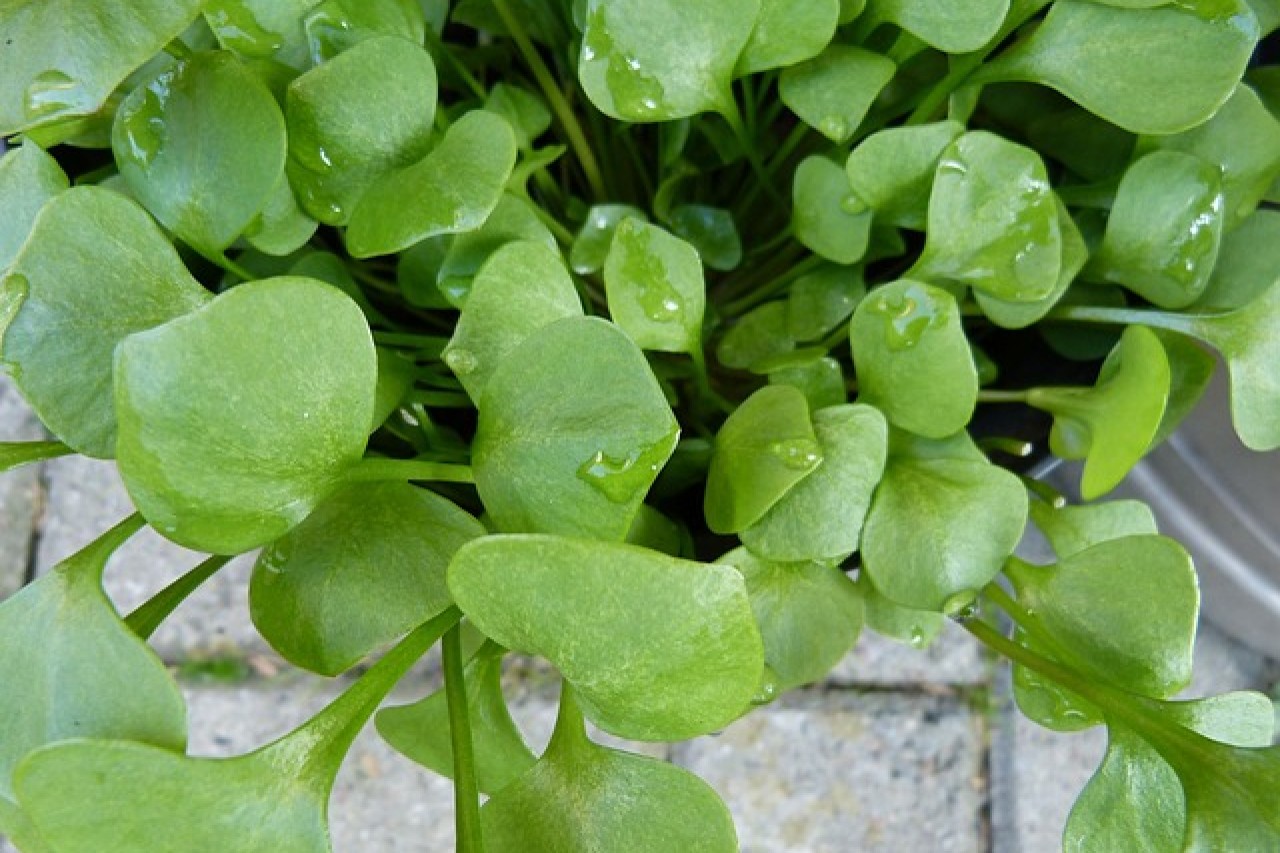
The purslane family encompasses 115 species distributed worldwide: from the predominantly dry regions of the southern hemisphere in Africa, Australia and South America to the arctic regions.
The almost forgotten vegetable and herb has been known for thousands of years — though its precise origin can today only be surmised. As early as 800 BC it is mentioned in Babylonian writings as a medicinal plant, and vegetable purslane is thought to originate from the western Himalayas, southern Russia and Greece. Winter purslane, on the other hand, is believed to originate from the Pacific Northwest of North America: along the west coast of North America, Native Americans were already using purslane as a salad and soup herb.
A Year-Round Swiss
This robust vegetable thrives throughout the year: winter purslane is frost-hardy and can overwinter outdoors. However, it is mostly cultivated in greenhouses or under polytunnels. In addition to winter purslane, there is also summer or vegetable purslane, which is less commonly grown and cultivated in open fields during the warmer season.
The growing area for purslane in Switzerland is very small at around 2.3 hectares — with well over two thirds in organic farming. According to Swiss vegetable producers, the Swiss season runs from October to April.
A Summer Greeting in Winter
Also known as Cuban spinach, tumbling weed, plate salad or kreusel, purslane has the highest omega-3 fatty acid and alpha-linolenic acid content of all green plants. Purslane is also rich in vitamins C and A, as well as B and B2, along with alkaloids and flavonoids. Especially in autumn and winter, when no fresh vegetables can be harvested from the garden, purslane is particularly welcome as a source of vitamins.
While wild-growing purslane is considered a persistent weed in our latitudes today, the robust and deep-green herb is a discovery for connoisseurs in its cultivated form. The leaves taste slightly sour, salty and nutty – the flower buds can be used like capers. Purslane tastes great raw as a salad, as a soup addition, lends dishes a kick as a seasoning herb, and when steamed is an alternative to spinach.