Hunting Regulations in the Canton of Valais 2021–2022
Valais revises its hunting decree: ban on lead ammunition with a transition period, annual marksmanship certification from 2025, and new rules for protected areas.


The State Council has approved the revision of the decree on the practice of hunting in Valais.
In order to improve readability and clarity, it was decided to move from a five-year decree to a periodic decree. As a result, from the 2021–2022 season onwards, hunters will receive a single document each year listing all the legal provisions that set out the practical conditions for the upcoming season. The revision of the decree also includes amendments to the implementing regulations on the practice of hunting. The most important changes concern the management culls in federal wildlife sanctuaries, the types of permitted ammunition, the time windows for vehicle use during the first weeks of the hunting season, and the marksmanship certification that must be submitted annually from 2025 onwards. These revisions were carried out in collaboration with the advisory hunting commission, which is composed of representatives from the fields of hunting and environmental protection, among others.
The revision of the decree on the practice of hunting has been approved by the State Council. The current system is based on a five-year decree that is amended by annual addenda, which makes it difficult to read. To facilitate understanding of the applicable rules, the State Council has decided to transition from a five-year decree to a periodic decree. Starting with the 2021–2022 season, hunters will receive a single document each year listing all the legal provisions that govern the practical conditions for the relevant hunting season. This revision of the decree also includes amendments to the implementing regulations concerning the practice of hunting. The cantonal law on hunting and the protection of wild mammals and birds (kJSG), however, remains unchanged.
Regulation by recreational hunters in federal wildlife sanctuaries and WZVV reserves
The revision of the current legislation also includes further changes. One of these concerns the regulation of huntable animals in federal wildlife sanctuaries (EBG) as well as the water and migratory bird reserves of international and national importance (WZVV). Based on the Federal Court's decision on the appeal in the case of the EBG Aletsch, the regulation of huntable species in the protected areas listed in the federal inventory may no longer be carried out through ordinary hunting, but only within the framework of regulatory culls.
For the 2021–2022 season, a cull plan is being discussed for the EBG and WZVV areas where regulatory measures in the form of culls are necessary to prevent unacceptable damage and, in particular, to ensure forest regeneration. Where part of these culls exceeds the capacity of the wildlife wardens, they will be transferred to the hunting community. For this purpose, a list of names will be compiled. Hunters may register for culls in these federal protected areas as part of their annual hunting licence application. If the number of registered individuals exceeds the number of available places, a draw will be conducted by the head of the Department of Security, Institutions and Sport (DSIS). This solution ensures the greatest possible equal treatment of all hunters.
The revision of the resolution and the implementing regulations concerning the practice of hunting has led, among other things, to the following further important changes:
The marksmanship certificate, which is currently valid for three years, must be submitted annually from 2025 onwards to demonstrate that hunters are able to use their respective weapons safely and efficiently;
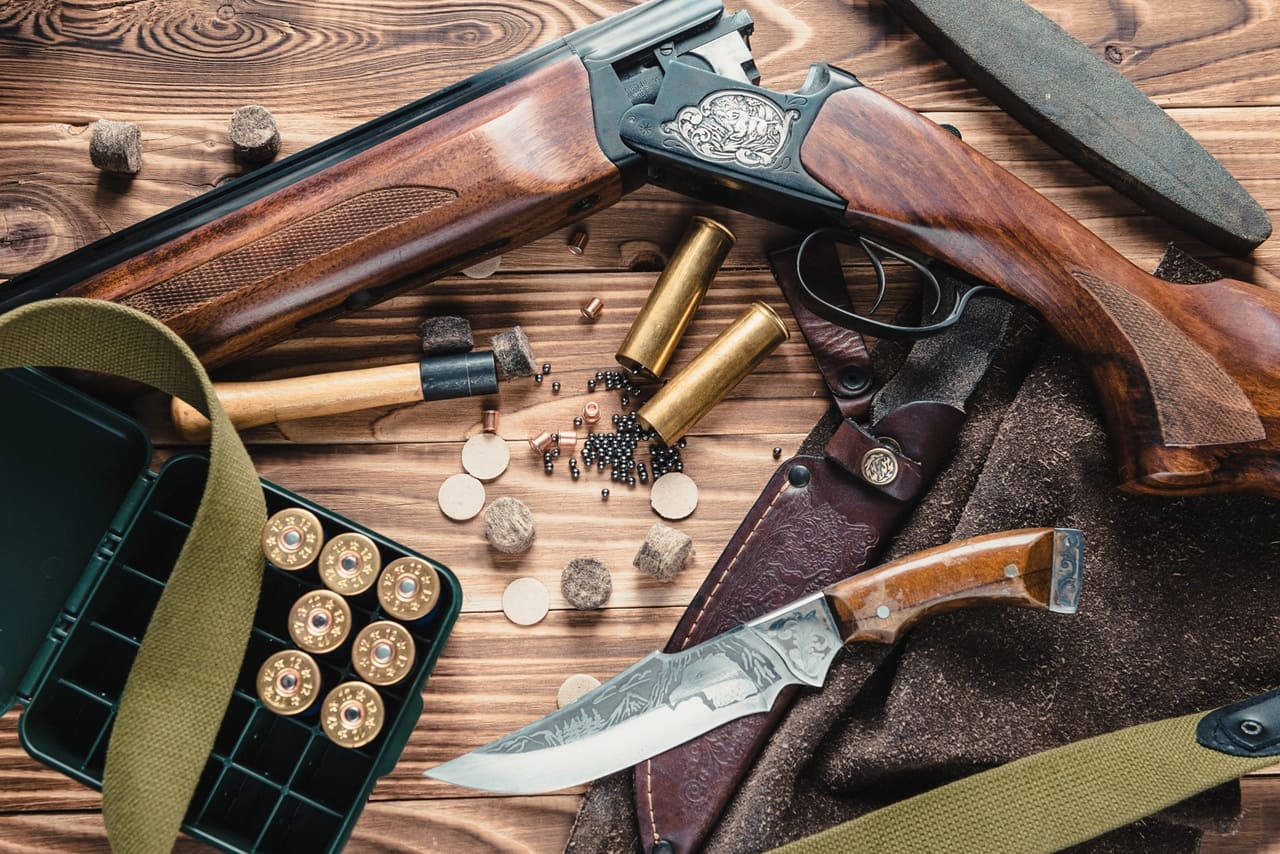
- the use of lead ammunition is prohibited, with a transitional period of five years to allow hunters to equip themselves accordingly. The use of lead-free ammunition by wildlife wardens in the course of their duties will be mandated from the end of this year;
- the time windows for using roads with vehicles during the first five weeks of the hunting season have been redefined in order to preserve the tranquillity of hunting areas at the beginning and end of the day and to give hunters more flexibility for transporting harvested game;
- the interactive map of the Office for Hunting, Fishing and Wildlife (DJFW) defines the perimeters and information for the practice of hunting. It is authoritative in the event of a dispute. Textual descriptions of area boundaries have been removed.
All changes were unanimously adopted by the members of the consultative hunting commission, which is composed of representatives from the departments and judicial authorities concerned, the hunting sector, the main cantonal environmental protection, agriculture, forestry and tourism associations, and the Association of Valais Burgher Municipalities.
More on the subject of recreational hunting: In our dossiers on the criticism of recreational hunting gather fact-checks, analyses and background reports. What the research says about this is shown by Hunting fact-checked: the state of research.
The position of IG Wild beim Wild: IG Wild beim Wild rejects recreational hunting. Our model is the canton of Geneva, which has managed without recreational hunting since 1974: without hunting seasons, without hunting dogs, without driven hunts, without high seats, without the animal cruelty and crime that go hand in hand with hunting season elsewhere. What has worked there for over fifty years disproves every position paper by JagdSchweiz. An association that bases its policy on claims it refutes in its own documents is not a professional organisation, but a factory for misinformation.