Mass deception in series: St. Gallen swears in 65 new recreational hunters
In the canton of St. Gallen, recreational hunters train, examine and supervise recreational hunters themselves.
On 12 June 2026, in the canton of St. Gallen, 65 aspiring recreational hunters passed the hunting examination, around 80 per cent of the candidates.
At the handover of the certificates of competence, the cantonal hunting administration emphasised the “important responsibility” of the hunting trade and spoke of a “modern and responsible approach to hunting”.
It is the continuation of a story that we already documented last year under the title Mass deception in the canton of St. Gallen. Only the number has changed.
A closed system
In the canton of St. Gallen, recreational hunters are trained, examined and supervised by recreational hunters. The examination commission, the training commission and the hunting division within the Office for Nature, Hunting and Fisheries are staffed by people who are themselves connected to recreational hunting. There is no independent professional or ethical oversight from outside.
In this way, an interest group examines and legitimises its own leisure pursuit. In hardly any other field involving the lives of sentient animals would such self-monitoring be conceivable.
Not an isolated case, but a system
St. Gallen does not stand alone. The same staging is repeated year after year across the cantons, as our series shows: In Solothurn the Landammann hands over the certificates with praise for “healthy wildlife populations and efficient regulation”, in Zug the canton promises “animal-welfare-compliant and safe” hunting, in Lucerne, Baselland and in the Aargau the same pattern. They are the same platitudes, the same self-legitimisation. What sounds like a professional appreciation is a cross-cantonal template text.
A training that protects nothing
The deficiencies begin with the training itself. The courses for the hunting examination are predominantly conducted by people from the hunting milieu, some with a pronounced ideological background, and require no regular proof of qualification. Anyone who passes the examination then moves within the echo chamber of the hunting press, which constantly repeats distorted and often false portrayals. In the hunting clubs, they confirm one another.
This does not produce professional qualification, but rather a sealed-off group that is barely receptive to new information. What is fatal is that the local press and politicians continue to believe that expertise lies ready beneath the hunter's hat, and on nature topics turn of all people to the local recreational hunter.
What «responsibility» means in practice
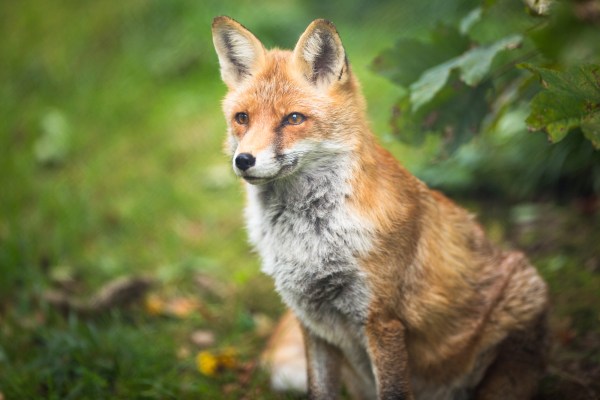
The reality of this much-invoked responsibility can be read off the fox and the badger. In the canton of St. Gallen, thousands of mostly healthy foxes and badgers are killed year after year, without any wildlife-biological or ecological reason. The animals are not killed for food but end up at the carcass collection point.
The science here is unequivocal: lightly hunted fox populations produce fewer offspring, while intensive hunting even counteracts this through compensatory reproduction. What is sold as wildlife management is to a large extent killing without consequence. We have documented this in the article St. Gallen: Stop the fox and badger massacre .
An authority headed by a man who hunts wolves in Russia and shoots squirrels for fun, and in which recreational hunters train, examine and monitor one another, is not a nature conservation office. It is a hunting authority with a nature conservation label. This is not normal. That an ethically and scientifically unjustifiable leisure activity administers and legitimises itself in this way ought to be fundamentally reviewed politically and socially.
An authority with a credibility problem
The problem reaches right to the top. Office head Dr. Dominik Thiel, responsible for the canton's hunting and wolf policy, travelled in 2024 during working hours and at the taxpayers' expense to a multi-day wolf hunt in Russia and shot a squirrel for fun while sighting in his rifle. Two years after the scandal, he is still in office. The chronology can be found in the article Dominik Thiel: wolf hunter at the state's expense. lso head of the hunting division Simon Meier, who gave a welcoming address at the certificate ceremony, is no stranger either, as How the recreational hunter Simon Meier leads people onto the wrong trail shows.
It can be done differently
A counter-model is close at hand. The canton of Geneva completely banned recreational hunting in 1974 by popular vote. Since then, twelve state-employed professional hunters have taken over wildlife management, with an instant-kill rate of 99.5 per cent. Foxes, martens and badgers are not killed simply because it is hunting season. Instead, the focus is on deterrence and education. The result: the highest brown hare density in Switzerland and over 50 years without legal challenge. The claim that without recreational hunting the ecological balance would collapse is thus empirically refuted.
Dossier on the St. Gallen hunting administration
- Dominik Thiel: wolf hunter at the state's expense
- The psychology of hunting in the canton of St. Gallen
- Hunting season until New Year's Eve: kill pressure instead of wildlife management
- St. Gallen hunting administration: wolf management without science and without credibility
- Dumbing down the public in the canton of St. Gallen
- Office for Hunting and Nonsense in St. Gallen modernises hunter training
- Lying hunter became head of division in the canton of St. Gallen
- St. Gallen: stop the fox and badger massacre
- How the recreational hunter Simon Meier leads people onto the wrong trail
More on the subject of recreational hunting: In our dossiers on the criticism of recreational hunting gather fact-checks, analyses and background reports. What the research says about this is shown by Hunting fact-checked: the state of research.
The position of IG Wild beim Wild: IG Wild beim Wild rejects recreational hunting. Our model is the canton of Geneva, which has managed without recreational hunting since 1974: without hunting seasons, without hunting dogs, without driven hunts, without high seats, without the animal cruelty and crime that go hand in hand with hunting season elsewhere. What has worked there for over fifty years disproves every position paper by JagdSchweiz. An association that bases its policy on claims it refutes in its own documents is not a professional organisation, but a factory for misinformation.
Support our work
With your donation you help to protect animals and give their voice a hearing.
Donate now →