Ocean warming drives fish species toward the poles
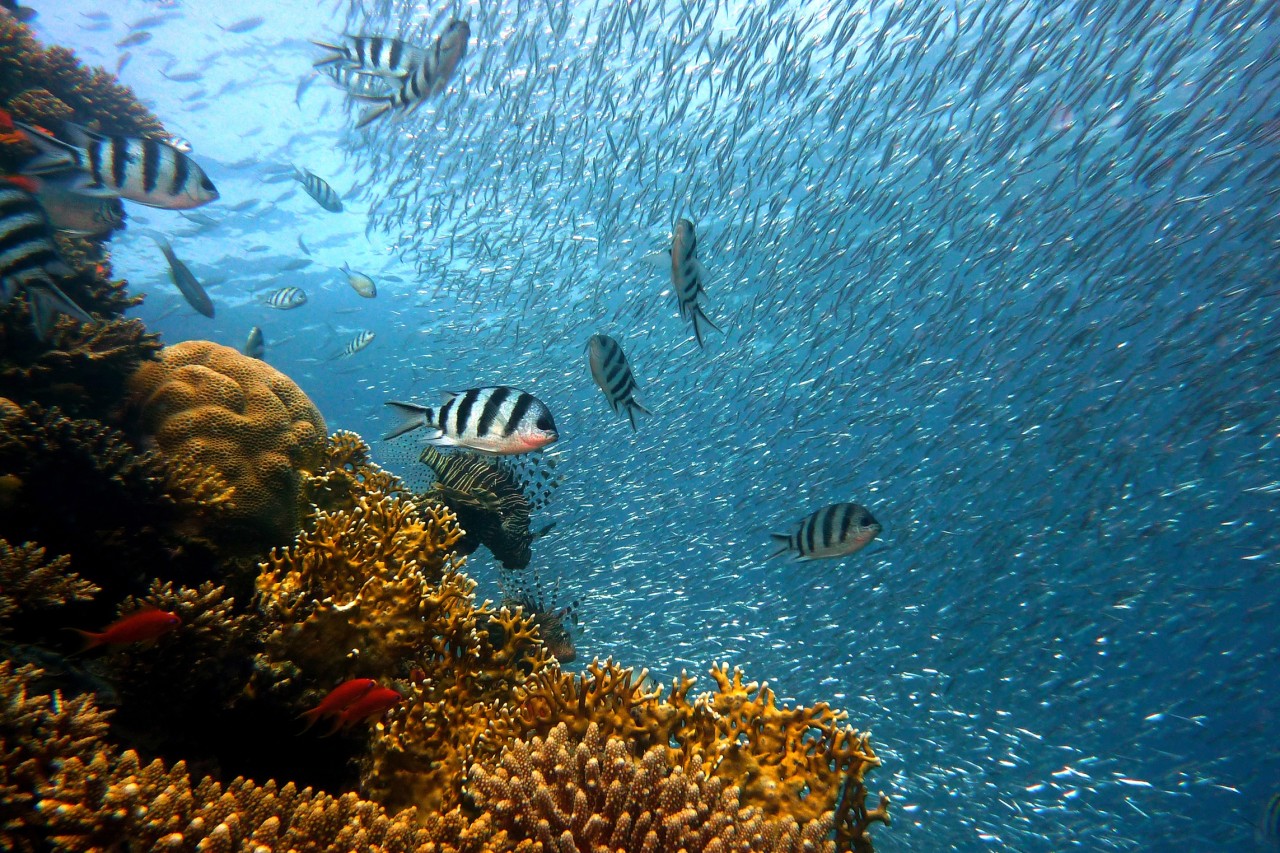
Due to ocean warming, well over a thousand marine species have already migrated from the equator toward the poles.

This is the conclusion of a study published in the journal «PNAS», for which data on more than 50’000 species were compared.
Accordingly, the species-rich tropical marine regions face further loss of biodiversity if climate change continues to advance.
The situation could also deteriorate drastically for people who depend on these animal populations for their livelihoods, the researchers involved warned. Overall, they recorded a decline of around 1,500 species at the equator. This trend will continue throughout the century. The pace of the poleward migration depends on whether and how quickly humanity reduces greenhouse gas emissions.
«Global warming has already been changing life in the oceans for 60 years», summarised lead author Mark Costello of the University of Auckland in New Zealand, outlining the central findings of the study. The trend toward poleward migration was found to be more pronounced in the Northern Hemisphere. The reason is that the oceans there have warmed more strongly so far than in the Southern Hemisphere.
Fish more severely affected
Furthermore, species living in open water, such as fish, were more severely affected than bottom-dwelling species. The latter can only drift freely in the water with the currents during their early life stages and are no longer mobile after that, the researchers explained. As a result, the shift to other latitudes takes place over the course of generations.
The «disappeared» tropical species would likely follow their native temperature zones northward and southward as subtropical seas warm, explained co-author David Schoeman of Nelson Mandela University in Port Elizabeth, South Africa. According to the study, the number of species in tropical waters declines when the annual average temperature rises above 20 to 25 degrees. This varies depending on the specific species.
Open-ocean species with fewer problems
Researchers have found that similar shifts also occurred 140’000 years ago, as fossil discoveries show. At that time, temperatures on Earth were last as high as they are today. How individual species cope with the changes was not examined in the current study, however. Older studies showed that open-ocean species generally have fewer problems.
The experts also did not explicitly address the impact on species relevant to fisheries in their work. Nevertheless, it was obvious which regions of the world would be most severely affected. «Indonesia and other countries near the equator, such as in West Africa, have the most to lose», reported lead author Costello. In their waters, biodiversity is declining as a result of the trend, without new species migrating in to compensate.
More on the subject of recreational hunting: In our dossiers on recreational hunting gather fact-checks, analyses and background reports. The scientific evidence is presented in the overview Studies on the Effects of Recreational Hunting.
The position of IG Wild beim Wild: IG Wild beim Wild rejects recreational hunting. Our model is the canton of Geneva, which has managed without recreational hunting since 1974: without hunting seasons, without hunting dogs, without driven hunts, without high seats, without the animal cruelty and crime that go hand in hand with hunting season elsewhere. What has worked there for over fifty years disproves every position paper by JagdSchweiz. An association that bases its policy on claims it refutes in its own documents is not a professional organisation, but a factory for misinformation.