CITES: No Trade in Elephants and Protection for Giraffes
Giraffes, severely decimated by hunting and habitat loss, are to receive better protection.

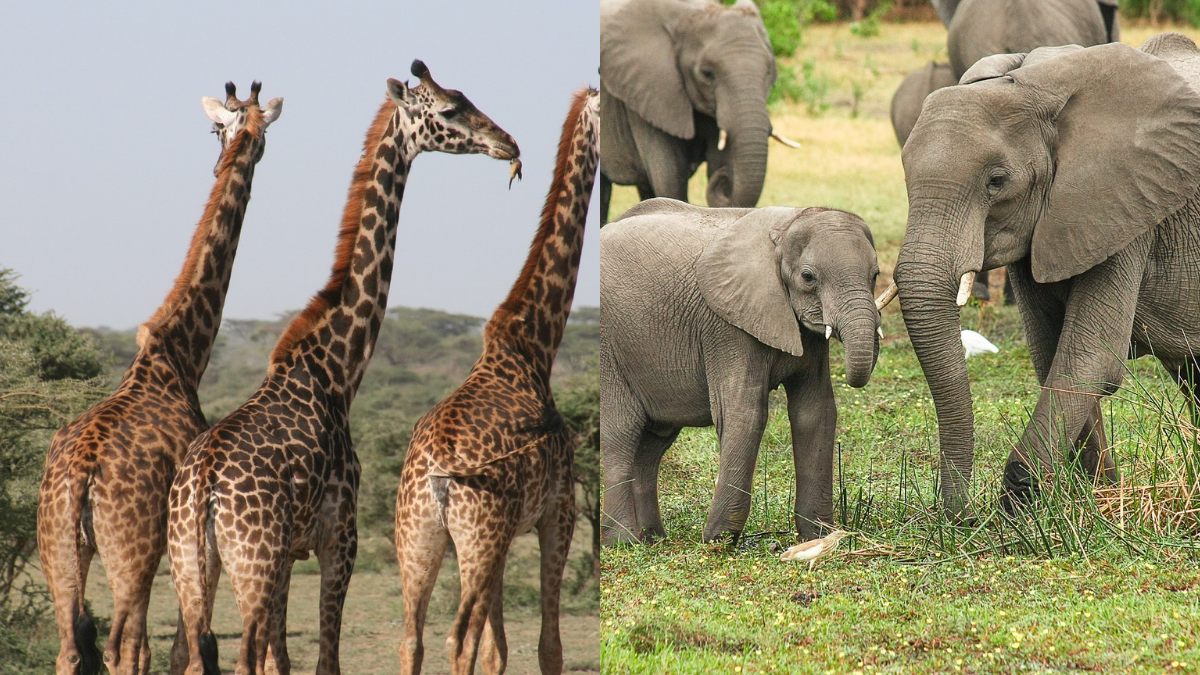
International trade in meat, leather, and hunting trophies, or the shipping of animals to zoos and circuses, should in future only be permitted if the exporting country can demonstrate that stocks will not be further endangered as a result.
This was decided by representatives of the 183 signatory states of the Washington Convention on International Trade in Endangered Species (CITES) on Thursday in Geneva, over the objections of countries in southern Africa. 106 countries voted in favour, 21 against. The decision still needs to be confirmed in a plenary session at the end of the conference next week.
Collapse of giraffe populations
Giraffe populations are estimated to have declined by up to 40 percent over the past 30 years to around 100’000 animals. Countries in southern Africa argue, however, that their populations are stable and that problems exist only further north. Zambia, South Africa, and six other countries sharply criticised the decision. According to their figures, 70 percent of all giraffes live in their countries.
«An important step», said Ralf Sonntag of the International Fund for Animal Welfare (IFAW) in Geneva. «Giraffes are severely threatened. If one aspect of that threat — such as trade — is removed, there is a chance that giraffe populations can recover.»
The militant German Hunting Association (DJV) opposed the stronger protections. Hunting could make a positive contribution to local incomes or in the fight against poaching, said a spokesperson. Recreational hunters from abroad pay considerable sums for shooting licences, for example.
Ivory trade remains banned
The trade in ivory, strictly prohibited for nearly 30 years, will not be loosened for the time being. This was decided by the species conservation conference on Thursday in Geneva.
It rejected, by a large majority, applications from countries in southern Africa that sought to profit once again from the ivory of elephant tusks. All decisions must still be confirmed in a plenary session at the end of the conference next week.
«These were sensational results in a row», said Daniela Freyer, co-founder of the animal welfare organization Pro Wildlife. «The rejection of the ivory trade and the easing of elephant protections could not have been more clear.»
«In the fight against poaching, it is important that there continues to be no international legal market through which poached ivory can be laundered», explained German Environment Minister Svenja Schulze.
More on the subject of recreational hunting: In the dossier The Role and Criticism of Recreational Hunters we shed light on the training, power and self-image of recreational hunters. What the research says about this is shown by Hunting fact-checked: the state of research.
The position of IG Wild beim Wild: IG Wild beim Wild rejects recreational hunting. Our model is the canton of Geneva, which has managed without recreational hunting since 1974: without hunting seasons, without hunting dogs, without driven hunts, without high seats, without the animal cruelty and crime that go hand in hand with hunting season elsewhere. What has worked there for over fifty years disproves every position paper by JagdSchweiz. An association that bases its policy on claims it refutes in its own documents is not a professional organisation, but a factory for misinformation.