
Moratorium or ban on wolf hunting
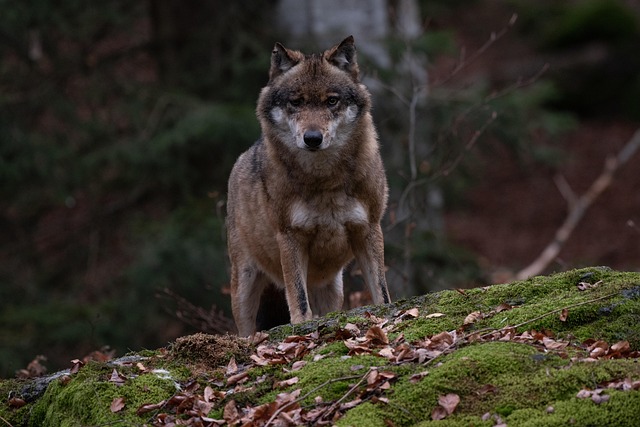
Instead of hunting wolves, herd protection, prevention and scientific monitoring should be the priority.
1. Motion
The cantonal government is instructed to submit to the cantonal parliament a proposal to amend the Law on Hunting and Wildlife Protection (………) as well as the Hunting Ordinance (…………), with which the handling of wolves in canton (………) is newly regulated. The legal revision must particularly ensure that
- a moratorium for preventive and regular wolf cullings is introduced throughout the canton, as long as no scientifically based population analysis for wolves in canton (………) exists
- the wolf is not classified as a huntable species in cantonal hunting law within the framework of ordinary hunting (license hunting, territory hunting or comparable forms of recreational hunting)
- hunting wolves for recreational purposes as well as regular population regulation by persons authorized to hunt are inadmissible
- interventions in wolf populations are only permissible as officially ordered measures in narrowly defined exceptional cases, insofar as this is compatible with federal hunting law, namely
- for combating animal diseases and for reasons of animal disease prevention
- in case of immediate danger to humans or significant threat to important material assets
- for compelling reasons of nature and species conservation
In these cases, the intervention is generally carried out by the responsible wildlife management authority or by official order and is limited to the necessary minimum
- before any intervention in wolf populations, it is always examined and documented whether non-lethal measures such as livestock protection, adaptation of husbandry or management practices, deterrence and other prevention measures are sufficient, and the canton uses its federal legal scope restrictively in favor of the most comprehensive protection of the wolf possible
- the resources for livestock protection measures, for advising livestock keepers as well as for conflict prevention and public information are significantly increased
- independent monitoring of the wolf's impacts on biodiversity, ungulate populations, agriculture, protection forests and animal welfare is established and regularly evaluated
- the results of this monitoring are published transparently and are bindingly considered in the further development of cantonal hunting and livestock protection practices
- the canton develops or updates a technical concept for wolf management that regulates monitoring, prevention, non-lethal measures, public information as well as the process of any potential official intervention
- the government council explains in the message
- what impacts the abolition of recreational wolf hunting has on hunting planning and hunting organization
- how the new regulation affects agricultural damage, protection forests, livestock protection measures and compensation arrangements
- what financial and organizational consequences are to be expected for canton and municipalities
The government council considers the necessary transitional provisions in its proposal, particularly with regard to ongoing shooting permits, existing hunting plans and already ordered livestock protection programs.
2. Brief Justification
The wolf is a protected native species. Its return to Central Europe is a consequence of international and national conservation efforts. Culling interferes with the complex social structures of wolf packs, can destabilize packs and trigger undesirable side effects, such as increased conflicts with livestock due to scattered individual animals. It does not solve the structural deficits in livestock protection.
The canton (………) has scope within federal hunting law to enact additional protection provisions, to specify culling regulations and to strengthen livestock protection. A moratorium on preventive wolf culling creates time to assess on a scientifically sound basis how the wolf affects ecosystems, protection forests, ungulate populations and agricultural use, and which measures in livestock protection are actually effective and proportionate.
According to federal law, no canton in Switzerland must provide for recreational hunting. It is the right of the cantons to decide whether hunting is permitted or not. If a canton decides against or even only partially against hunting, it can do so freely according to the federal constitution. The canton of Geneva has long chosen this exemplary path.
A consistently implemented principle of 'livestock protection before culling' helps to defuse conflicts, prevent damage to livestock and at the same time take seriously the legal protection status of the wolf. Additional resources for livestock protection, consultation and conflict prevention relieve affected livestock keepers and promote sustainable, long-term solutions.
With such a regulation, the canton (………) positions itself as a pioneer of a factual, evidence-based approach to predators, instead of following populist knee-jerk reactions, and sets a signal for animal welfare, biodiversity and legally sound decision-making foundations.
Related Articles
- Wolves Under Constant Fire: How Swiss Hunting Policy Ignores Science and Ethics
- Protection Forests: Recreational Hunting Creates Problems It Claims to Solve
- The Wolf Is Not the Problem – It Is the Solution
- Forest transformation: paths to resilient mixed forests in the face of hunting
- Forest transformation at the Lukmanier Pass
- Hunting is not the solution for forest transformation
- Hobby hunters do not help forest transformation
- The conflict between forestry, hunting and wildlife