
Cantonal People's Initiative – Canton of Valais
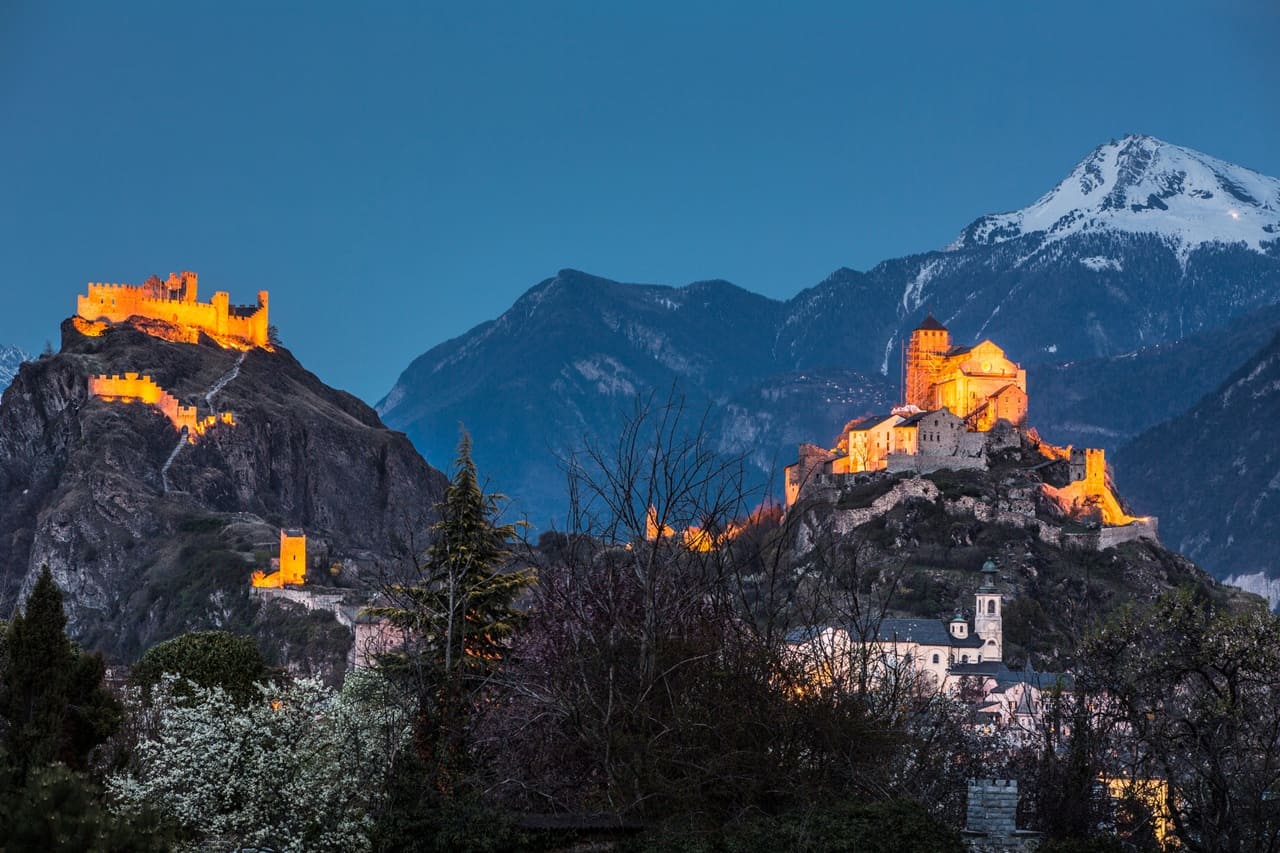
«For Professional Wildlife Protection» / «Pour une gestion professionnelle de la faune sauvage»
Legislative initiative in the form of a fully drafted proposal / Initiative constitutionnelle rédigée de toutes pièces
Based on Art. 33 of the Constitution of the Canton of Valais of 8 March 1907 and on the Law on Political Rights
Submitted by the initiative committee [date of submission]
Note: The Canton of Valais is bilingual. For submission, the initiative text must be available in both German and French. The French version must be verified by a legal expert prior to submission.
Initiative Text
The undersigned persons entitled to vote in the Canton of Valais hereby submit the following legislative initiative:
The Constitution of the Canton of Valais of 8 March 1907 shall be supplemented with the following articles:
Art. [new] Professional Wildlife Protection
1The practice of hunting by private individuals (licence hunting, recreational hunting) is prohibited throughout the entire territory of the Canton of Valais.
2The protection, care and, where necessary, regulation of wild animals shall be the exclusive responsibility of professionally trained wildlife managers employed by the Canton.
3The killing of wild animals is permissible only as a last resort, when all other suitable measures for damage prevention or hazard mitigation have been exhausted or proven insufficient. It requires prior approval from the Wildlife Commission.
4The Canton shall establish an independent Wildlife Commission composed of representatives from animal and nature conservation organisations, the scientific community, and the relevant authorities. The Commission shall oversee wildlife management and decide on population regulation measures.
5The Canton shall promote the natural regulation of wildlife populations, the connectivity of habitats, and the coexistence of humans and wildlife.
6The details shall be regulated by law.
Art. [new] Protection of Endangered and Protected Wildlife Species
1The Canton shall refrain from submitting requests for preventive population regulation of protected wildlife species under the Federal Act on Hunting and the Protection of Wild Mammals and Birds, in particular concerning the wolf, lynx, bear, beaver, otter, golden jackal, golden eagle, common merganser, and other species protected under federal law.
2 It promotes the coexistence of humans and wildlife, passive damage prevention, the ecological enhancement of habitats, and the scientific monitoring of wildlife presence.
3 Measures against individual wild animals that pose an immediate and significant threat to human safety remain reserved. Such measures must be limited to the absolute minimum and carried out by the competent cantonal authority.
4 The canton actively advocates for the protection and conservation of endangered wildlife species within the framework of intercantonal cooperation and in its relations with the federal government.
Transitional provision
1 The State Council shall enact the necessary implementing provisions within two years of the adoption of this constitutional amendment.
2 Existing hunting licenses shall expire upon the entry into force of the implementing provisions. Patent fees already paid for the current hunting season shall be refunded on a pro-rata basis.
3 The State Council shall ensure the continuity of wildlife management during the transitional phase.
Explanatory notes
1. Background
In the Canton of Valais — the third-largest and, by area, the largest purely Alpine canton in Switzerland, with approximately 345,000 inhabitants across 5,224 km² — the current hobby hunting system serves neither species conservation nor contemporary wildlife management. It is the practice of a bloody recreational pastime at the expense of sentient beings, legitimized by outdated narratives that do not withstand scientific scrutiny. The claim that ecological balance would collapse without hobby hunting has been empirically refuted for over 50 years by the Geneva model (cf. the comprehensive dossier on the Geneva hunting ban at wildbeimwild.com).
Hobby hunting in Valais is organized as a license-based hunt. Private individuals obtain a cantonal license and hunt without fixed territory responsibilities (cf. the psychology of hobby hunting in the Canton of Valais as well as the critical analysis of hunting training at wildbeimwild.com).
The Canton of Valais stands at the center of the national wolf debate. Valais has the most wolf packs of any canton in Switzerland. No other canton has applied for and carried out more wolf cullings in recent years. Since February 2025, beavers may be shot upon cantonal request. The lynx is native to the canton. The golden eagle breeds in the Valais Alps. Valais is home to the bearded vulture, the ibex, and a unique alpine fauna. With the UNESCO World Natural Heritage site Jungfrau-Aletsch, one of Europe's most valuable protected areas lies partially within the canton (cf. the analysis of hunting policy on wildbeimwild.com and the wolf policy on wildbeimwild.com).
The Canton of Valais has the opportunity to send a clear signal here: not only for professional wildlife management instead of hobby hunting, but also for the consistent protection of endangered wildlife species at the cantonal level. As the canton with the most wolf packs in Switzerland, this signal would have an impact reaching far beyond cantonal borders.
2. The Model: Canton of Geneva
On May 19, 1974, approximately two-thirds of voters in the Canton of Geneva voted in favor of abolishing militia-based hobby hunting. Before the ban, large game in the canton had been practically eradicated: deer and wild boar had disappeared decades earlier, and only a few dozen roe deer remained. Around 300 hobby hunters were releasing massive numbers of pheasants, partridges, and hares for recreational hunting.
The experiences since the hobby hunting ban are unequivocal:
– Biodiversity has increased markedly. The number of overwintering waterfowl has multiplied from a few hundred to approximately 30’000. Geneva today harbors the largest brown hare population and one of the last grey partridge populations in Switzerland.
– The roe deer population has stabilized at a healthy level, with an annual special cull by professional game wardens of merely 20 to 36 animals.
– In 2005, in a renewed popular vote, 90 percent of Geneva's electorate voted in favor of maintaining the hobby hunting ban. In 2009, a motion to reintroduce hunting was rejected in the cantonal parliament by a vote of 70 to 7.
– The total costs of professional wildlife management in Geneva amount to approximately 1.2 million francs annually, divided into roughly 600,000 francs for personnel (approx. three full-time positions, distributed among roughly a dozen environmental officers), 250,000 francs for prevention, and 350,000 francs for damage compensation. This corresponds to approximately 2.40 francs per resident per year.
Geneva's fauna inspector Gottlieb Dandliker, responsible for wildlife management since 2001, describes the hobby hunting ban as the financially most favorable alternative for the canton. A detailed account can be found in the Dossier “Geneva and the Hunting Ban” on wildbeimwild.com.
The efficiency of the Geneva model is evident in direct comparison: A professional game warden in Geneva needs an average of 8 hours and a maximum of 2 cartridges for a sanitary cull of a wild boar. A hobby hunter in the canton of Zurich needs 60 to 80 hours and up to 15 cartridges for the same task. The European hare density in Geneva is 17.7 animals per 100 hectares (the highest in Switzerland), while in the canton of Zurich it is only 1.0 per 100 hectares (cf. Fact Check Zurich Cantonal Government).
3. The Concept: Professional Game Wardens Instead of Hobby Hunting
The initiative does not replace hobby hunting with a vacuum, but with professional wildlife management based on the game warden model. This model is founded on the following principles:
Professional expertise instead of recreational amusement. Professional wildlife managers act on a scientific basis (cf. the critical analysis of hunting education on wildbeimwild.com).
Ultima ratio principle. A cull is only permissible when all non-lethal measures have been exhausted.
Democratic oversight through a wildlife commission. The independent commission prevents political pressure from diluting wildlife management.
Natural self-regulation as a guiding principle. Experience from Geneva, from national parks and from numerous scientific studies demonstrates: wildlife populations regulate themselves in most cases.
4. Why Valais?
The canton of Valais is suited for the introduction of professional wildlife protection for several reasons:
Switzerland's number one wolf canton. Valais has the most wolf packs in Switzerland. No other canton has requested and carried out more wolf cullings in recent years. The canton's wolf policy is nationally and internationally controversial. The initiative offers a constitutional answer: professional wildlife management and professional herd protection instead of politically motivated mass cullings. The second article on species protection makes the initiative attractive to nature conservation organizations that have so far been defensive in the wolf debate (cf. Wolf policy on wildbeimwild.com).
UNESCO World Natural Heritage Jungfrau-Aletsch. The Great Aletsch Glacier and the surrounding area are part of the UNESCO World Natural Heritage. Professional wildlife management would protect this unique conservation area more consistently than hobby hunting (cf. wildbeimwild.com on national parks and protected areas).
Unique alpine fauna. Valais is home to bearded vultures, golden eagles, ibex, chamois, wolves, lynx, and numerous other species in a unique high-mountain landscape. It is the most species-rich Alpine canton in Switzerland (cf. wildbeimwild.com on predators).
Bilingualism as a bridge. Valais is bilingual: approximately two-thirds of the population speak French (Lower Valais), one-third German (Upper Valais). The initiative connects the Romandie's Geneva experience with the German-speaking Swiss debate. The core messages must work in both German and French.
Protective forests and alpine farming. Valais has a high proportion of protective forests. The wolf naturally regulates the deer population and reduces browsing pressure in protective forests. For alpine farming, professional herd protection offers better protection than hobby hunting, which does not effectively keep predators away from livestock herds.
4,000 signatures. With 345,000 inhabitants, 4,000 signatures represent 1.15 percent of the population. Signatures can be collected in Sion, Brig-Glis, Visp, Monthey, Martigny, and Naters. The collection must be organized in both languages (cf. wildbeimwild.com on wildlife in residential areas).
Patent hunting = simpler system change. No lease contracts, no municipal compensation.
Tourism canton. Zermatt, Saas-Fee, Verbier, Crans-Montana: Valais is one of the most important tourism cantons in Switzerland. Professional wildlife protection and coexistence with predators are an argument for sustainable tourism.
5. On the initiative text
Paragraph 1 – Ban on hobby hunting
The prohibition of license hunting by private individuals corresponds to the Geneva model. Cantonal competence is undisputed: Art. 3 para. 1 HuntA. The three hunting systems are equivalent. Geneva has been in compliance with federal law since 1974.
Paragraph 2 – Professional Wildlife Management
Instead of hobby hunters, professionally trained wildlife managers employed by the canton assume all responsibilities. In Geneva, this system has proven effective for over 50 years.
Paragraph 3 – Culling as Ultima Ratio
Culling is the exception, not the rule. Passive measures take priority.
Paragraph 4 – Wildlife Commission
The independent wildlife commission is modeled on the Geneva system. It prevents the Council of State from unilaterally authorizing exceptions. In Valais, wolf policy has demonstrated how quickly political pressure leads to mass culling. A constitutionally anchored wildlife commission would have prevented this automatism (cf. wildbeimwild.com/jagd-fakten).
Paragraph 5 – Natural Regulation and Coexistence
The promotion of coexistence in Valais encompasses in particular the safeguarding of the UNESCO World Natural Heritage Site Jungfrau-Aletsch, the connectivity of alpine habitats, professional herd protection, and the education of the public and tourists (cf. wildbeimwild.com on wildlife in residential areas).
Transitional Provisions
The two-year deadline gives the Council of State sufficient time. The existing cantonal Office for Hunting, Fishing and Wildlife (Service de la chasse, de la pêche et de la faune) can serve as the institutional basis. Important: Valais is bilingual. The initiative text must be available in both languages.
6. On the Second Article: Protection of Endangered and Protected Wildlife Species
The second article is of the utmost relevance for Valais. Valais has the most wolf packs and the most wolf cullings in all of Switzerland. The initiative provides constitutional protection that prevents every wolf presence from automatically resulting in a culling order. The bearded vulture breeds in Valais. The golden eagle is present. The lynx is native. The “in particular” formulation also protects future returnees, especially the bear, which could return to Switzerland via Valais (cf. the wolf policy on wildbeimwild.com).
7. Cost Implications: Concrete Budget for Valais
The Geneva Reference Budget
In Geneva, which at 282 km² is roughly eighteen times smaller than Valais and has around 500,000 inhabitants, total costs amount to approximately 1.2 million francs annually.
Conservative projection for Valais
For Valais, with an area of 5,224 km² and around 345,000 inhabitants, the following deliberately conservative cost estimate applies. It calculates generously and takes into account the particular challenges of the largest purely alpine canton:
Personnel costs: 1,440,000 to 2,520,000 francs annually. 12 to 18 full-time positions are required. Valais is eighteen times larger than Geneva and topographically extremely demanding: high mountains, numerous side valleys, extensive alpine farming. However, settlement is concentrated in the Rhone Valley and the side valleys. The higher number of positions accounts for the transitional red deer management.
Material costs: 350,000 to 600,000 francs annually. In high mountain terrain, material costs are higher: off-road vehicles, alpine equipment, herd protection materials, monitoring infrastructure, and public relations in two languages.
Damage compensation: 250,000 to 500,000 francs annually. Primarily wolf predation losses on livestock and browsing damage in protective forests.
Herd protection start-up investment: 700,000 to 1,200,000 francs. In the first three to five years after the system change, a one-time start-up investment in herd protection infrastructure is needed for the entire Valais alpine pasture area, which represents Switzerland's greatest herd protection challenge: livestock guardian dog programs, mobile fences, night enclosures, shepherd training. This investment is non-recurring.
Total costs: 2,040,000 to 3,620,000 francs annually (gross). This corresponds to approximately 5.90 to 10.50 francs per inhabitant per year.
Red deer transitional management
In Valais as well, red deer populations are substantial and not sustainably regulated by recreational hunting. Compensatory reproduction — i.e., the artificially elevated reproduction rate caused by hunting pressure — prevents sustainable reduction. After the system change, targeted transitional management is needed, which is factored into the higher staffing numbers (cf. Studies on wildbeimwild.com).
Savings and counter-financing
Substantial savings offset this: no hunting exams, no license administration, no cull planning, no hunting supervision. In Valais, the enormous costs of logistically complex wolf culls are particularly notable: a single senselessly killed wolf costs the public around 35,000 francs (helicopter deployments, coordination, legal proceedings). With dozens of kills per year, this quickly adds up to hundreds of thousands.
Lost revenue
With the abolition of hobby hunting, the estimated 2.5 to 3.5 million francs in annual license fees would be eliminated. However, these are offset by the never-audited external costs of militia hunting — wildlife accidents, hunting-induced browsing damage in protective forests, administrative overhead, police and court interventions — which amount to many times these revenues. In the Canton of Geneva, these revenues have been absent since 1974 — without any financial problems: before the hunting ban, over 400 hobby hunters were active; today, three full-time positions do the same work better. Sanitary and therapeutic culling by professional game wardens is not the same as regulatory hunting based on hunter folklore or the hobby hunters' misunderstood notion of “nature experience.” A full-cost analysis shows: militia hunting costs the taxpayer significantly more than it generates (cf. “What hobby hunting really costs Switzerland” on wildbeimwild.com).
Hobby hunters in politics vote against nature conservation. The hobby hunting lobby systematically fights biodiversity and species protection efforts. In 2024, it opposed the biodiversity initiative (63 percent No). In 2020, the hunting law it helped shape was rejected at the ballot box (51.9 percent No). In 2016, the Ticino hunters' association torpedoed the Parc Adula national park. During the 2015–2019 legislative period, hobby hunters in parliament predominantly voted against environmental concerns. Anyone who claims hobby hunters are conservationists is ignoring their voting record (cf. Ticino Hunters' Association: 30 Years of Nonsense and Cost Dossier).
The net additional costs are likely to be between 1,200,000 and 2,500,000 francs annually, which amounts to approximately 3.50 to 7.25 francs per resident This corresponds to. Even with generous calculations: that amounts to less than 0.06 percent of the cantonal budget of approximately 4.6 billion francs (state accounts 2024, FFA). Put differently: less than one coffee per person per year – for professional wildlife protection in Switzerland's No. 1 wolf canton (cf. Hunting myths fact-check on wildbeimwild.com).
8. Compatibility with superior law
First article: Abolition of hobby hunting
Compliant with federal law. Art. 3 para. 1 HuntA. Three equivalent hunting systems. Geneva unchallenged since 1974.
Second article: Protection of protected species
Art. 7a HuntA enables preventive regulation but does not mandate it. Refraining from such regulation violates neither federal law nor the Bern Convention.
Unity of subject matter
Maintained, as all provisions relate to cantonal wildlife management and the protection of wild animals.
9. Anticipation of foreseeable objections
"Valais is eighteen times larger than Geneva and an Alpine high-mountain canton – the Geneva model does not work here"
The facts: A larger area requires more professionals (10–12 rather than 2–3 full-time positions). However: Settlement is concentrated in the Rhone Valley and its side valleys. The largest portion of the cantonal territory is high-mountain terrain without permanent settlement – there are no human-wildlife conflicts there. The absolute costs (1’200’000 to 2’500’000 francs) are modest for a canton with a billion-franc budget (cf. the Psychology of hobby hunting in the canton of Valais).
Key communication formula: "The Rhone Valley is the same landscape as Geneva. And in the high mountains, there are fewer conflicts, not more." / «La plaine du Rhône est le même paysage que Genève. Et en haute montagne, il y a moins de conflits, pas plus.»
"The wolf must be regulated – Valais has the most packs"
The facts: Valais has the most packs and the most culling permits – and yet the packs continue to increase. The culling policy has failed to achieve its objective. The wolf naturally regulates the roe deer population, reduces browsing pressure in protective forests, and alters ungulate behavior in favor of the forest (Landscape of Fear). Professional wildlife management enables the wolf to fulfill its ecological function while simultaneously protecting livestock herds through professional prevention.
Key communication formula: «Valais shoots the most wolves – and still has the most packs. Shooting doesn’t work. Coexistence does.» / «Le Valais tire le plus de loups – et a quand même le plus de meutes. Tirer ne fonctionne pas. La coexistence, si.»
«The per capita costs are too high»
The facts: In a large, alpine canton with 345’000 inhabitants, per capita costs are naturally higher than in Zurich. In absolute figures: Even generously calculated: 1’200’000 to 2’500’000 francs annually. Less than 0.1 percent of the cantonal budget. Less than one coffee per person per year. The enormous costs for wolf culling are eliminated entirely.
Communicative short formula: «Less than one coffee per person per year. Less than 0.1 percent of the cantonal budget. And the costly wolf culling operations are eliminated.»
10. Summary
This initiative gives the Valais population the opportunity to vote in favor of modern, evidence-based wildlife management and comprehensive protection of endangered wildlife species. The first article follows the Geneva model, which has proven successful for over 50 years. The second article is a direct response to the Valais wolf policy: It prevents every wolf presence from automatically resulting in a shooting order, and also protects bearded vultures, lynx, golden eagles, and future returnees such as the bear. As Switzerland’s number one wolf canton, a success in Valais would send a powerful signal across the nation.
Initiative committee «For professional wildlife protection» / «Pour une gestion professionnelle de la faune sauvage»
[Name 1], [Name 2], [Name 3] …
(Committee members according to cantonal law, with domicile in the Canton of Valais)
Contact address: [Address of the committee]
Appendix: Supplementary documentation
Geneva model in detail: wildbeimwild.com/dossiers/genf-und-das-jagdverbot – Comprehensive overview of Geneva’s wildlife management since 1974.
Scientific studies: wildbeimwild.com/studien
Hunting in Switzerland: wildbeimwild.com/jagd-in-der-schweiz
Psychology of hobby hunting in the Canton of Valais: wildbeimwild.com – Psychology of hobby hunting in the Canton of VS
Psychology of hobby hunting: wildbeimwild.com/category/psychologie-jagd
National parks and protected areas: wildbeimwild.com/category/nationalpark
Wildlife in residential areas: wildbeimwild.com/category/wildtiere-im-siedlungsgebiet
Hunting myths: wildbeimwild.com/dossiers/jagdmythen
Cantonal popular initiative Basel-Stadt: Model text of the initiative in the Canton of Basel-Stadt
Note on the procedure
The initiative committee submits the initiative text in German and French to the State Chancellery of the Canton of Valais for preliminary review before the start of signature collection. 4’000 valid signatures are required for the initiative to come about. The submission modalities are governed by the Law on Political Rights.
Strategic briefing for activists
Popular initiative «For professional wildlife protection» – Canton of Valais Internal working document – Status March 2026
Summary
Valais is the most difficult and at the same time the strategically most important canton in the series. Switzerland's No. 1 wolf canton, most packs, most kills. The initiative is a counter-offensive: professional wildlife management instead of politically motivated mass culling. 4’000 signatures among 345’000 inhabitants are achievable. Bilingualism as a bridge. UNESCO World Natural Heritage Jungfrau-Aletsch. The core message: «Valais shoots the most wolves and still has the most packs. Shooting doesn't work.»
1. Why Valais of all places?
Wolf canton No. 1. Most packs, most kills, most debate. The species protection article is the answer.
UNESCO World Natural Heritage. Jungfrau-Aletsch. Professional protection for a World Heritage site.
Unique alpine fauna. Bearded vulture, golden eagle, wolf, lynx, ibex.
4’000 signatures. 1.15 percent. Achievable.
Bilingualism. Bridge between Romandie and German-speaking Switzerland.
Licence hunting = simpler system change. No lease contracts.
2. Lessons from Zurich: What we do differently
Positive title. «For professional wildlife protection» / «Pour une gestion professionnelle de la faune sauvage».
Wolf debate as a counter-offensive. Not defensive («the wolf is not dangerous»), but offensive («shooting doesn't work – coexistence does»).
Absolute costs. 800’000–1’500’000 francs. Less than 0.1 percent of the cantonal budget.
Bilingual campaign from day one.
3. Particular challenges
Hunting culture. Valais is one of the cantons in Switzerland most deeply shaped by hunting culture. The campaign must work with facts, not emotions.
Wolf polarisation. The debate is more polarised in Valais than in any other canton. The initiative must win the centre, not the extremes.
Alpine farming. Alpine farming is culturally and economically significant in Valais. The initiative must demonstrate that professional herd protection safeguards herds more effectively than recreational hunting.
4. Opponent Analysis and Prepared Responses
Counter-argument 1: «Valais is too large and too alpine»
Key communication formula: «The Rhone Valley is the same landscape as Geneva. In the high mountains, there are fewer conflicts.» / «La plaine du Rhône est Genève.»
Counter-argument 2: «The wolf must be regulated»
Key communication formula: «Valais shoots the most wolves and still has the most packs. Shooting doesn't work.» / «Le Valais tire le plus de loups et a quand même le plus de meutes.»
Counter-argument 3: «The costs are too high»
Key communication formula: «1’200’000 to 2’500’000 francs. Less than 0.1 percent of the cantonal budget. And the costly wolf culls become unnecessary.»
5. Communication Strategy: The Three Core Messages
«Shooting doesn't work. Coexistence does.» / «Tirer ne fonctionne pas. La coexistence, si.»
«Geneva has been showing the way for 50 years.» / «Genève le fait depuis 50 ans.»
«Professional instead of hobby.» / «Professionnel au lieu de loisir.»
6. Timeline and Next Steps
| Phase | Content | Timeframe |
|---|---|---|
| Committee formation & preliminary text review | Engage a legal expert; translation; committee members from Upper and Lower Valais | Month 1–4 |
| Submission for preliminary review | State Chancellery of Valais (German and French text) | Month 4–5 |
| Publication & signature collection launch | Target: 5’000+ signatures as a buffer; bilingual collection organisation | Month 5 |
| Party contacts & coalition building | SP, Greens, GLP; Pro Natura Valais; WWF Valais; Fondation Franz Weber; Groupe Loup Suisse | Month 1–12 |
| Submission of signatures | State Chancellery, official verification | After collection deadline |
| Grand Council debate | Parliamentary anchoring; bilingual media work | Subsequent months |
| Referendum campaign | Wolf debate as counter-offensive, UNESCO argument, bilingual | Before vote |
7. Campaign Material
- The Geneva dossier on wildbeimwild.com as the central compendium of arguments.
- The Psychology of Recreational Hunting in the Canton of Valais as background material.
- Local media: Walliser Bote, Le Nouvelliste, Rhone Zeitung, Kanal 9, Radio Rottu.
- Infographic: «Culls vs. Packs» chart (culls increase, packs increase nonetheless). UNESCO World Natural Heritage as a visual element. Cost comparison VS vs. GE.
- All campaign material bilingual (DE/FR).
8. Further Sources
- Geneva Hunting Ban in Detail
- Scientific Studies
- Hunting in Switzerland
- Psychology of Recreational Hunting in the Canton of Valais
- Hunting Myths Fact-Check
- National Parks and Protected Areas
- Federal Hunting Statistics (FOEN)
- Cantonal Popular Initiative Basel-Stadt
This document is a template text by IG Wild beim Wild. It may be freely used by activists, organizations, or initiative committees and adapted to the conditions in the Canton of Valais.
Fact-Check: The Claims of the Hobby Hunting Lobby
The brochure «Hunting in Switzerland Protects and Benefits» by JagdSchweiz reads like an advertising pamphlet – yet its central claims do not withstand a fact-check. Ten narratives put to the test, from «state mandate» to «biodiversity» to «80% approval»:Dossier: Fact-Check of the JagdSchweiz Brochure →