More money for guard dogs, less room for wolves
How the federal government fills the livestock protection fund while simultaneously clearing the way for the hunting lobby.

The federal government backs down and raises the contribution for livestock protection measures back to 80 percent.
Politically, this is being sold as a victory. Yet in the background, motions are under way that would massively facilitate the shooting of wolves. For wildlife, the decision is therefore a mixed blessing.
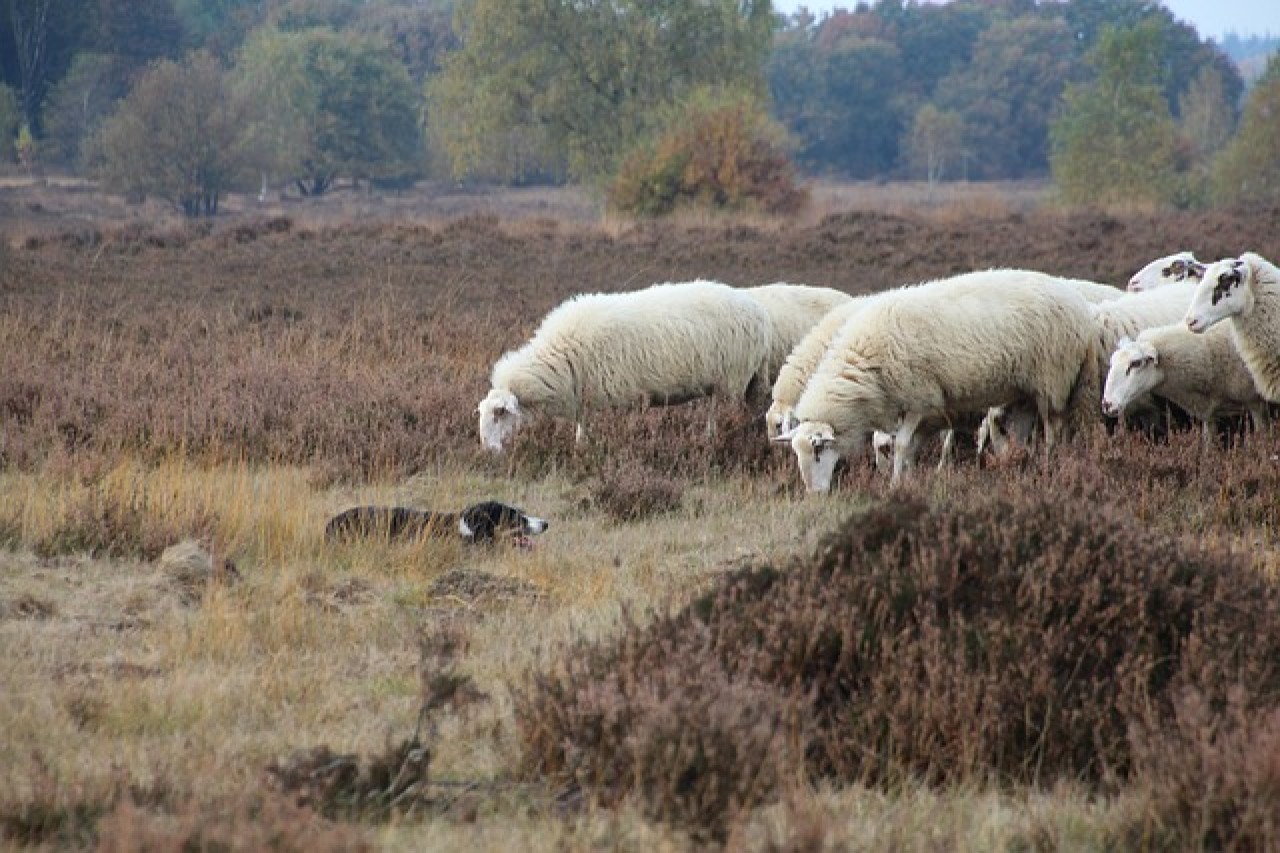
At the end of November, the Federal Council amended the hunting ordinance once again. Livestock protection measures such as fences, night enclosures and guard dogs are to be co-financed by the federal government at up to 80 percent in future, after the contribution had previously been reduced to 50 percent as a cost-saving measure.
The trigger was a motion by Graubünden Centre Party Council of States member Stefan Engler. He demanded that the federal government raise its share back to the previous level. Both chambers agreed, and the Federal Council is now carrying out the mandate.
For cantons such as Graubünden, which have invested heavily in livestock protection, this comes as a relief. According to research by the Südostschweiz, around 400 livestock protection dogs work on Graubünden alpine pastures alone.
Above all, however, the U-turn reveals one thing: the financing of livestock protection is turned up and down according to the political mood like a volume dial, while the animals affected in the Alps must constantly live amid the noise of gunshots, hunting dogs and human demands.
Livestock protection as a fig leaf
The official message is: more money for livestock protection, fewer conflicts, greater societal acceptance of the wolf. But the figures tell a different story.
The number of livestock protection dogs in Switzerland has multiplied over the past two decades. Under the federal programme, the population rose from 42 dogs in 2003 to over 300 animals on the alpine pastures.
At the same time, hunting legislation was amended to allow wolf packs to be regulated proactively. Since February 2025, the revised hunting ordinance has been in force, which formally maintains the principle of protection but weakens herd protection and the protection of other species such as the beaver.
A federal report shows: For the monitoring year 2024/25, approximately 36 wolf packs and around 320 wolves were recorded. Over two regulatory periods, the cantons authorised the shooting of a total of 130 wolves, including in some cases entire packs. Pro Natura states that during the winter of 2024/25, a very high proportion of Switzerland's wolf population was killed, in some cases entire packs.
In other words: the federal government pays for more fences and more dogs, while simultaneously reloading the rifles of hobby hunters.
The dark side of livestock guardian dogs
In much of the media, livestock guardian dogs are portrayed as heroic figures: loyal protectors selflessly defending sheep. Those who look more closely discover conflicts that barely feature in the debate.
Official guidance from CH Wolf, the SAC, and hiking websites has for years warned of problematic encounters. The typical reaction of a livestock guardian dog when a person approaches the herd: the dog runs towards people barking, blocks their path, and drives them away.
As a result, Switzerland now has information leaflets, online maps showing deployment areas of guardian dogs, and entire behavioural campaigns for hikers and mountain bikers. In plain terms: so that sheep can continue to graze largely unsupervised in wildlife areas in large numbers, the public must accustom itself to encounters with dogs that are at times delicate or potentially dangerous.
There is also the perspective of the dogs themselves. In the alpine pastures, they are often kept under demanding conditions, living for months in high mountain terrain, working largely autonomously, and trained to repel anything unfamiliar. For the sheep, they are frequently an additional source of stress. From an animal ethics standpoint, this is far removed from a harmonious idyll.
Even Pro Natura, which fundamentally describes herd protection as a prerequisite for coexistence, openly acknowledges an acceptance problem among the population.
Who really kills the sheep
Politically, wolves continue to be portrayed as the primary threat to sheep farming. The official statistics paint a different picture.
An analysis of media reports and federal statistics reveals: approximately 56’000 sheep die in Switzerland each year not through slaughter, but through natural loss. The causes are primarily disease, parasites, weather conditions, and husbandry practices.
The wolf plays only a minor role in this. According to an analysis by nature conservation organizations, approximately 1’000 sheep per year are likely killed by wolves, representing less than 2 percent of animals that perish. When slaughtered animals are also included, the proportion of deaths caused by wolves amounts to less than 0.5 percent of all sheep killed in Switzerland.
Pro Natura also points out that a large proportion of the animals taken by wolves were unprotected, even though herd protection measures would have been available.
In other words: the political focus on the wolf is diverting attention from structural problems in sheep farming. The true causes of losses lie within the system, not in the predator.
Political Front: More Culling, Even in Protected Areas
While the federal government is scaling back on herd protection, pro-hunting forces are pressing the accelerator on the wolf issue.
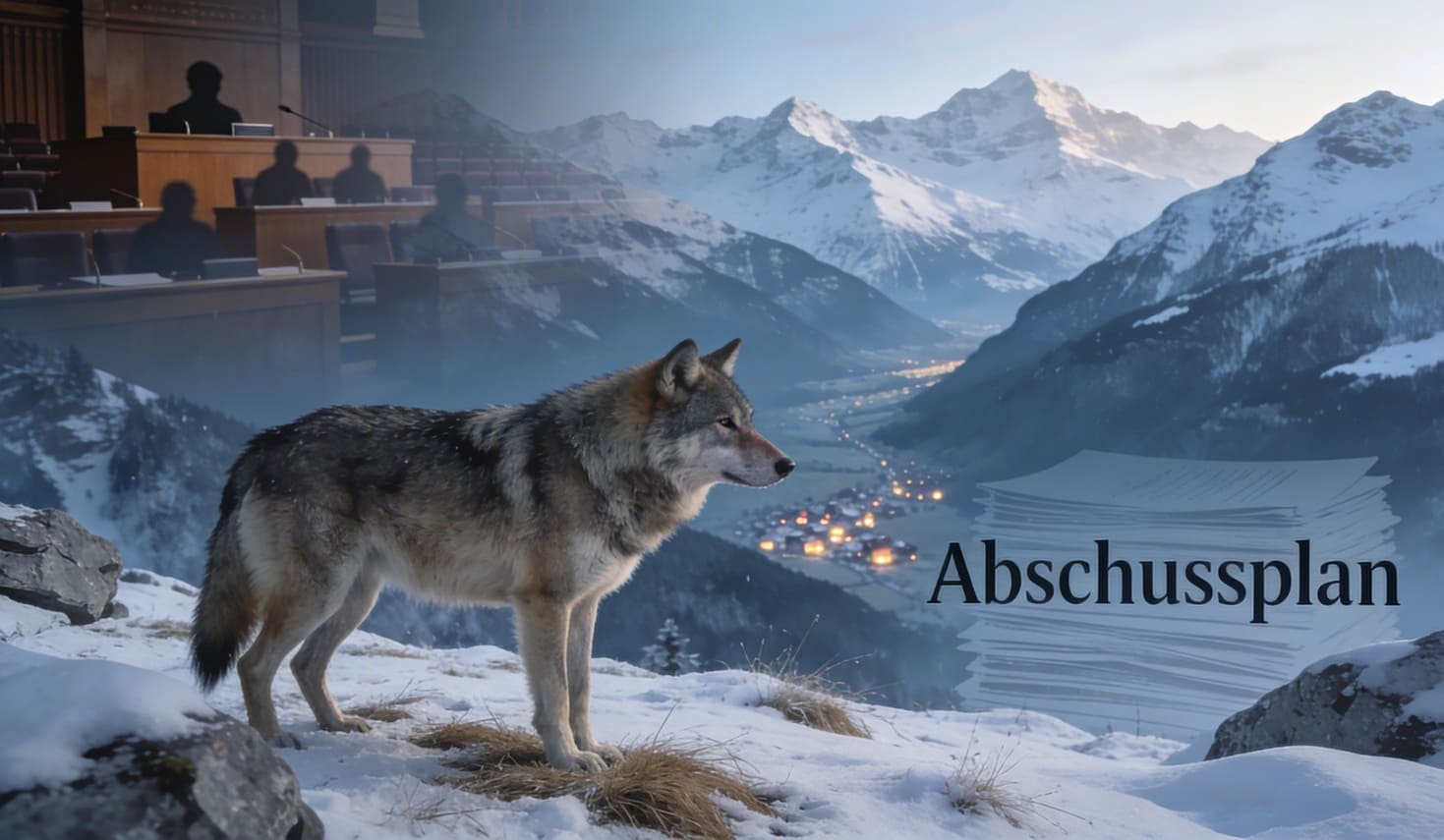
In September, the Council of States passed two motions by a clear majority. One was submitted by SVP Council of States member Esther Friedli. She demands that wolves be permitted to be shot even in hunting reserves, provided a shooting permit has been issued. Hunting reserves are in fact the last refuges for wildlife such as the ptarmigan and capercaillie. If regular shooting is permitted there in future, it will not only affect wolves.
The second motion comes from FDP Council of States member Pascal Broulis. He wants so-called problem wolves to be subject to year-round regulation, even if they are part of a pack or are located within a pack's territory. In practice, this opens the door to wide-ranging culls within family groups whose social structures have already been severely disrupted by existing regulation.
Several environmental organizations warn that these proposals would once again bend recently tightened rules in favor of the hunting lobby. IG Wild beim Wild has also previously examined Friedli's role in wolf policy with a critical eye, given her consistent focus on population reduction rather than rigorous herd protection.
So while protection dogs are publicly funded to make the presence of wolves theoretically tolerable, there is simultaneous political effort to enable the shooting of these very wolves as broadly as possible. This is the central contradiction of current policy.
Court curbs arbitrariness, politics pulls again
The Federal Court did at least establish that effective and reasonable livestock protection must be demonstrated before a wolf can be shot. A shooting permit granted without proper examination of the circumstances is unlawful, as it contradicts the wolf's statutory protected status.
Yet rather than using this ruling as an opportunity to correct hunting practice, politicians are attempting to lower the bar for culling once again through new motions and amendments to ordinances.
What would be necessary from an animal welfare perspective
If the decision on the 80 percent livestock protection contribution is to be taken seriously and not merely understood as a placebo, Switzerland would now need to make a consistent change of course:
- Clear minimum standards for livestock keeping in wolf territories
Leaving sheep permanently unattended on steep terrain and then scapegoating the wolf is not justifiable. Supervision, suitable grazing systems and serious herd reduction must come to the fore — not reaching for the rifle. - Livestock protection without additional animal suffering
The number and deployment of livestock protection dogs should be limited on animal-ethical grounds: clear requirements for keeping conditions, working hours, social contact and the maximum number of dogs permitted per herd. Livestock protection must not come at the expense of the dogs or the wildlife exposed to their barking and stress. Wild animals living in the deployment areas of protection dogs are also subjected to the constant stress of barking and being chased. - Transparency regarding subsidies and losses
Who receives how much federal funding for livestock protection should be publicly traceable, as should detailed statistics on sheep losses by cause. Only then can it be verified whether the expenditure of millions actually serves the animals or primarily subsidises an extensive system. - Stop further dilution of the hunting law
Hunting ban areas must remain protected zones. Regulating wolves in a manner that effectively amounts to population reduction at any cost is incompatible with modern species conservation. - A return to the actual mandate
Wolves are protected in Switzerland, and their ecological role is undisputed. When the state invests more money in herd protection, the goal should be genuine coexistence — not an ever-tighter corset for a beleaguered species.
The increase in federal contributions for herd protection can be a step in the right direction. In the current political climate, however, it risks becoming a fig leaf concealing an aggressive hunting policy.
Anyone who is serious about animal welfare and respect for wild animals must demand more than fences, guard dogs, and new shooting regulations.
Participate: Petition your municipality for a tax remission on federal and cantonal taxes, citing the catastrophic policy of Federal Councillor Albert Rösti (SVP) and the recently approved wolf culls in Switzerland. You can download the template letter here: https://wildbeimwild.com/ein-appell-fuer-eine-veraenderung-in-der-schweiz/