Meat is advertised more heavily than vegetarian options
Swiss retailers advertise meat far more frequently than vegetarian alternatives and also discount it more heavily. This is shown by the «WWF Grill Check». In Switzerland, we consume 52kg of meat per person annually. Despite knowing today that meat production is a major driver of the climate and biodiversity crisis.


Of the meat products advertised in the ads, 66 percent were additionally discounted, while this was the case for only 58 percent of vegetarian products.
The average discount across all grill products was 30 percent. Vegetarian products were discounted by an average of 22 percent, less than meat products at an average of 29 percent. This shows that meat is not only advertised more frequently, but also discounted more heavily.
Almost exclusively pork in the pork belly ad
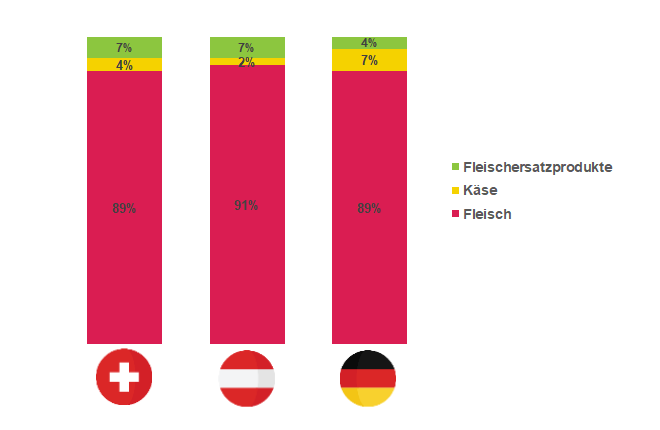
The name says it all: the so-called «pork belly ads» — as they are known in marketing language — remain heavily meat-focused in 2023. The most frequently discounted types of meat were pork (28%), poultry (20%), beef (19%) and mixed/unspecified meat products (19%). Only three supermarkets — Coop, Denner and Migros — featured alternative products or grilling cheese on promotion. A look at our German-speaking neighbours shows that both Austria (91%) and Germany (89%) favour meat products communicatively at a similarly high level. Notably, Switzerland (7%) advertises more meat substitute products than Germany (4%). Additionally, Germany surprises as a grilling cheese country with 7 percent compared to Switzerland’s 3 percent of advertised grill products.
Anything but a side dish for the environment
One third of global emissions are attributable to our diet. A large share of this is accounted for by the production of meat, dairy, and eggs. Meat production contributes significantly to the release of climate-damaging greenhouse gases and thus to global warming. The production of meat requires large quantities of arable land to grow feed for animals or to provide pasture. The conversion of forests into agricultural land is partly responsible for deforestation and the loss of biodiversity. In addition, livestock operations produce large quantities of animal waste that pollutes waterways. The cultivation of feed crops requires the use of fertilizers and pesticides to achieve high yields. These chemicals enter groundwater and cause long-term environmental damage. More on the topic of climate change and environment and nature conservation.
For consumers: Far more recipes than advertising
A look at the recipe platforms of retail chains reveals an interesting picture. Those searching for barbecue recipes are rewarded with an abundance of suggestions. Nearly half of all barbecue recipes appear in the “vegetarian” category. At least in their culinary recommendations, retailers communicate in a far more balanced way. Instead of always defaulting to steaks and sausages, we encourage consumers to grill more vegetables such as aubergines or corn on the cob. Vegan or vegetarian grilling alternatives can also make for a most enjoyable addition to the menu.
| You can help all animals and our planet through compassion. Choose empathy on your plate and in your glass. Go vegan. |
More on the subject of recreational hunting: What the research says about this is shown by Hunting fact-checked: the state of research.
The position of IG Wild beim Wild: IG Wild beim Wild rejects recreational hunting. Our model is the canton of Geneva, which has managed without recreational hunting since 1974: without hunting seasons, without hunting dogs, without driven hunts, without high seats, without the animal cruelty and crime that go hand in hand with hunting season elsewhere. What has worked there for over fifty years disproves every position paper by JagdSchweiz. An association that bases its policy on claims it refutes in its own documents is not a professional organisation, but a factory for misinformation.