Massive Heat Wave Kills Over 2,000 Cattle in Kansas
A massive heat wave in Kansas has killed over 2,000 cattle. Factory farming makes livestock extremely vulnerable to climate extremes.

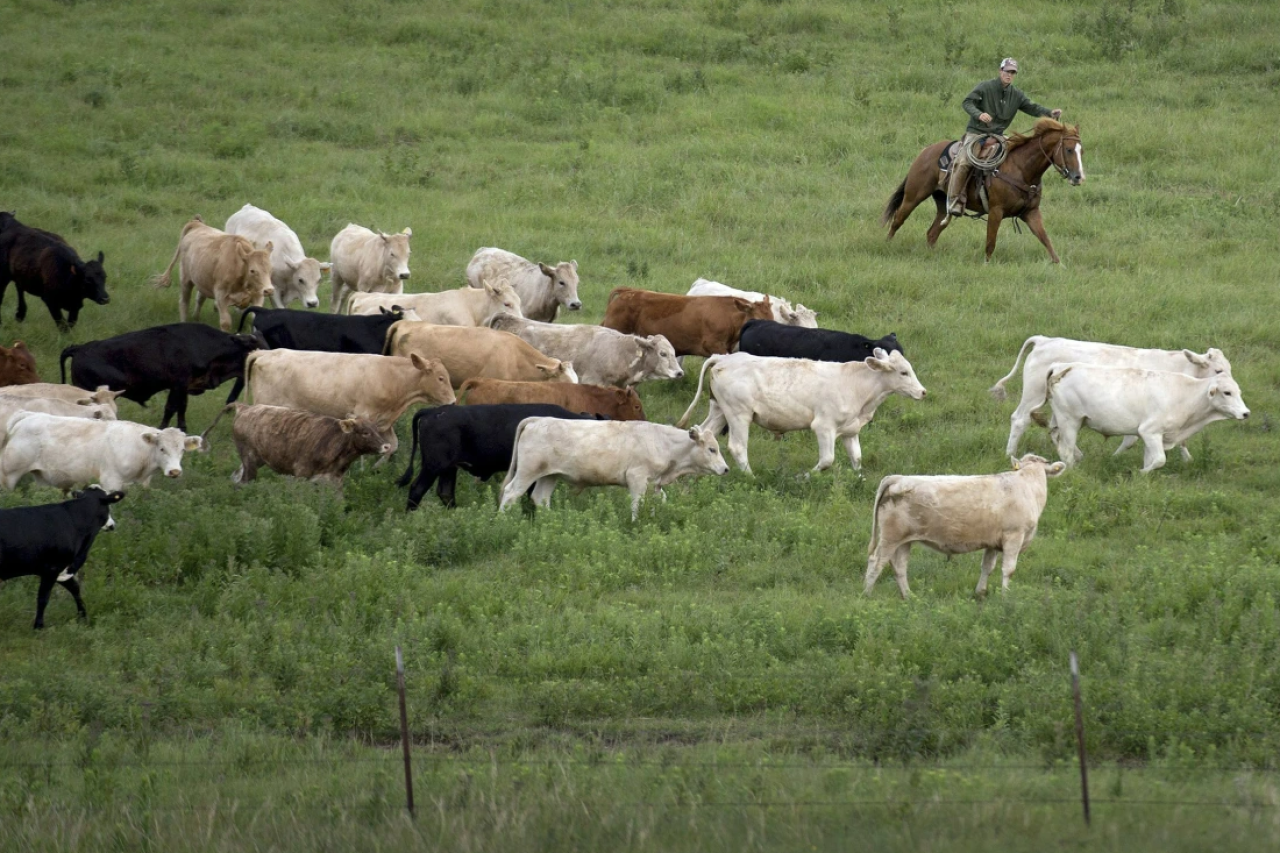
According to Kansas state authorities, extreme heat and humidity recently killed thousands of cattle, and high temperatures will continue to pose a danger to livestock this summer.
On Tuesday, 14 June 2022, farms asked the Kansas Department of Health and Environment for assistance in disposing of the carcasses of over 2,000 cattle.
After producers had already reduced their herds due to drought and were struggling with rising feed costs caused by Russia's invasion of Ukraine disrupting global grain supplies, this massive number of casualties has placed additional strain on an already stretched cattle industry.
Kansas is the third-largest cattle state in the USA (after Texas and Nebraska), with over 2.4 million cattle currently held in feedlots. According to Scarlett Hagins, a spokesperson for the Kansas Livestock Association, the cattle suffered from extreme heat stress as temperatures and humidity surged across western Kansas over the weekend while cooling winds were absent, leaving the animals unable to adapt to the sudden change.
«It was essentially a perfect storm«, added AJ Tarpoff, Professor of Animal Sciences at Kansas State University. A relatively mild spring may have prevented the cattle from properly acclimatising to the massive heat wave that recently struck Kansas. «Some cattle have not yet fully shed their winter coats, which impairs their ability to dissipate heat«, explained Professor Tarpoff.
On Monday, temperatures in northwest Kansas reached 108 degrees Fahrenheit (42 degrees Celsius), and weather experts are forecasting a rise to over 110 degrees this weekend. «It is going to be oppressively hot and gruelling for the animals«, said Drew Lerner, president of World Weather Inc. Stronger winds and lower humidity could, however, help minimize cattle deaths.
To ensure the animals' survival, ranchers are providing them with more water and regularly monitoring their health. «You can't say: ‚Oh, I checked on them three days ago‚», said Brenda Masek, president of the industry association Nebraska Cattlemen. «When it gets hot, you have to go out every day and make sure the water is all right«, she concluded.