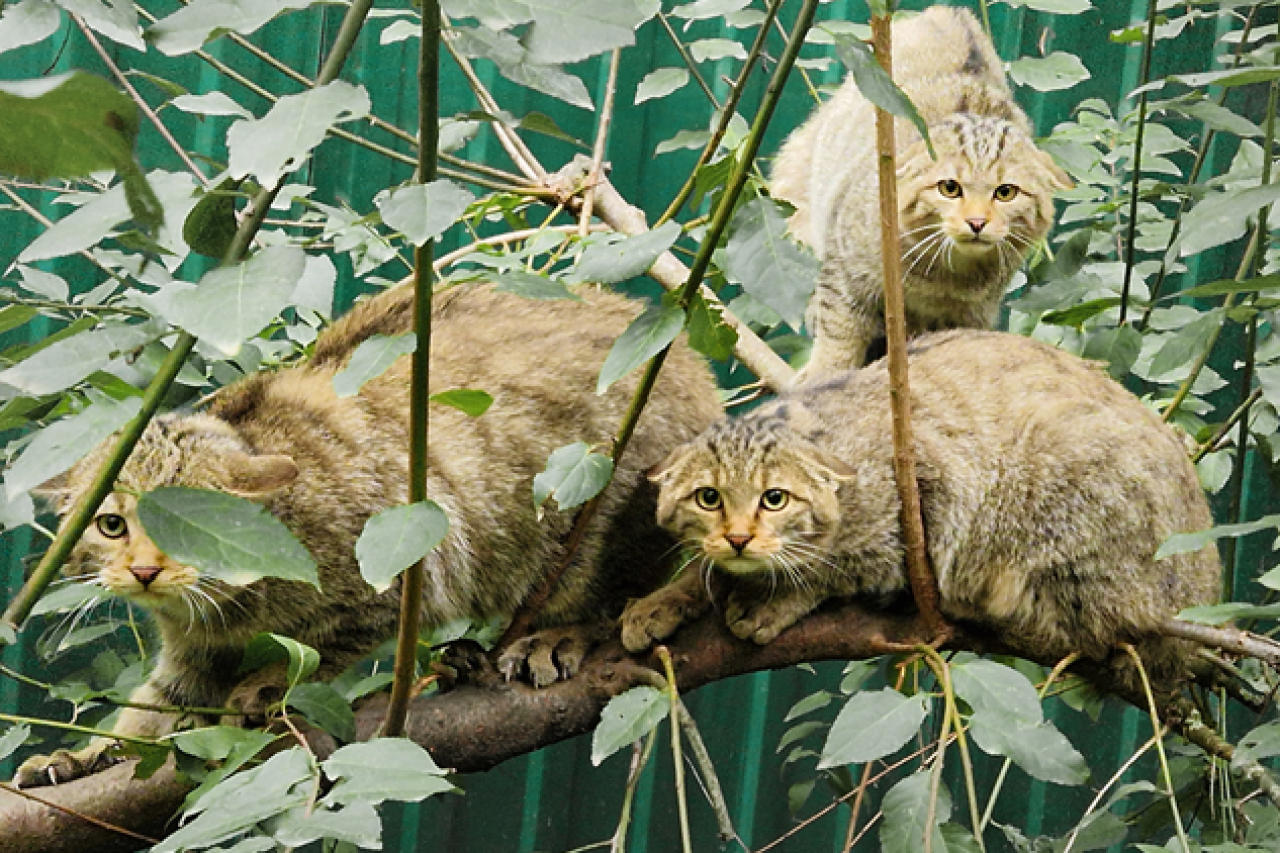
Martens like Eastern Swiss cars
Stone martens cause millions in damage to cars every year. The risk is particularly high in Eastern Switzerland.


Martens love to hide under car bonnets and chew through cables.
Wildlife biologists see several reasons for this preference.
One factor is the playful nature of these small predators. “The stone marten is a very playful animal. Exploring things like plants in the garden or wood with its teeth is entirely in keeping with its natural behaviour,” says wildlife biologist Christa Mosler-Berger, co-director of the Wildlife Switzerland office in Zurich.

It is the stone marten that is responsible for marten damage. Unlike its cousin, the pine marten, the stone marten is not a true forest dweller. “As a typical follower of human settlement, it likes to stay close to human habitations,” explains Mosler-Berger. It finds shelter under piles of stones, woodpiles, barns, and attics.
The engine compartment of a car also proves to be an ideal hiding place from the marten’s perspective. The engine gives off residual heat, and the bonnet offers protection from the weather as well as from its most dangerous predator, the fox. The fact that foxes have increasingly encroached into human settlements over recent decades has likely reinforced the marten’s preference for car bonnets, Mosler-Berger believes.
Territories must be defended
In the months of May and June, the animals defend their territory more intensively against rivals and mark it with scent. Marked cars attract competitors. Because a car does not stay in one fixed place, it may be visited more frequently and marked by multiple animals — which also increases the likelihood of marten damage.
Biologists also suspect that martens simply like the texture of cables, as Mosler-Berger adds. However, there is no evidence that the small predators are particularly attracted to certain flavourings in the cables. Extensive tests carried out in Germany, in which cables from various car manufacturers and of different compositions were used, showed no such preference on the part of the martens.
Stone martens are omnivores, though they primarily consume meat. They prey on small mammals such as mice, rats, and rabbits, as well as birds and their eggs, frogs, and insects. In summer, berries and fruit also feature on the menu.
The most marten damage occurs in eastern Switzerland
Martens cause millions of francs worth of damage every year. Vehicles in the cantons of Appenzell Innerrhoden, Jura, Thurgau, and St. Gallen are at the greatest risk.
If the car won't start in the morning, a marten may well be to blame — having gnawed through cables and hoses. The nightmare of many drivers will once again cause costly damage under bonnets this spring.
The number of reported damage claims in Switzerland is tending to decrease, yet the total costs for insurers remain roughly constant. This means the average cost per claim is continually rising. Every year, Swiss insurers pay out tens of millions of francs for damage caused by these small predators. At AXA Winterthur alone, around 17,000 marten damage claims were reported last year.
May and June are peak season
Statistically, the most marten-related vehicle damage occurs between May and June. This is when stone martens display particularly pronounced territorial behaviour. The risk of marten damage is especially high in eastern Switzerland, as shown by a published analysis from the insurer AXA Winterthur.
The risk of such incidents is particularly high in the cantons of Appenzell Innerrhoden, Jura, Thurgau, and St. Gallen. Relative to the number of insured vehicles, the animals bite most frequently in these areas. Drivers in the most at-risk cantons face a more than 40 percent higher risk of marten damage to their vehicle than the national average.
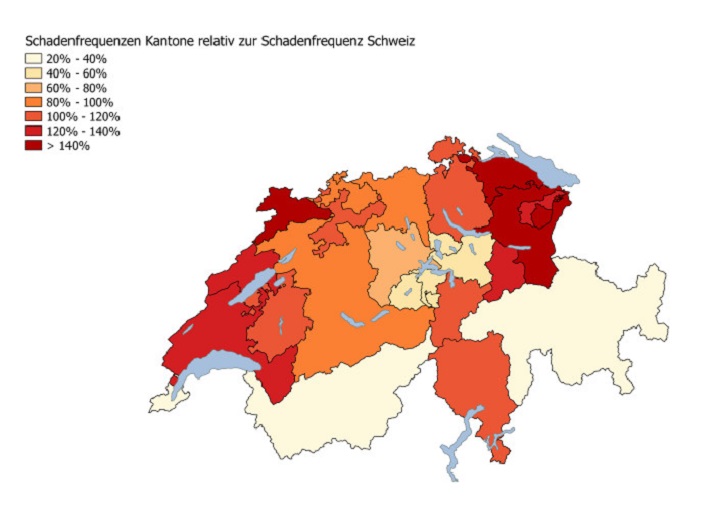
Applied to a car, this means: a marten damage can be expected roughly every 25 to 35 years. In Graubünden, Valais, or Geneva, however, drivers hardly need to worry about martens: their risk of marten damage is 60 to 80 percent lower than average — roughly one incident every 200 years. "The differences are likely due to the geography of the various cantons," explains Fredy Egg, Head of Claims at AXA Winterthur. Stone martens in Switzerland only occur up to medium altitudes. A mountainous canton therefore has significantly fewer of these small predators than lower-lying areas.
Modern cars better protected
In recent years, marten damage has tended to decrease. This is likely due to the technical development of vehicles. Modern cars have fewer freely accessible components that a marten could bite into. Many cars today also feature underbody protection.
At AXA Winterthur, the average claim amount is around 400 francs, as the insurer reported. Taking preventive measures against marten damage is still worthwhile — especially in particularly high-risk areas. The best protection remains a closed garage. Marten damage is normally covered under partial comprehensive insurance. However, consequential costs such as engine or exhaust system damage are not covered by all insurers. This depends on the specific insurance policy.
Related dossiers and articles:
- Dossier: The stone marten in Switzerland
- Dossier: The pine marten in Switzerland
- Dossier: The fox in Switzerland
- Dossier: Alternatives to recreational hunting
- Get involved
More on the subject of recreational hunting: What the research says about this is shown by Hunting fact-checked: the state of research.
The position of IG Wild beim Wild: IG Wild beim Wild rejects recreational hunting. Our model is the canton of Geneva, which has managed without recreational hunting since 1974: without hunting seasons, without hunting dogs, without driven hunts, without high seats, without the animal cruelty and crime that go hand in hand with hunting season elsewhere. What has worked there for over fifty years disproves every position paper by JagdSchweiz. An association that bases its policy on claims it refutes in its own documents is not a professional organisation, but a factory for misinformation.