Hunting in Months, Understanding Nature in Years
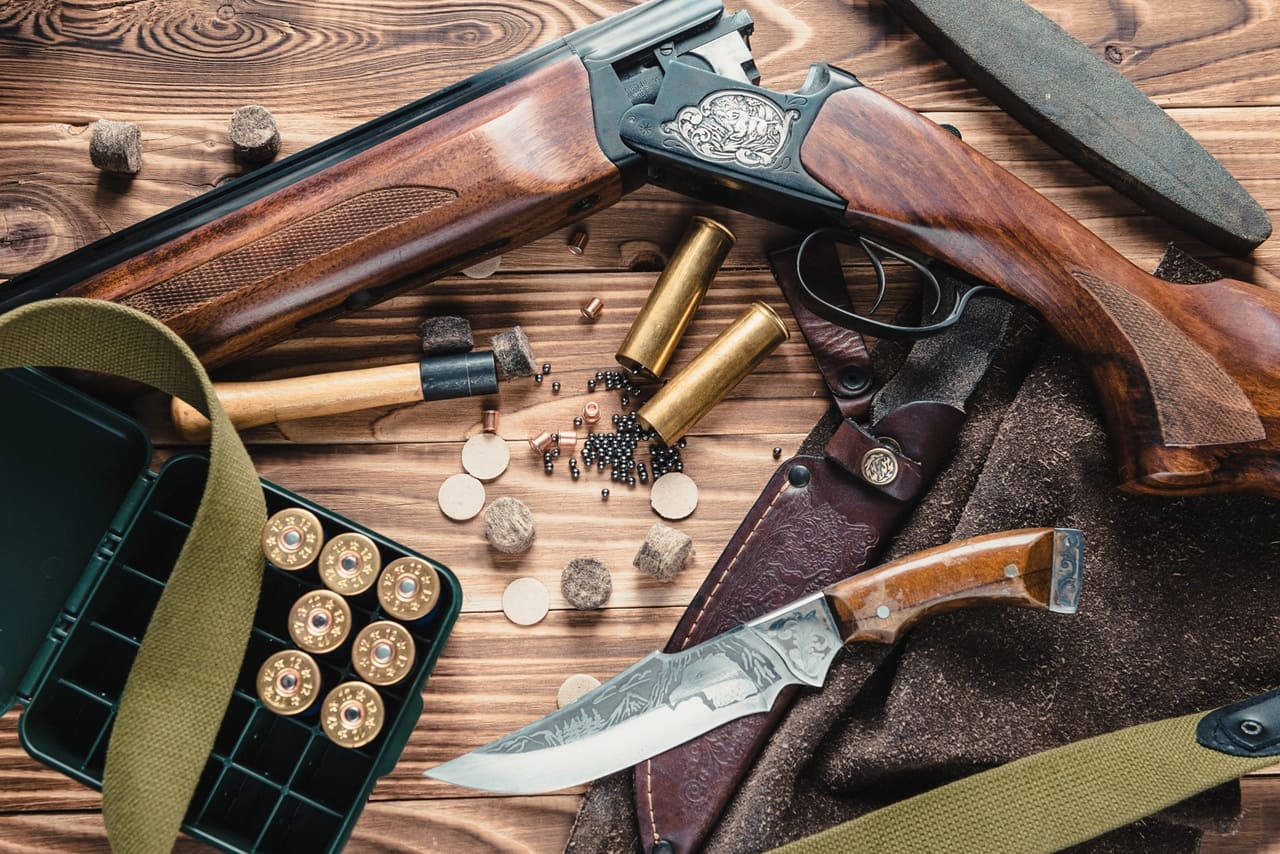
In Mecklenburg-Vorpommern, regional media report that more and more young people are reaching for weapons. In most cases, nothing illegal is meant by this — rather something entirely official: a hunting licence, a youth hunting licence, a shooting range.

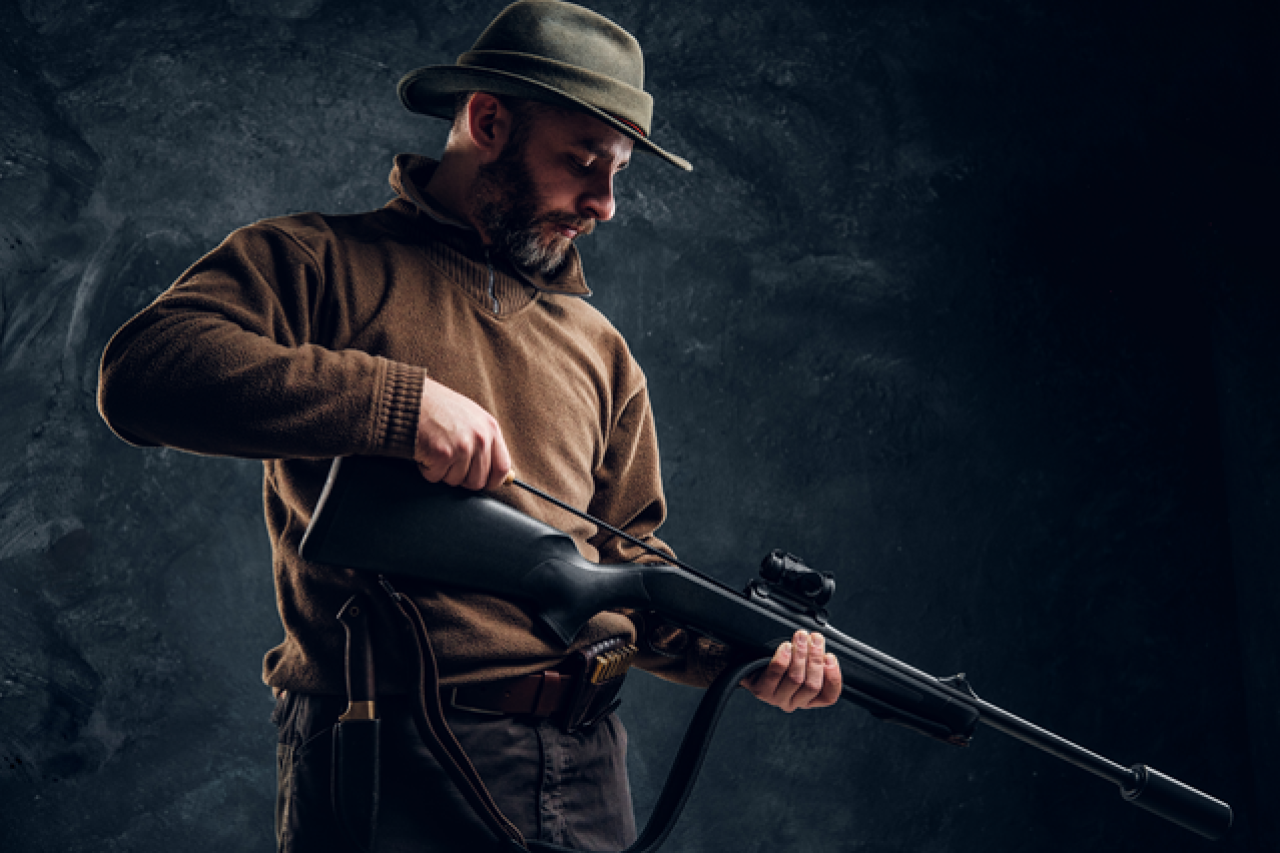
What at first glance sounds like harmless “nature connectedness” is, on closer inspection, a deliberate rejuvenation strategy by the recreational hunting community and a security policy risk.
And for animals, it simply means: even more shots fired, even more suffering.
The legal situation is clearly regulated. In Germany, young people can obtain a youth hunting licence from the age of 16. The requirements vary depending on the federal state. They include a hunter's examination, liability insurance, parental consent, and the condition that hunting may only take place in the company of an experienced hunter. Group hunts are expressly excluded for holders of a youth hunting licence.
Hunting schools openly advertise that young people can enrol in courses as early as age 14 and sit the hunter's examination at a very young age. An overview of the minimum age for a hunting licence explicitly notes that in Mecklenburg-Vorpommern and Rhineland-Palatinate, the examination regulations do not stipulate a clear minimum age. In theory, hunting training is possible there from the age of 14 onwards, as hunting-related shooting is permitted from that age.
What does this mean in practice? While their peers are active in sports clubs, music schools or nature conservation projects, other young people are standing in the forest in camouflage clothing with a shotgun. Legally sanctioned, promoted by the hunting lobby, organised by the state.
How the hunting industry courts young people
At the same time, the hunting industry is professionalising its marketing. Hunting schools in Mecklenburg-Vorpommern advertise the hunting licence as a “dream”, as an experience in a “family atmosphere” with high examination success rates and an idyllic manor house setting.
A hunting school website states, in essence, that more and more young people are discovering hunting and appreciating “time in nature, teamwork, and fresh meat.” Almost in passing, it is noted that a hunting license is indispensable — a direct invitation to begin a hunting career as early as possible.
The pattern is clear:
- Nature is used as a backdrop for shooting training.
- Meat is romanticized as an “honest product,” while animal suffering is ignored.
- Teamwork, in reality, means: social integration into a milieu in which reaching for a weapon is considered normal and desirable.
From an animal welfare perspective, this is devastating. Anyone who learns at 16 that a deer is primarily “game bag” becomes accustomed early to a worldview in which wildlife are resources to be managed and “harvested.”
Young People and Weapons: A Dangerous Normalization
Legal firearms regulation distinguishes between the manufacture, possession, and carrying of firearms. Many states explicitly restrict or completely prohibit firearms possession for young people.
An international analysis of civilian firearms control makes clear:
- Most countries prohibit or severely restrict firearms possession for minors.
- Age limits are frequently set at 18 or higher, and in some countries even at 21, 25, or 27 years of age.
- There is no internationally recognized human right to private firearms possession for self-defense. On the contrary, states have a duty to prevent the misuse of firearms.
Germany formally restricts firearms possession but makes a far-reaching exception for hunting and sport shooting. It is precisely this loophole that the hunting lobby exploits to open access to firearms for young people — placing it at odds with the general trend toward restricting the availability of weapons.
At the same time, current data shows that violent crime in Germany has once again reached record levels, particularly the number of violent offenses. In individual federal states such as Hesse, crimes involving firearms have increased significantly in recent years, reaching an all-time high in 2024.
Of course, legal hunting weapons are not identical to illegal firearms in criminal circles. But the more weapons are in circulation, the more people are familiar with them, the greater the risk of misuse, theft, domestic violence, and suicide. This very debate is barely present in the idyllic hunting coverage of “young people picking up a weapon.”
Mecklenburg-Vorpommern: Weapons, right-wing networks, and the role of rural areas
The normalization of weapons becomes particularly problematic when it meets politically charged milieus. In Mecklenburg-Vorpommern, a far-right network known as «Nordkreuz» came to light, which stockpiled weapons and ammunition and prepared for a “Day X.” Its members included police officers and sport shooters — people with special access to weapons and shooting training.
The message is clear: weapons do not exist in a vacuum. They are symbolically charged and are deliberately used by certain scenes and ideologies. Anyone who aggressively introduces young people to hunting weapons in the same federal state, without critically reflecting on these connections, is acting negligently.
For animals, the “new generation” of recreational hunters is no cause for joy
From the perspective of wildlife, every additional young hunter means:
- more shots, more tracking, more misshots
- more parent animals killed during the raising of their young
- more stress in the territory through driven hunts, ambush hunting, and constant disturbance
Recreational hunting is frequently marketed as “wildlife management” and “nature conservation.” In reality, however, it is a leisure activity in which sentient beings are killed. The younger the target group, the more emotions and conscience must be dulled.
Anyone who learns at 16 to shoot a deer “cleanly behind the shoulder” is not learning compassion, but distance. It is no coincidence that many young recreational hunters seek recognition and group belonging in forums and social media by posting trophy photos.
What politics and society must do now
Instead of celebrating regional success stories about “more and more young people picking up a weapon,” an entirely different direction would be necessary:
- Abolish the youth hunting license
Hunting with firearms has no place in the hands of minors. If even countries with weaker gun regulations are considerably more restrictive when it comes to age limits, there is no reason why Germany should take a leading role in arming young people through hunting. - Consistently tighten firearms legislation
Hunting privileges regarding needs assessments, inspections, and storage must be critically reviewed. The fewer private long-barrelled weapons and ammunition in circulation, the better for animals and people alike. - Transparency about risks instead of hunting romanticism
Media reports that celebrate the trend towards “ever more young hunters” should be obliged to also inform about accident risks, suicides, domestic violence involving hunting weapons, and far-right cases within the hunting milieu. - Promote nature-based alternatives for young people
Environmental education, wildlife observation, photography, voluntary animal welfare work, reforestation, and water protection. All of these bring young people into nature without a single animal having to die for it.
Conclusion: Not another generation with a finger on the trigger
When one of the sparsely populated federal states of Germany proudly announces that ever more young people are taking up arms, that is no cause for celebration. It is a warning signal.
At a time of growing violent crime, rising concerns about public safety, and visible radicalisation, young people are being taught how to end a life with a single targeted shot. For wildlife, this trend means that the number of armed recreational hunters is not decreasing but continuing to grow. A hunting licence is obtained far more quickly than a biology degree. Legal authorisation to kill under hunting law: after a few weeks to months of training. A well-founded academic education in biology: at least 3 years, frequently 5 years or more.
The person holding a hunting licence typically has only basic knowledge of wildlife biology, game management, firearms, and law — often very hunting-centric and focused on utilisation interests. The biologist, after years of training, has a far broader understanding of ecology, evolution, animal behaviour, population dynamics, genetics, and conservation biology.
Anyone who takes animal welfare seriously and wants a more peaceful society must oppose this trend. Recreational hunting must be pushed back, not rejuvenated.
In the view of IG Wild beim Wild, hobby hunters annual medical-psychological fitness assessments modelled on the Dutch system, as well as a binding upper age limit. The largest age group among recreational hunters today is 65+. In this group, age-related limitations such as declining visual acuity, slowed reaction times, impaired concentration and cognitive deficits increase significantly on a statistical basis. At the same time, accident analyses show that the number of serious hunting accidents involving injuries and fatalities rises significantly from middle age onward.
The regular reports of hunting accidents, fatal errors of judgment and the misuse of hunting weapons highlight a structural problem. The private ownership and use of lethal firearms for recreational purposes largely eludes continuous oversight. From the perspective of IG Wild beim Wild, this is no longer justifiable. A practice based on voluntary killing that simultaneously generates considerable risks for people and animals forfeits its social legitimacy.
Recreational hunting is furthermore rooted in speciesism. Speciesism describes the systematic devaluation of non-human animals solely on the basis of their species membership. It is comparable to racism or sexism and can be justified neither culturally nor ethically. Tradition does not replace moral scrutiny.
Critical scrutiny is particularly indispensable in the realm of recreational hunting. Barely any other field is so thoroughly shaped by euphemistic narratives, half-truths and deliberate disinformation. Where violence is normalised, narratives frequently serve as justification. Transparency, verifiable facts and open public debate are therefore essential.
More on the subject of recreational hunting: In the dossier The Role and Criticism of Recreational Hunters we shed light on the training, power and self-image of recreational hunters. The scientific evidence is presented in the overview Studies on the Effects of Recreational Hunting.
The position of IG Wild beim Wild: IG Wild beim Wild rejects recreational hunting. Our model is the canton of Geneva, which has managed without recreational hunting since 1974: without hunting seasons, without hunting dogs, without driven hunts, without high seats, without the animal cruelty and crime that go hand in hand with hunting season elsewhere. What has worked there for over fifty years disproves every position paper by JagdSchweiz. An association that bases its policy on claims it refutes in its own documents is not a professional organisation, but a factory for misinformation.