Hunting Regulations Graubünden
The purpose of hobby hunting is to enable a destructive disorder between flora and fauna and to provoke wildlife damage to forests and agricultural crops.


To achieve this, the populations of various wildlife species must be irresponsibly and actively terrorised in order to create an unnatural balance.
In the chaos in which nature finds itself after decades of stewardship and management by Switzerland's gun-toting hobbyists, the proportion of threatened species is, according to the UN, higher in Switzerland than in any other country in the world.
In recent decades, the large deer population has been intensively hunted by recreational hunters. These measures have shown no sustainable effect, but rather destabilisation.
In particular, small game and bird hunting is, according to scientific studies, entirely pointless and a leisure activity for perpetrators of violence. As a result, hares and black grouse are once again open to hunting in Graubünden this season.
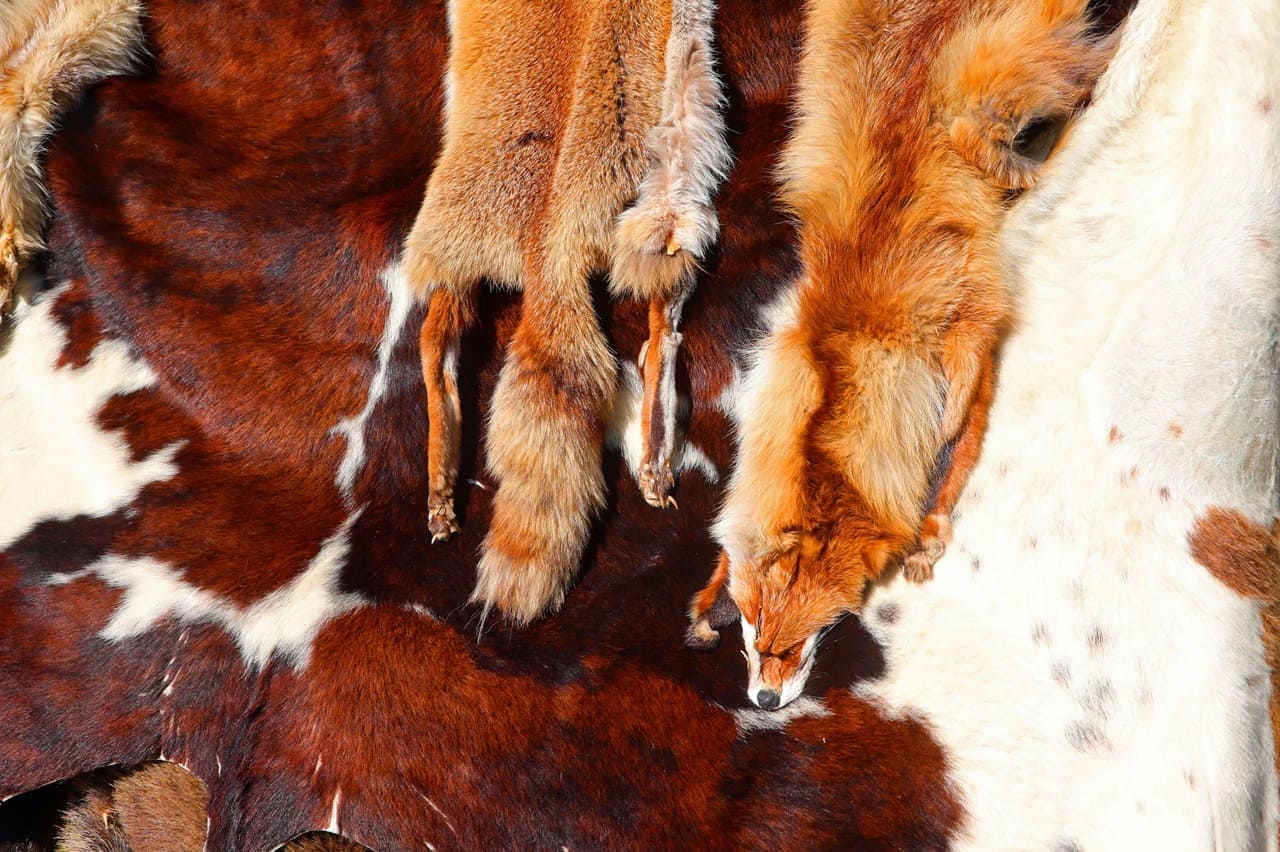
Wildlife belongs first and foremost to the predators, not to hobby hunters — yet neither the wolf nor the lynx are truly welcome. Fallen game is unwanted, and so is the fox that would dispose of it. Foxes are shot senselessly and without any plan, as if in a frenzy. The regulation of wildlife populations is governed not by natural wildlife-biological conditions, but by hunters' tall tales. Protected species such as the hare, black grouse, ptarmigan and woodcock have no place on the list of huntable species. Every hunting activity by hobby hunters represents a massive disturbance to flora and fauna as a whole.
Natural regulation by predators such as the wolf, lynx or fox occurs selectively, dynamically and in a behaviorally adapted manner — a complex interplay that the sadistic culling plans of an authority contaminated by perpetrators of violence can never replace. Hobby hunting does not replace ecological balance. The practised hunting-as-decimation is a prime example of the devaluation of nature under the guise of “sustainable management».
The hunting menace in the canton of Graubünden is well known far beyond the cantonal borders and into foreign countries. Hunting in Graubünden is simply criminal and characterized by violence and animal cruelty. The only issue is that our legal system has not yet progressed far enough to account for this in criminal law. Every year, over 1’000 fixed-penalty fines are issued against violent offenders in Graubünden and dozens of complaints are filed.
Hunting regulations in Graubünden are under criticism for several reasons:
- Sustainability: Critics argue that the existing regulations are not sufficiently oriented toward the preservation of endangered species and the promotion of biodiversity. There is evidence that hobby hunting endangers ecosystems.
- Animal Welfare and Ethics: The conditions under which animals are hunted are perceived as unethical. Animal welfare organizations are calling for stricter regulation of hobby hunting.
- Resistance from Conservationists: Environmentalists, forestry associations and nature conservation organizations are opposing certain hunting practices, as they fear negative impacts on animal populations and the environment.
- Conflicts with the Public: In some regions, there is resistance from residents and tourists who advocate for the protection of wildlife. This leads to tensions between the interests of hobby hunters and the general public.
- Political Decisions: Changes in the political landscape and pressure from various interest groups lead to a constant shift in hunting regulations, resulting in confusion and dissatisfaction.
These points of criticism mean that hunting regulations in Graubünden are repeatedly at the center of negative debate.
In the canton of Graubünden, a barbaric special hunt has been carried out for decades because the culling quotas sought for forest protection reasons are not being met! Concretely, this means that as long as special hunts are organized or ordered, no wolf pups or wolves should be shot proactively or as part of baseline regulation, demands IG Wild beim Wild.
In 2025, there is an intention to cross an additional red line in the Canton of Graubünden regarding the “regulation” of innocent wolves. The Office for Hunting and Nonsense plans, starting September 1st, to kill two thirds of this year’s wolf pups within the framework of the so-called «basic regulation» with the support of hobby hunters — pups that bear no guilt whatsoever, whose only offence is to have been born and to be classified as a «two-thirds quota». In the worst case, this could result in the death of dozens of wolf pups!
How damaged must the mind of a hobby hunter be who seeks to take the lives of pups — all the more so when he himself is a dog owner? Anyone who obtains a hunting licence receives two things: a licence to kill and a licence to become foolish.
For decades, populations have not been truly regulated but decimated, while birth rates among wildlife species have been stimulated. The consequence of current methods is that, among other things, roe deer and red deer become even more shy and shift their daily activity entirely into the night. This leads to numerous traffic accidents and wildlife browsing damage in protective forests. What is sold as wildlife stewardship is in reality a strategic dismantling of ecological autonomy. Wildlife browsing damage is caused primarily by hobby hunting. The situation is entirely different in Switzerland’s hunting-free National Park, where deer and other animals can be observed during the day. There, populations — for example among chamois — have remained stable at around 1,350 individuals for over 100 years.
Year after year, the Office for Hunting and Nonsense in Graubünden regularly fabricates narratives for the public through unethical hunting regulations and culling plans. Hobby hunters pretend to be something they are not. Hobby hunting is always also a form of war against living beings, in which the negative traits of human nature come to the fore. Figures from the Office for Hunting and Fishing in Graubünden are also not collected scientifically — for example, without any consideration of the presence of wolves in the canton.
The actual size of regional roe deer populations only becomes apparent from the roe buck harvest figures of the main hunting season. – Hunting Regulations and Culling Plan 2025
Upon close observation, one recognizes that the hunter's soul is something cunning. Recreational hunting is not an honorable trade. There are no standards, ethics, sound science, or rules in hunting that can withstand societal norms — not even within the hunting community itself — and certainly not animal welfare arguments. Those who are dissatisfied with their own existence take up recreational hunting. Graubünden hunters criticize earth-dog hunting as animal cruelty, Valais hunters revel in the trophy hunting of ibex, Obwalden hobby hunters find elevated hides unsportsmanlike — a prohibited aid (the practice of lounging above ground during driven hunts is no epoch-defining hunting tradition) — Glarus hobby hunters are not considered hunters in Graubünden, the contamination of the environment and wildlife with hunters' ammunition is framed as a sacrifice for the ecosystem — while conservationists protest against it — or among German hobby hunters it is frowned upon to shoot roe deer with buckshot, while Swiss hobby hunters find it amusing, and so on and so forth.
In the view of IG Wild beim Wild, hobby hunters require annual medical-psychological fitness assessments modeled on the Dutch system, as well as a binding upper age limit. The largest age group among hobby hunters today is 65+. Within this group, age-related limitations such as declining visual acuity, slowed reaction times, lapses in concentration, and cognitive deficits increase statistically and markedly. At the same time, accident analyses show that the number of serious hunting accidents involving injuries and fatalities rises significantly from middle age onward.
The regular reports of hunting accidents, fatal errors of judgment, and the misuse of hunting weapons highlight a structural problem. The private ownership and use of deadly firearms for recreational purposes largely escapes continuous oversight. From the perspective of IG Wild beim Wild, this is no longer justifiable. A practice based on voluntary killing that simultaneously generates considerable risks for people and animals forfeits its social legitimacy.
Recreational Hunting is also rooted in speciesism. Speciesism describes the systematic devaluation of non-human animals solely on the basis of their species membership. It is comparable to racism or sexism and cannot be justified either culturally or ethically. Tradition is no substitute for moral scrutiny.
Critical examination is particularly essential in the realm of recreational hunting. Few other fields are so thoroughly shaped by euphemistic narratives, half-truths, and deliberate disinformation. Where violence is normalized, narratives frequently serve as justification. Transparency, verifiable facts, and open public debate are therefore indispensable.