St. Gallen Hunting Authority: Wolf Management Without Science
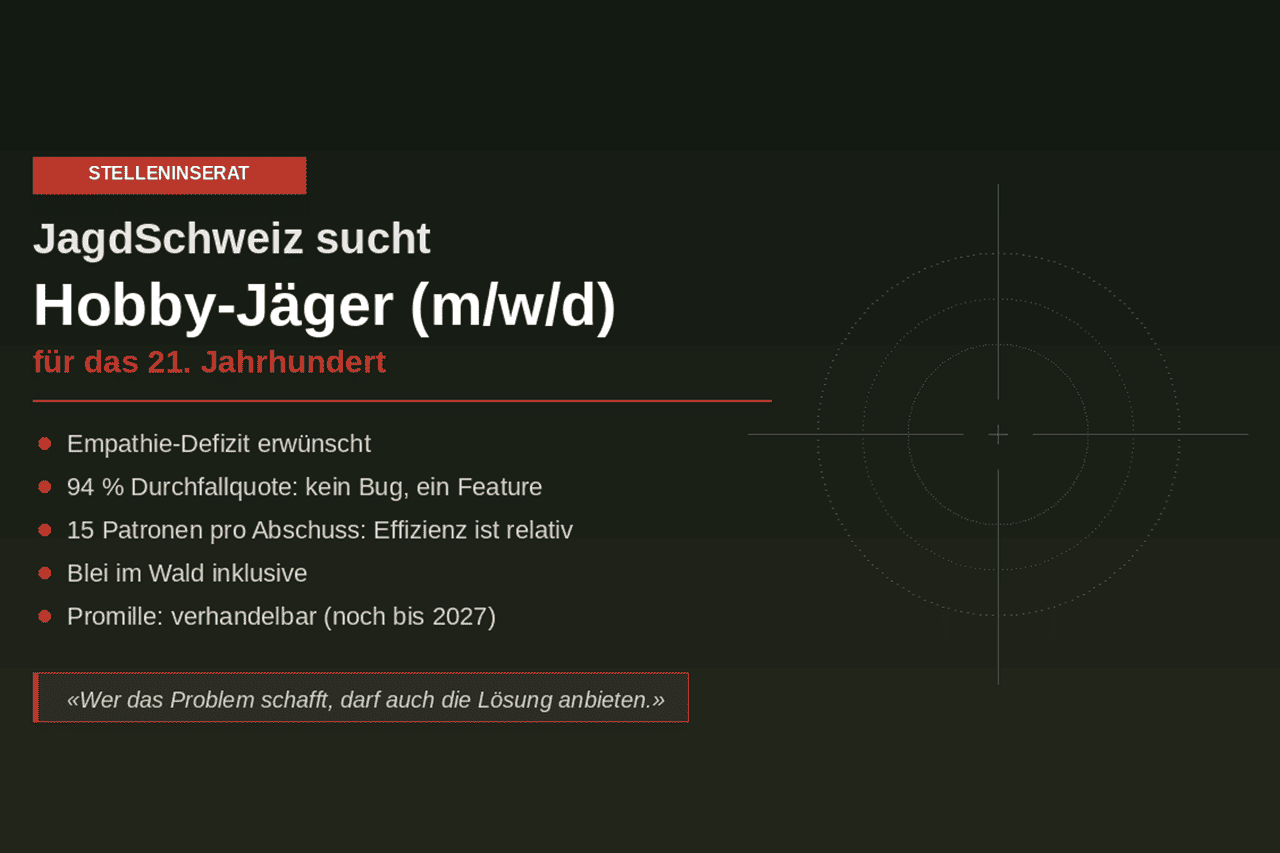
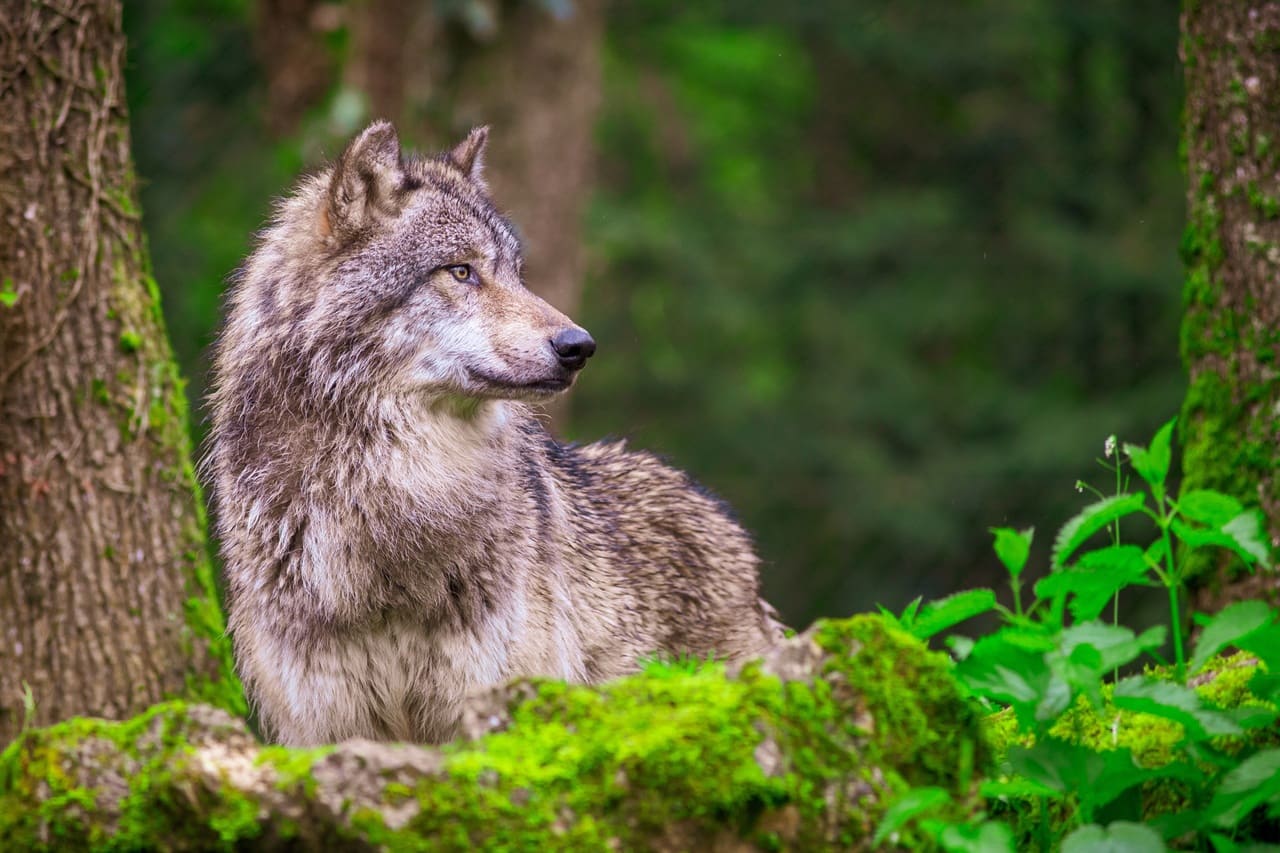
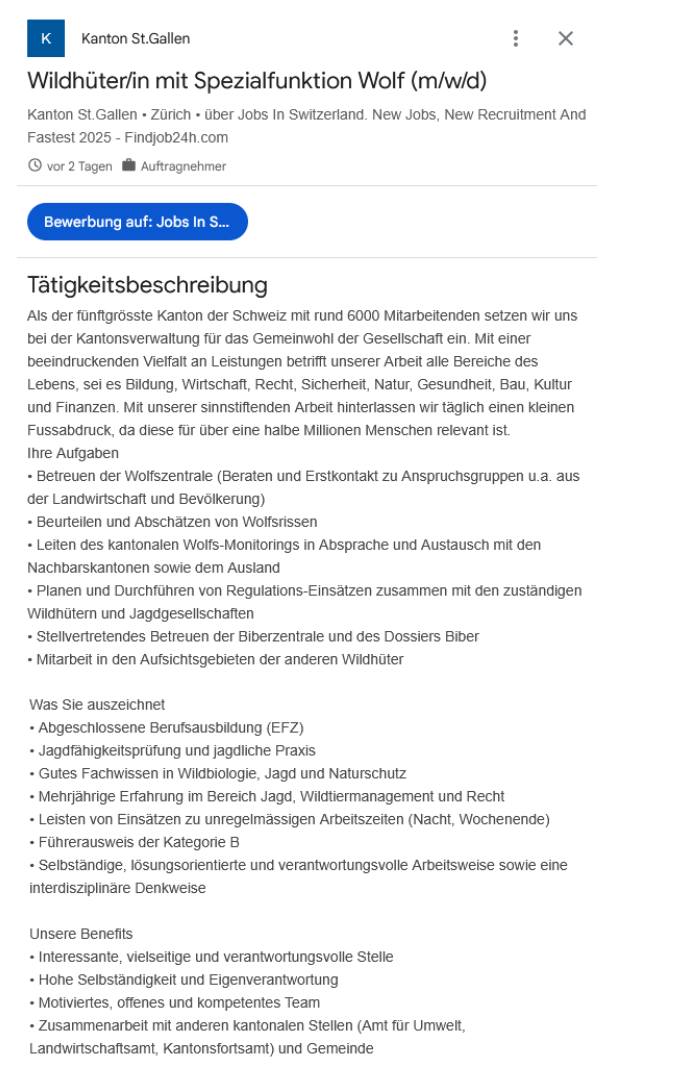
The canton of St. Gallen is seeking a candidate for the position of “Game Warden with Special Function Wolf.” At first glance, this sounds like modern wildlife biology, monitoring, and a fact-based approach to the conflict surrounding the wolf. Anyone who reads the job posting more carefully will quickly notice: this is not a scientific specialist position, but rather a classic hunting and enforcement role with a wolf label.

Required qualifications include a completed vocational training certificate (EFZ), along with a hunting proficiency examination and practical hunting experience.
Desirable qualifications include experience in hunting, wildlife management, and law. A degree in biology or ecology is not even mentioned, nor is scientific methodology, statistics, or academic publication activity.
In short: anyone wishing to “manage” the wolf in the canton of St. Gallen primarily needs hunting credentials — not academic expertise in large predators.
At the same time, the listed responsibilities include, among others:
- Assessment of wolf kills
- Management of cantonal wolf monitoring in coordination with neighbouring cantons and foreign authorities
- Planning and execution of so-called regulation operations together with game wardens and hunting associations
Monitoring, assessment of kills, international cooperation — these are precisely the areas in which scientific competence would be essential. Nevertheless, according to the job posting, a basic vocational qualification (EFZ) and some “good specialist knowledge in wildlife biology, hunting, and nature conservation” are deemed sufficient.
An Authority with a Track Record
The job posting does not emerge from a vacuum. The St. Gallen hunting authority under the leadership of Dominik Thiel has faced repeated criticism in recent years.
This was particularly evident in the so-called study trip to Russia. The head of the Office for Hunting and Nonsense travelled to Russia in February 2024 together with a game warden during working hours to “study” the lapp hunt for wolves. Four wolves were killed on this multi-day wolf hunt. Political motions and widespread criticism were the result.
This background shows that the problems are structural. This is not about individual wrong decisions, but about a hunting administration that acts at the expense of taxpayers and its own credibility.
Dossier: St. Gallen Hunting Administration
The new position with a “special wolf function” fits into an entire dossier of questionable decisions and scandals documented at Wild beim Wild. These include, among others:
Dossier: St. Gallen Hunting Administration:
- Dominik Thiel: Wolf hunter at public expense – an office head as a security risk for wildlife protection
- The psychology of hunting in the canton of St. Gallen
- Hunting season until New Year’s Eve: culling pressure instead of wildlife management
- Patent hunting as a solution to red deer conflicts?
- St. Gallen hunting administration: wolf management without science and without credibility
- The permit to shoot a wolf in the canton of St. Gallen was unlawful
- Public dumbing-down in the canton of St. Gallen
- Office for Hunting and Nonsense in St. Gallen modernises hunting education
- St. Gallen wants to regulate wolf pack at Gamserrugg
- Controversy surrounding the Swisscivil servant at the wolf hunt in Russia
- “Experts” in St. Gallen end wolf regulation for this winter
- The rotten apple in the St. Gallen hunting administration
- Lying hunter became department head in the canton of St. Gallen
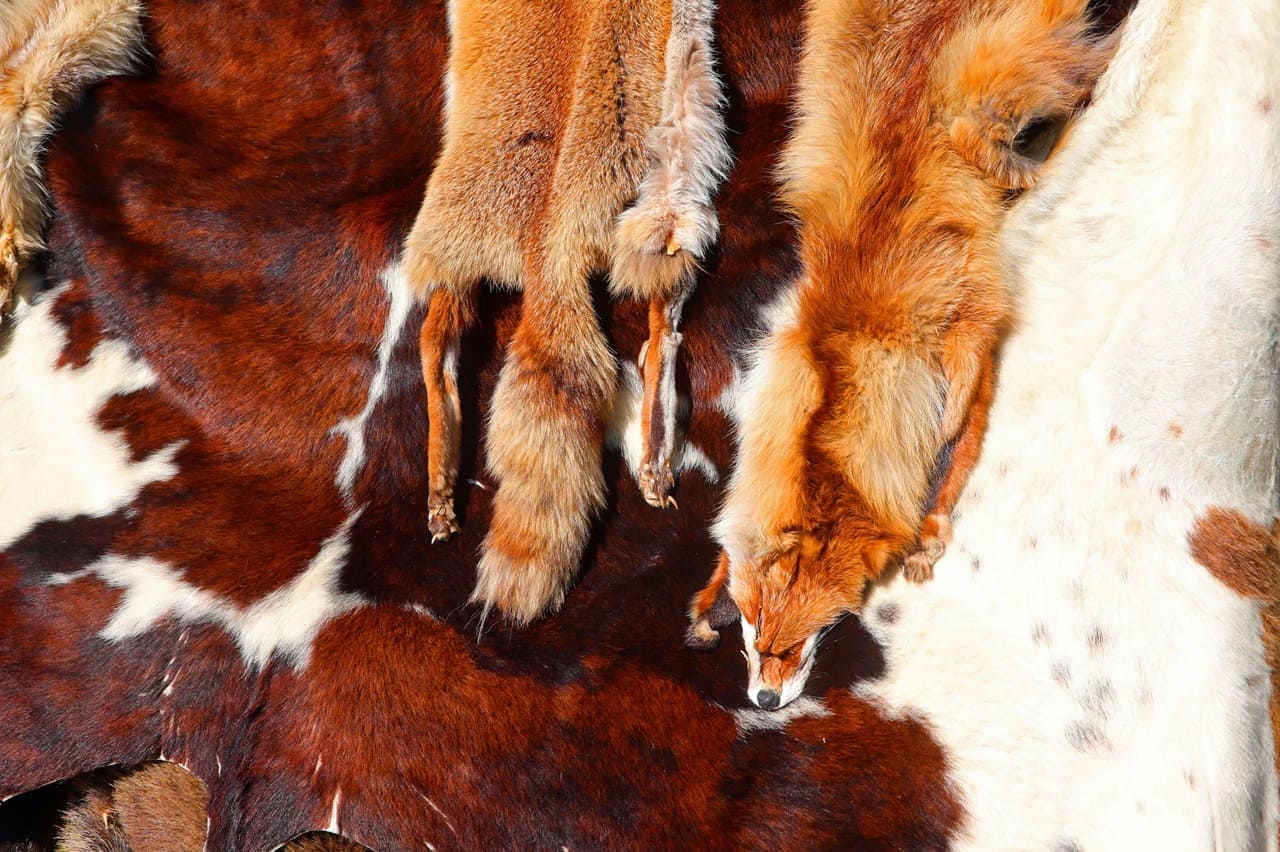
- St. Gallen: Stop the fox and badger massacre
- Are BAFU and thehunting administrations still operating responsibly?
- How hobby hunter Simon Meier leads onto the wrong track
The sum of these articles paints the picture of an authority that has become deeply entangled in hunting self-interest and whose priorities are far removed from modern, scientifically grounded wildlife policy.
Dangerous conflicts of interest
Particularly sensitive is the close entanglement with recreational hunting. The new function works directly with hunting associations and carries out wolf culls together with them. At the same time, it is supposed to oversee the wolf centre – that is, to serve as the first point of contact for farmers, the public and the media.
This means: the person who plans and oversees culls is simultaneously expected to provide neutral information, assess attacks, and supply population data. From an animal welfare perspective, this is a classic conflict of interest. Those who come from a hobby hunting background often understand the wolf primarily as a competitor in the hunting ground, rather than as a protected, ecologically important species.
Instead of establishing an independent, scientifically grounded specialist body for large predators, the wolf in the canton of St. Gallen is being integrated into the existing militant hunting structure. The language of the job posting reveals this: the position is part of the wildlife warden service, supports other wildlife wardens, and incidentally also takes on duties at the beaver centre. Protective functions are reduced to by-products of an enforcement framework shaped by hunting interests.
Wolf management is more than shooting
Contemporary wolf management encompasses far more than organising culls. What is needed includes, among other things:
- independent data collection and analysis by specialists with training in biology, ecology, or related disciplines
- transparent communication with the public and media that is not coloured by hunting self-interest
- advisory support for agriculture on effective livestock protection measures, based on current research
- long-term planning in coordination with other cantons and states, so that the genetic diversity and ecological functions of the wolf are preserved
All of this requires solid scientific qualifications. Those tasked with moderating the socially highly charged conflict surrounding the wolf also need communicative and media competence — not merely the willingness to inspect attack sites in the dead of night or to shoot wolves.
Signal to the public
Job postings are also political signals. They reveal what kind of expertise a canton values and whose interests it prioritises.
When a position bearing the title “Special Function Wolf” focuses almost exclusively on hunting practice, culling operations, and irregular working hours, it sends a clear message: the wolf is regarded primarily as a problem to be managed, rather than as a strictly protected, ecologically significant species.
Anyone hoping the job posting would reveal a serious scientific wolf expertise center will be disappointed. The combination with the pre-compromised hunting administration, which already made headlines with hunting trips to Russia, further reinforces this impression.
Modern wildlife policy requires independent expertise
No one disputes that conflicts between wolves and livestock farming must be taken seriously. But the answer cannot be to hand primary responsibility to hobby hunters and hunting-affiliated authorities.
Modern wildlife policy requires:
- professional, independent research
- clear separation of enforcement and advisory functions
- transparent decision-making processes
- participation of animal welfare, nature conservation, and scientific communities
With this job posting, the canton of St. Gallen misses an opportunity. Instead of becoming a pioneer in large-scale wolf management through an interdisciplinary specialist unit, it falls back on the old pattern: hunting administration with a slightly modernized task catalogue.
Time for an honest debate
The position “Game Warden with Special Wolf Function” may be serious in the sense of being formally correct and consistent with existing cantonal hunting structures. That is precisely the problem. Policy delegates responsibility for a protected predator to an institution that has historically focused primarily on organizing the shooting of wildlife, and whose leadership travels to Russia to train in wolf hunting.
Anyone who genuinely wants animal protection and a factual, scientifically grounded debate about the wolf should read this job posting critically and view it in the context of the entire dossier on the St. Gallen hunting administration.
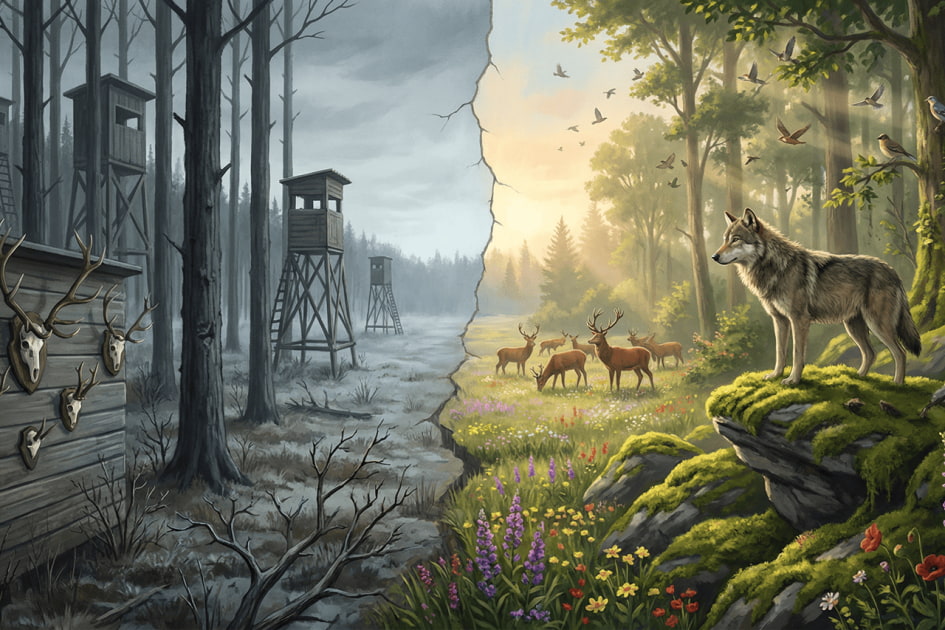
If the wolf is to have a future in Switzerland, more is needed than “special functions” within the hunting administration. What is needed are independent specialist units that treat the wolf not as a problem case, but as an integral part of our ecosystems.
Dossier: Wolf Switzerland: Facts, Politics and the Limits of Hunting
Participatory Action: Petition your municipality, in light of the catastrophic policy of Federal Councillor Albert Rösti (SVP), for a tax remission request for federal and cantonal taxes in response to the recently approved shooting of wolves in Switzerland. You can download the template letter here: https://wildbeimwild.com/ein-appell-fuer-eine-veraenderung-in-der-schweiz/