Rome: The Mayor and the Wild Boars
Rome's mayor is coming under pressure over wild boars during the election campaign. The coexistence of wildlife and cities is becoming a political issue.

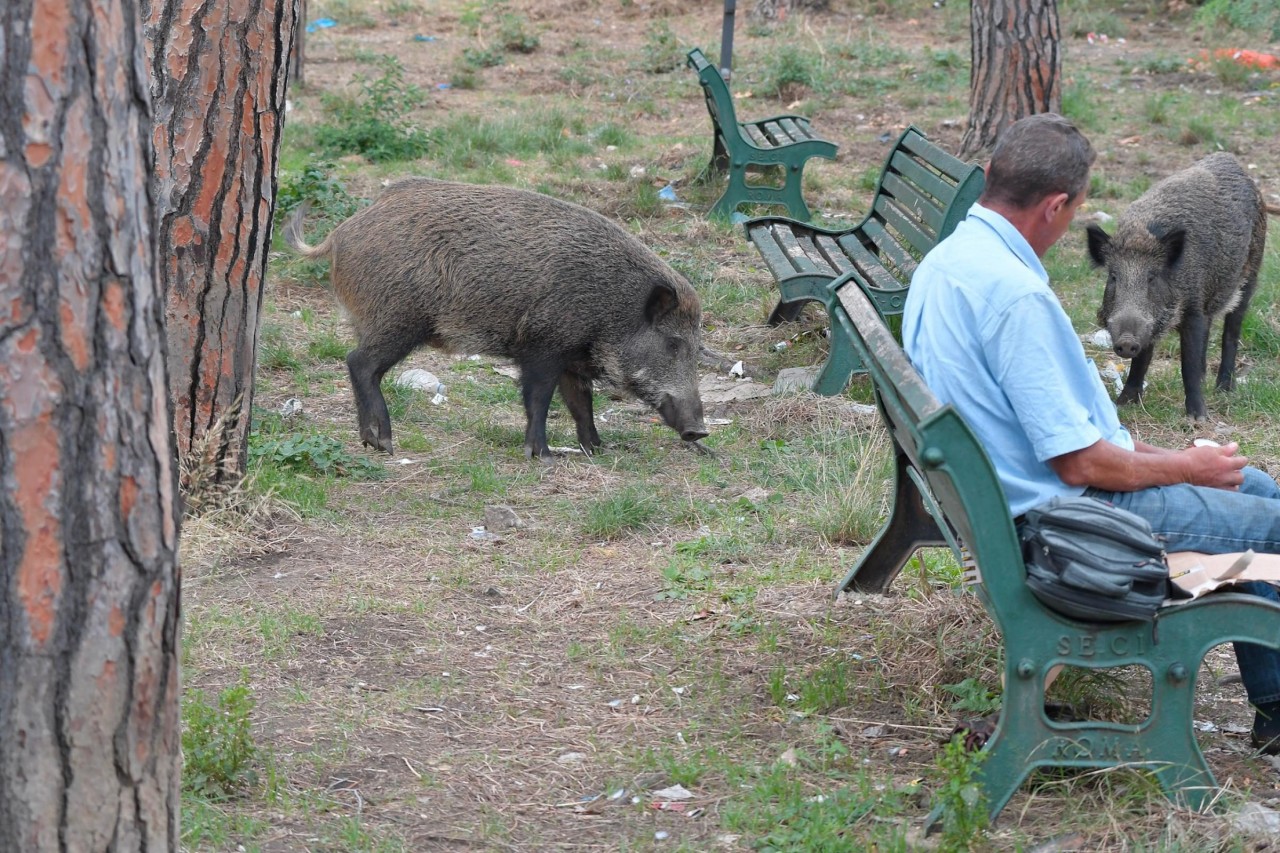
Wild boars on Rome’s streets are being used against me, the mayor complains.
In just over a week, Rome goes to the polls, and wildlife could help unseat Virginia Raggi.
A group of wild boars strolling across a busy street in Rome has catapulted the topic of decay in the Italian capital to the top of the debate ahead of the mayoral elections.
Around 13 wild boars, distinguished by their coarse hair, sturdy bodies and sharp tusks, walked through traffic on the Via Trionfale, a heavily trafficked road in the northern suburb of Monte Mario, to the astonishment of onlookers.
The scene was captured on a video that spread widely on social media, prompting jokes – it was suggested that Rome should introduce “wild boar lanes” instead of cycle paths – but also anger among residents preparing for the elections on 3 and 4 October.
Wild boar sightings in Rome are nothing new: they are frequently spotted rummaging through rubbish heaps, mostly on the outskirts of the city. But the animals are becoming increasingly bold.
Last week, wild boars mingled with parents waiting to collect their children from a school in the Monte Mario district. The animals were recently photographed outside the Italian Foreign Ministry, and some residents reported being chased by wild boars while taking out the rubbish.
In May, a group of hungry wild boars surrounded a woman in the car park of a supermarket in Formello, a town outside Rome, stole her shopping bags and ate the contents.
She blames the authorities of the surrounding Lazio region for the «massive and uncontrolled presence of wild boars in Italy's capital» and recently initiated legal proceedings against the regional authority.
When her political opponents seized on the latest wild boar sighting, she said:«My opponents continue to use photos and videos of wild boars in the area around Rome and place full responsibility for this on me.«
«It is clear that wild boars are a problem that affects not only the capital. When a woman in Formello, a small town north of Rome, is chased by a wild boar, the newspapers write the next day that I am responsible for it.«
Raggi pointed out that Formello is governed by a mayor from the far-right Lega party.
Rome's residents have long lamented the «degrado» (decay) of the city, from litter-strewn streets and neglected parks to potholes and graffiti-defaced historic buildings. But while Rome's condition improved somewhat during the pandemic, the old problems came back to the fore as the city grew busier again.
Raggi was elected mayor in June 2016 with the promise of solving all deeply rooted problems and making Rome «liveable again».
Polls this week placed her third among four candidates. Enrico Michetti, a politician from the far-right Brothers of Italy, leads in the polls, followed by Roberto Gualtieri of the centre-left Democratic Party. Carlo Calenda, who leads the party Azione, described as liberal and centrist, is in fourth place.
Since neither candidate is expected to receive more than 50% of the vote in the first round, two of them will compete in a second round on 13 October. During a debate between the candidates on Wednesday, Gualtieri promised to order an «extraordinary clean-up» of Rome, while Calenda promised to spend 38 million euros «to clean the pavements, remove graffiti from walls, clear the drains and tidy up around the rubbish bins«, writes the Guardian.