Ireland: Ancient goat breed helps Dublin's fire service
In Ireland, an ancient Irish goat breed is helping the fire service in Dublin. The animals graze on vegetation, thereby reducing the risk of wildfires.

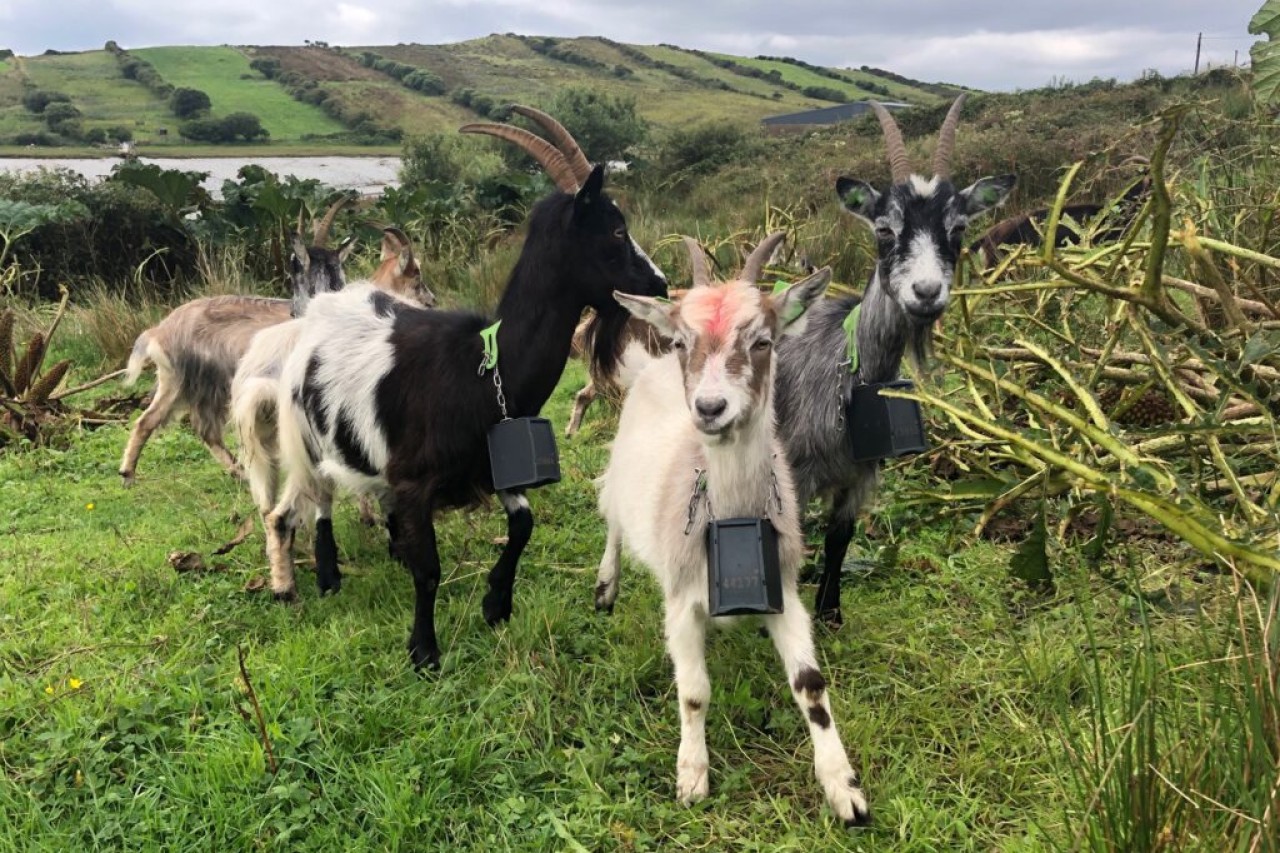
These animals offer a more cost-effective and sustainable solution for managing the landscape.
After the Howth Head peninsula went up in flames last year, sending black clouds of smoke drifting over the Irish capital's financial district, city planners knew they needed to take stronger action against the vegetation that had grown out of control.
Until the 1940s, Howth Head was traditionally grazed by livestock, and goats in particular. However, with the decline of traditional grazing, wildfires became more frequent, gorse and bracken spread unchecked, and the diversity and quality of the heathland deteriorated.
Remarkably, the Old Irish Goat is not the name of a pub, but an endangered species that has not roamed these hills in Ireland for over a century and has adapted to the natural environment.
Since they ceaselessly graze on native plants, they are ideal for clearing vegetation, and over the next three years their appetite in their new home will make them the ultimate fire brigade.
As the goat has been bred in captivity and only roams in small numbers on remote hillsides, an organisation called the Old Irish Goat Society has worked to keep its DNA free from the genetics of the domestic goat, and has provided a small herd of 25 animals to take the lead as the new «firefighters» at Howth.
The Old Irish Goat has short legs, large horns, a thick coat and small ears carried pricked. They are perfectly adapted to life in the Irish hills.
12 facts about the Old Irish Goat:
- In England, the breed was first called the “Irish Goat.”
- The Old Irish Goat was the only goat breed in Ireland until around 1900.
- A thick cashmere undercoat beneath their long outer hair keeps the goat warm in cold weather.
- You can determine the age of an Old Irish Goat by counting its horn rings.
- Unlike modern dairy goat breeds, the old Irish Goat comes in a wide variety of colours and colour patterns.
- In domestication, the breed could produce up to 200 gallons of milk per year.
- In the past, they were imported in large numbers each year to England and Scotland and referred to as «harbingers of spring» when the drovers arrived in towns and villages.
- It is closely related to the native goat breeds in England, Scotland and Wales.
- The wild herds of old Irish Goats are led by a female, while the males form bachelor herds for much of the year.
- The goats, which today are found only in a “wild” state, can be easily re-domesticated once they have been captured.
- It has small ears, carried erect and pointed.
- There are no tassels (wattles) on the neck.
«Our goats come from the mountains and eat everything that grows there: scrub, heather, gorse. They are best suited to this task«, Old Irish Goat Society chairman Pádraic Browne told The Guardian.
We are giving our beautiful little animals a job to do, and they deliver. They are not just a tourist attraction — they can earn their keep.
The current herd consists of 25 kids, to be supplemented by adult goats until it has grown to around 100 animals – a necessary boost, as wildfires on Howth and elsewhere in Ireland have been intensifying in recent years. Additionally, for the first time in Ireland, the Norwegian «No-fence« system is being trialled, in which the goats are tracked by GPS.
As strange as it may seem in an apparently wet and cloud-covered country like Ireland to have multiple fire brigades for a single town, this unique solution gives a largely forgotten piece of wild natural heritage the chance to raise awareness of this fascinating breed in its own right.
These goats will play an important role in managing vegetation to reduce the fire risk to residential properties while simultaneously increasing the biodiversity of priority heathland habitats.
More on the subject of recreational hunting: The scientific evidence is presented in the overview Studies on the Effects of Recreational Hunting.
The position of IG Wild beim Wild: IG Wild beim Wild rejects recreational hunting. Our model is the canton of Geneva, which has managed without recreational hunting since 1974: without hunting seasons, without hunting dogs, without driven hunts, without high seats, without the animal cruelty and crime that go hand in hand with hunting season elsewhere. What has worked there for over fifty years disproves every position paper by JagdSchweiz. An association that bases its policy on claims it refutes in its own documents is not a professional organisation, but a factory for misinformation.