India wants to resettle cheetahs from South Africa
India is planning to reintroduce cheetahs from South Africa. The big cat has been extinct in India since 1952.

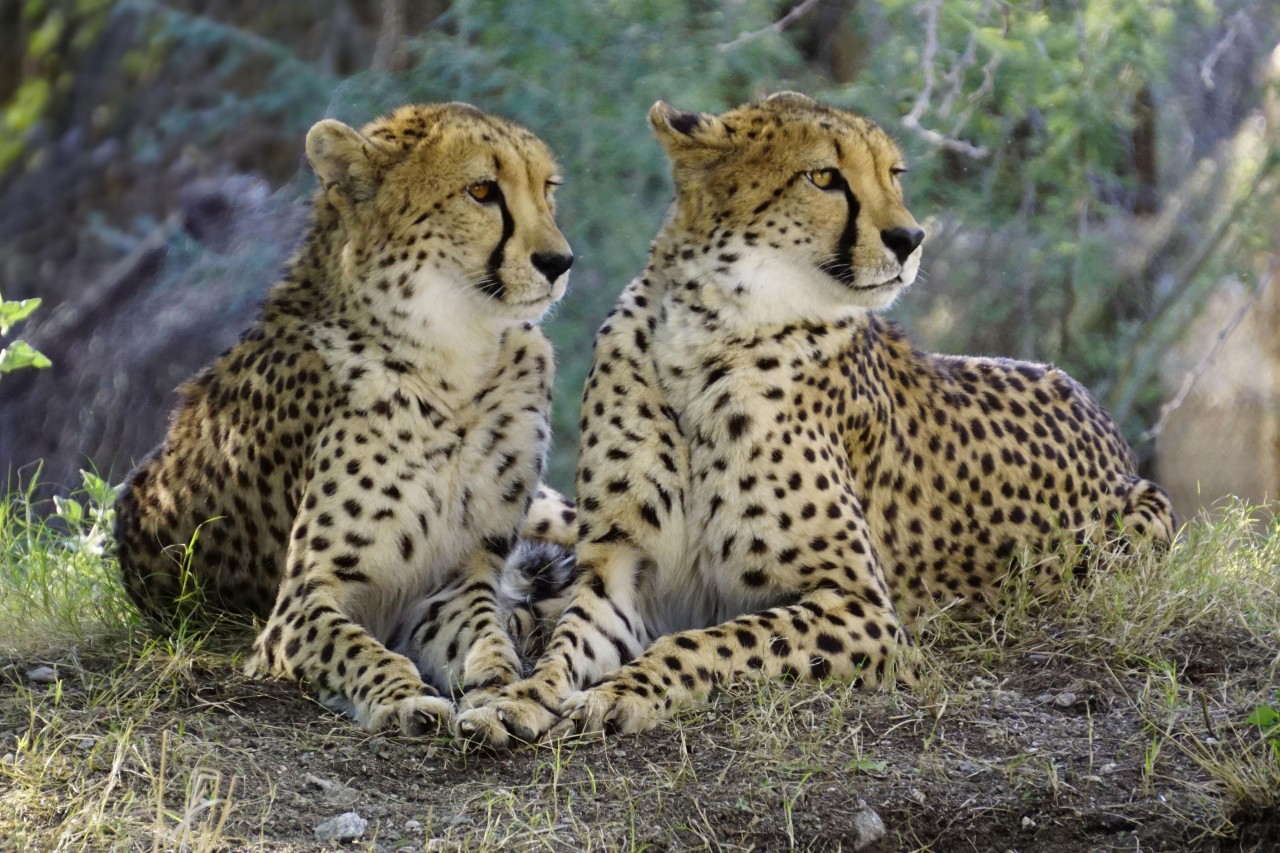
The cheetah is the only large predator that has been completely wiped out in India, primarily due to overhunting and habitat loss.
The government now plans to introduce 8–10 cheetahs per year to increase the population to 50 over a period of five years. The conservation of the cheetah holds a very special significance for the national conservation ethic and ethos.
The Ministry of Environment, Forest and Climate Change has announced that the government intends to settle cheetahs from South Africa in a nature reserve in Madhya Pradesh by August, in order to rehabilitate the species that has become extinct in the country.
A team from South Africa will visit Kuno-Palpur National Park next week to inspect the arrangements the wildlife reserve has made for the cheetahs, an official added.
A senior official from the Ministry of Environment said that Kuno-Palpur National Park in Madhya Pradesh has prepared a 10 square kilometre enclosure for cheetahs and will soon become home to at least six cheetahs to be brought there from South Africa.
The agreement with South Africa regarding the housing of these animals in India is already in force and is being reviewed by the legal department of the Ministry of Foreign Affairs, the official added.
In January, the then Union Minister for Environment, Forestry and Climate Change, Bhupender Yadav, had presented the plan for Project Cheetah and announced that Prime Minister Narendra Modi is deeply committed to the protection and conservation of seven big cats, including the cheetah.
The Minister said: «Project Cheetah aims to independently bring back India's only extinct large mammal – the cheetah.»
The considerations to bring the cheetah back to India were initiated in 2009 by the Wildlife Trust of India. Experts from India and around the world, as well as government officials, conducted studies to explore the potential for reintroduction. Former cheetah range areas — namely Gujarat, Rajasthan, Chhattisgarh, and Madhya Pradesh — were identified as priority regions. Later, an expert panel appointed by the Supreme Court confirmed Kuno Palpur as a viable site for cheetah reintroduction.
Beyond the conservation of the big cat itself, the initiative is a boon for the ecosystem as a whole. Cheetahs live in open plains; their habitat is predominantly where their prey lives — grasslands, scrubland and open woodland systems, semi-arid environments and temperatures that tend to be hot rather than cool.
To save the cheetah, one must not only save its prey, which consists of certain endangered species, but also other threatened species of grassland and open woodland ecosystems, some of which are on the brink of local extinction.
It has also been noted that among the large predators, cheetahs pose the least conflict with human interests. They present no threat to people and do not attack large livestock.