Hunting Statistics: Massacre of Endangered Species
In Switzerland, over 138'000 wild animals were shot in 2019. Among them 4'118 endangered brown hares, ptarmigan, black grouse, and woodcock.


In Switzerland, over 138’000 wild animals were shot last year, 2.6% more than the previous year.
The official Federal hunting statistics, published online these days, show that endangered species are not exempt. A total of 4’118 kills of brown hare, ptarmigan, black grouse, and woodcock are recorded. The revised hunting law would cement this outdated hunting practice for decades to come.
The proportion of threatened species is, according to the UN, greater in Switzerland than in any other country in the world. This is a scandal. Over a third of plant, animal, and fungal species are considered threatened. It is always these same circles of recreational hunters and livestock farmers’ representatives, with their lobbying work through politics, media, and legislation, who have been responsible for this for decades. They are the ones who notoriously block contemporary, ethical improvements in animal welfare and sabotage serious animal and species protection.
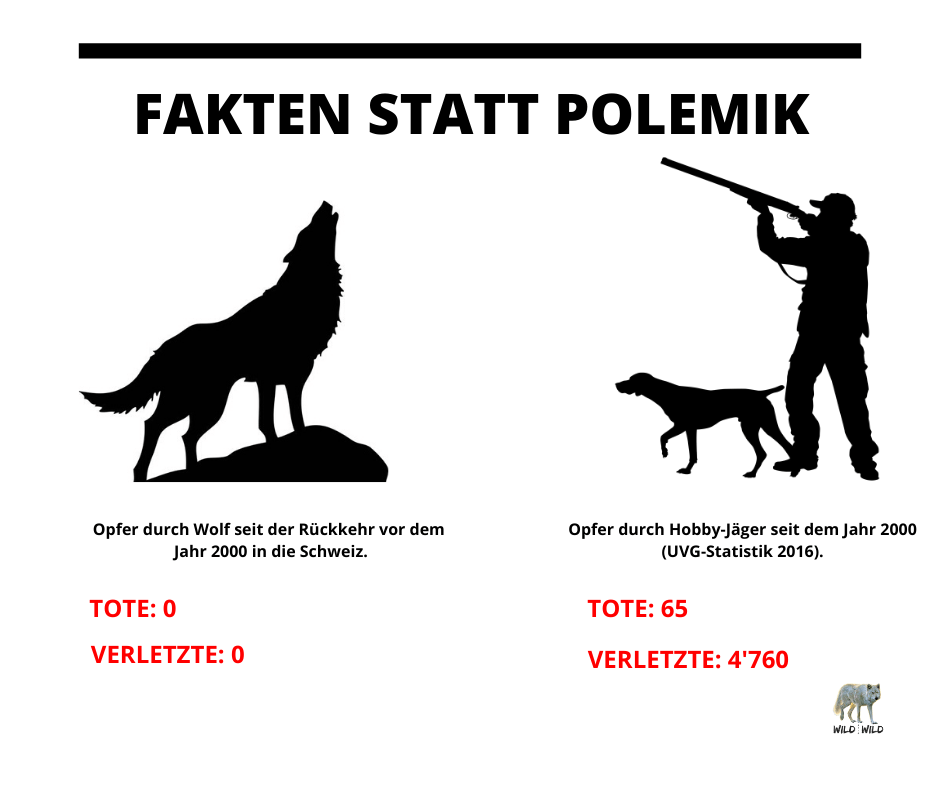
Recreational hunters also kill people
Both the accuracy of recreational hunters, alcohol consumption, and the many hunting accidents themselves are cause for concern and should be taken into account in a revised version of the hunting law.
From the perspective of IG Wild beim Wild, the threshold at which a recreational hunter is considered unreliable under firearms law due to handling weapons under the influence of alcohol should mandatorily be set at 0.0 per mille blood alcohol, as is the case in military or police service is also the case. Anyone who goes hunting goes out to kill. No one may handle a weapon or even shoot while under the influence of alcohol. Anyone who is alcohol-dependent must have their hunting and firearms licence revoked immediately. Mandatory alcohol tests must be introduced after hunting accidents, without any ifs or buts. In addition, medical-psychological assessments for recreational hunters are needed — following the example of the Netherlands — as well as an upper age limit.
The largest age group among recreational hunters is the 65+ category — those with age-related, visual, concentration, and reaction impairments, as well as training and practice deficits.
From the age of 40, the number of accidents rises dramatically. A hunting accident occurs every 29 hours, and a fatality is recorded every 3½ months. In the police force or the military, older officers are — for good reason — no longer deployed in armed operations involving dangerous firearms. This was also a missed issue during the revision of the Hunting and Species Protection Act (JSG).
If the police or the military regularly recorded as many casualties as hunting does, hardly anyone would speak of responsible use of firearms.
Hunting statistics: The massacre of wildlife
For hoofed animals — roe deer, red deer, chamois, and wild boar — the number of kills has increased by 7% according to the new hunting statistics. While hunting hoofed animals is intended to ensure forest regeneration, hunting other mammals remains controversial. Why, for example, 5,735 marmots or 146 secretive stone martens are shot is difficult to understand. Of the threatened European hare, 1,669 were killed, and 868 mountain hares.
Not only is hunting hares ecologically entirely unnecessary, but so is hunting birds.Nevertheless, in 2019 more than 23,000 native, wild-living birds were killed. 4,731 ducks were shot: a total of 4,685 mallards, teal, and tufted ducks, and 108 ducks of other species. According to the revised Hunting Act only these 108 ducks would be protected; 98% of ducks could continue to be hunted as before.

The great crested grebe breeds at lakes with natural surroundings. Last year, 142 birds of this species were shot — 71 percent more than the previous year. Protection of the great crested grebe in the new hunting law was not even discussed. Coots (Taucherli) in our waters also continue to be hunted. 423 lost their lives this way, 6% more than the previous year.
Among threatened bird species, the woodcock faces the most intense hunting pressure in Switzerland. Last year, 1,819 birds were shot in 7 cantons. The revised hunting law would continue to permit hunting of this threatened species. The hunting season was adjusted in the new hunting law; woodcocks could be hunted one month later, from October 16 onwards. But this adjustment is purely cosmetic: 96% of woodcocks can still be hunted under the new hunting law, including our Swiss breeding birds, which remain in the country well into the hunting season.Another missed opportunity to improve the protection of an endangered species that is still open to hunting.
In the case of the potentially threatened black grouse, 383 animals were shot last year across 6 cantons. Only the glossy black male is shot, not the brown female —a classic trophy hunt, still available to foreigners in Valais.
The rock ptarmigan, also listed on the Red List as potentially endangered, is still hunted in three cantons according to hunting statistics — 247 individuals in 2019.In 2019, the Ticino government banned hunting of the rock ptarmigan for the first time, citing the threat it faces, including from climate change.
For the CEO of BirdLife, it is deeply troubling that no serious discussion about endangered species took place during the revision of the hunting law. That was a missed opportunity.
After a revision, it is assumed that the new hunting law should remain in force for the next 20 to 30 years. The current proposal cements the hunting of endangered species into law.
Werner Müller – BirdLife
The opportunity to better protect this potentially endangered species throughout Switzerland under the new hunting law has been squandered. That is why we are voting NO on 27.9.2020..
More on the subject of recreational hunting: In the dossier The Role and Criticism of Recreational Hunters we shed light on the training, power and self-image of recreational hunters. The scientific evidence is presented in the overview Studies on the Effects of Recreational Hunting.
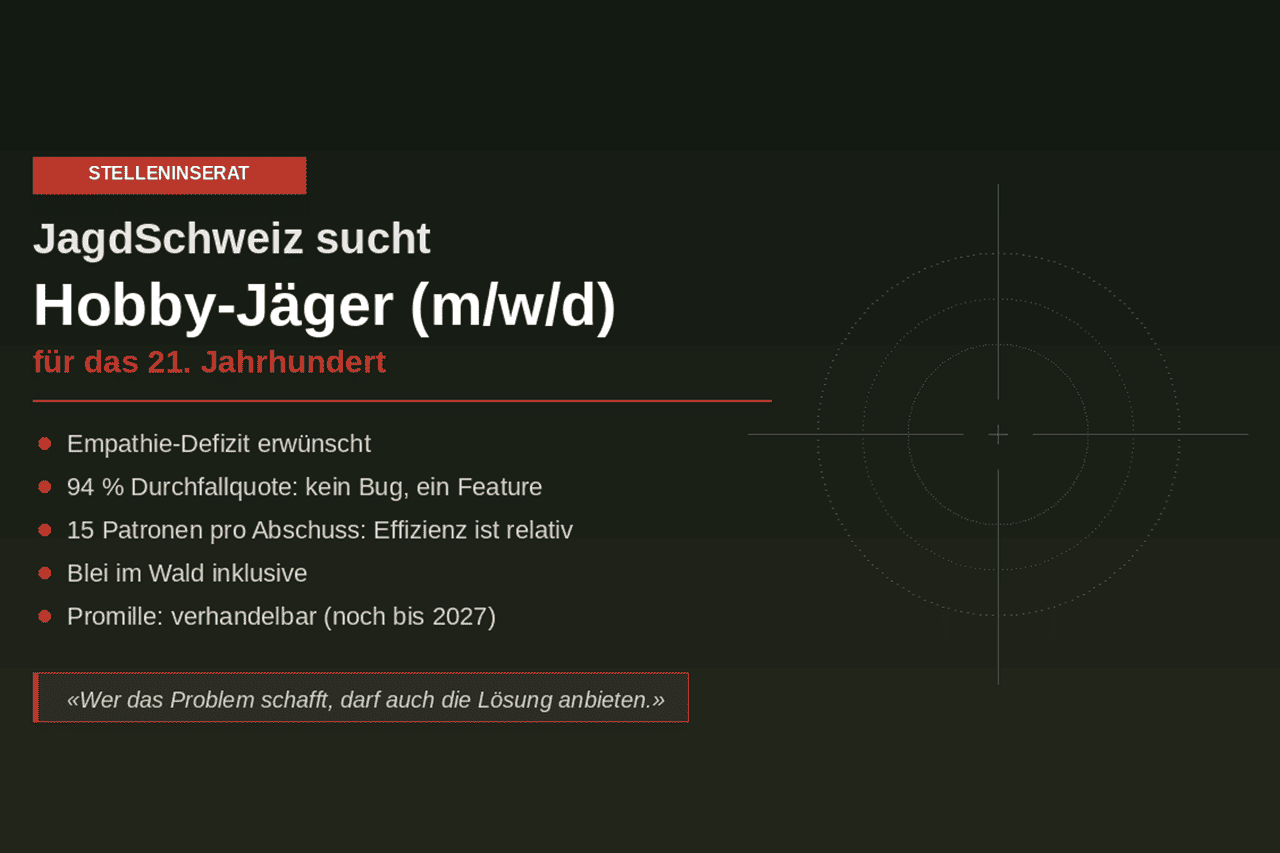
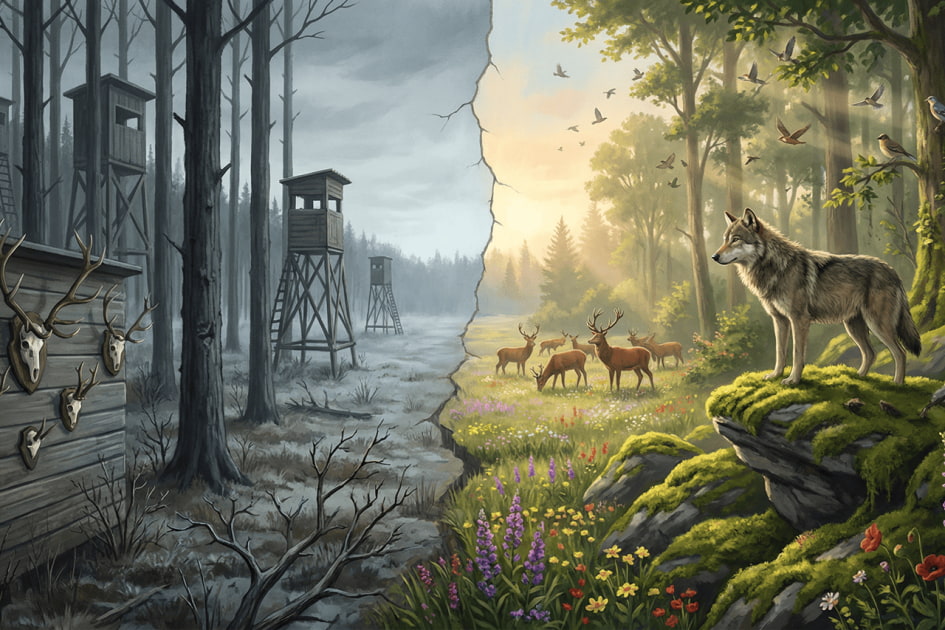
The position of IG Wild beim Wild: IG Wild beim Wild rejects recreational hunting. Our model is the canton of Geneva, which has managed without recreational hunting since 1974: without hunting seasons, without hunting dogs, without driven hunts, without high seats, without the animal cruelty and crime that go hand in hand with hunting season elsewhere. What has worked there for over fifty years disproves every position paper by JagdSchweiz. An association that bases its policy on claims it refutes in its own documents is not a professional organisation, but a factory for misinformation.