Hunting the badger because it knocks over gravestones?
The recreational hunting of badgers on the grounds that they knock over gravestones is absurd and unnecessary. Non-lethal solutions are more effective and more humane.

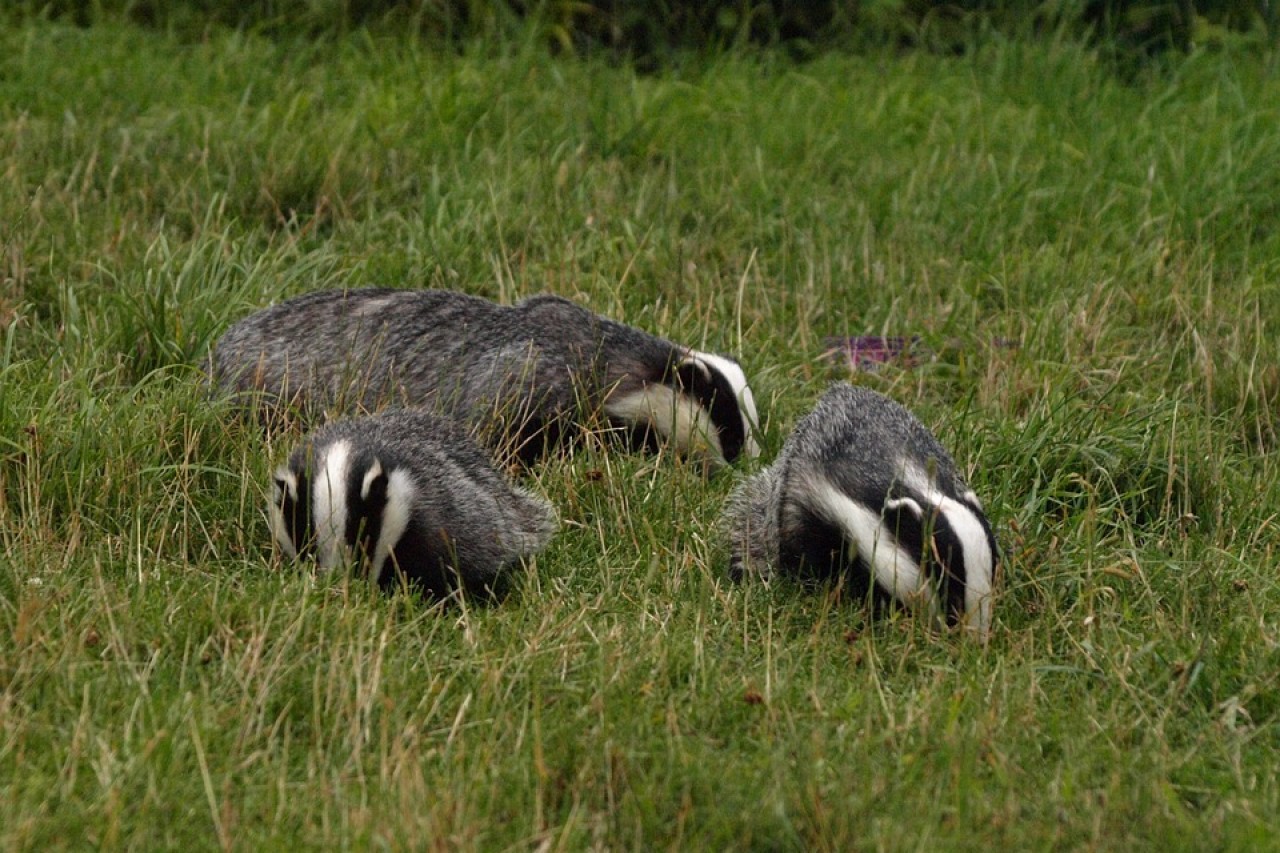
The Wildtierschutz Deutschland suspects that most people have rarely, if ever, observed a badger in the wild.
If at all, one tends to encounter these stocky, marten-like animals dead by the roadside. Alongside hunting (approximately 65,000 kills per year in Germany), road traffic (around 25,000 accident victims) is the greatest threat to this relatively rare, nocturnal species.
In Central Europe, the badger's diet consists predominantly of earthworms, with only minor regional variation. Other significant dietary components include small vertebrates — especially mice — carrion, insects, snails, as well as cherries, plums, apples and blackberries. Grain is barely consumed as food even during the ripening season.
The badger has previously found itself in a highly critical population situation in this country. When hunting associations and politicians in the late 1960s mistakenly believed that fumigating fox and badger setts could eradicate rabies, approximately 80% of the badger population was wiped out. It was not until the mid-1990s that the numbers of «Grimbarts» were able to recover.
For this reason, the Ministry of the Environment in Mainz regards the annual hunting tallies of more than 5’000 badgers in Rhineland-Palatinate as the result of «balanced regulations and practices in dealing with this species of wildlife«. Rhineland-Palatinate even permits hunting of these nocturnal omnivores beyond the hunting season stipulated by the Federal Hunting Act — which runs from August to October — extending it through to the end of December. Hunters are also permitted to hunt the animals using dogs in their setts, to trap them, and to destroy with spades and excavators the retreats they have used for decades.
The mere fact that the badger population is currently classified as non-threatened provides no reasonable justification for hunting within the meaning of animal welfare legislation. This is presumably why the hunting-aligned ministry constructs justifications that cannot be sustained as grounds for blanket hunting:
Grimbart, it is claimed, causes a nuisance by overturning gravestones and destroying grave plantings. In addition, those responsible in the relevant department attribute to him «frequent reports of damage in the agricultural sector» to him. These are likely to consist predominantly of negligible, and therefore acceptable, damage — occurring, moreover, on maize fields. This too is no justification for pursuing the badger through hunting — an animal that, incidentally, is generally not utilised by hunters. For property entails obligations: animal welfare holds such paramount importance in contemporary society that it is in the public interest for a landowner to accept negligible losses to their property in favour of animal and nature conservation.
There are therefore neither legal, ecological, economic, nor epidemiological grounds that would provide a coherent justification for the blanket hunting of badgers. In Mainz — as is likely the case in the ministries of most other federal states — there are not even reliable data available for evaluating hunting measures against badgers that could remotely substantiate a reasonable justification for such hunting.
These impressive animals live within a stable social structure, which places lasting constraints on their reproduction. Young badgers — who in many federal states may be hunted year-round without a closed season — remain within the family group for 12 months or longer in many cases. This makes the killing of adult animals more than critically questionable from the perspective of parental protection and, by extension, animal welfare law.
Petition: Hunting for pleasure is outdated — let us abolish it!
More on the subject of recreational hunting: In the dossier The Role and Criticism of Recreational Hunters we shed light on the training, power and self-image of recreational hunters. The scientific evidence is presented in the overview Studies on the Effects of Recreational Hunting.
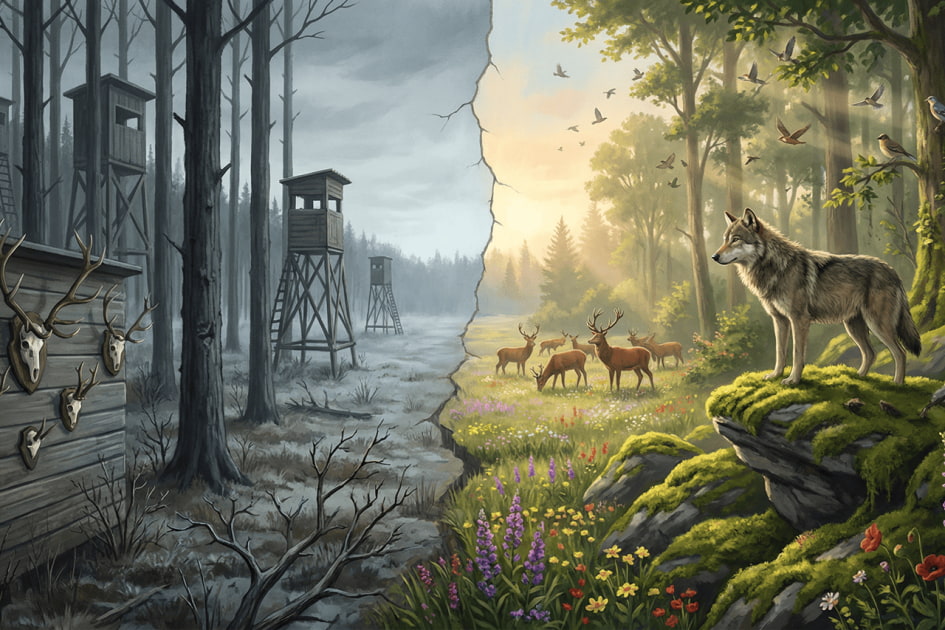
The position of IG Wild beim Wild: IG Wild beim Wild rejects recreational hunting. Our model is the canton of Geneva, which has managed without recreational hunting since 1974: without hunting seasons, without hunting dogs, without driven hunts, without high seats, without the animal cruelty and crime that go hand in hand with hunting season elsewhere. What has worked there for over fifty years disproves every position paper by JagdSchweiz. An association that bases its policy on claims it refutes in its own documents is not a professional organisation, but a factory for misinformation.