Ticino 2022: More roe deer, but fewer chamois harvested
In Ticino, more roe deer but significantly fewer chamois were harvested in 2022. The decline in chamois kills confirms the overhunting of previous years.


The 2022 high hunting season took place from 3 to 17 September and from 23 to 27 September, totalling 20 hunting days.
Ticino's recreational hunters could shoot chamois, roe deer, red deer, wild boar and marmots with a single licence.
During the hunting season, conditions were partly favourable. The first hunting days, characterised by overcast and relatively cool weather, proved favourable for harvesting roe deer, while the fog that frequently occurred at higher altitudes made chamois hunting more difficult.
The catch figures for the individual species are as follows.
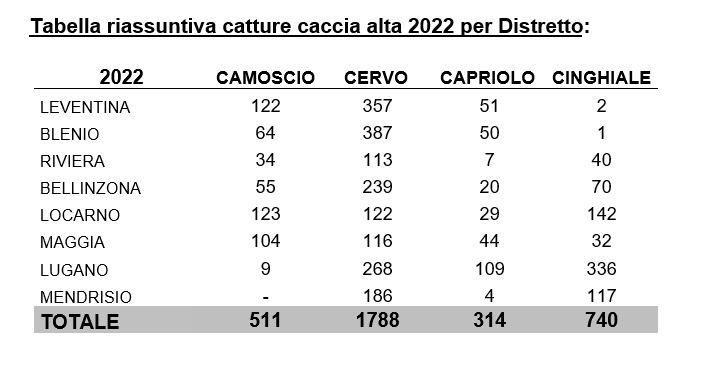
In 2022, a total of 511 chamois were killed (343 male and 168 female), compared to 642 in 2021.
Red deer harvests have increased by 10% compared to 2021, now standing at 1’788 animals (1’612 in 2021). In total, 811 males and 719 females as well as 258 fawns were killed.
However, the culling plan was not met, so further culls will take place during the late autumn hunt (mid-November to mid-December).
Roe deer catches totalled 314 animals (308 in 2021), of which 165 were male and 149 female. Most animals were taken in the district of Lugano, followed by Leventina and Blenio.
For wild boar, the number of kills during the high hunting season has declined slightly compared to the previous year, interrupting the continuous increase observed since 2018. The number of animals shot of this species amounts to 740 (912 in 2021).
Twenty animals were confiscated by the cantonal veterinary office because they tested positive for Caesium-137.
Taking into account the culls carried out by game wardens and recreational hunters holding a hunting licence (damage limitation and prevention of African swine fever), a total of 1’208 wild boar have been killed since the beginning of 2022 (as of 28.09.2022).
Further culls will take place during the late autumn hunt in November and the winter hunt in December and January.
For marmots, trapping data will only be available after the return of the control sheets.
On the whole, hunting was conducted in accordance with regulations, although in addition to around 30 minor violations and just under 200 self-reports, there were also some serious violations (e.g. hunting without the required permit, use of prohibited weapons or accessories, failure to record wildlife on the control sheet, and attempted theft), resulting in six reports to the public prosecutor's office and the revocation of six hunting licences, writes the Office for Hunting and Lying in Bellinzona.
More on the subject of recreational hunting: In the dossier The Role and Criticism of Recreational Hunters we shed light on the training, power and self-image of recreational hunters. What the research says about this is shown by Hunting fact-checked: the state of research.
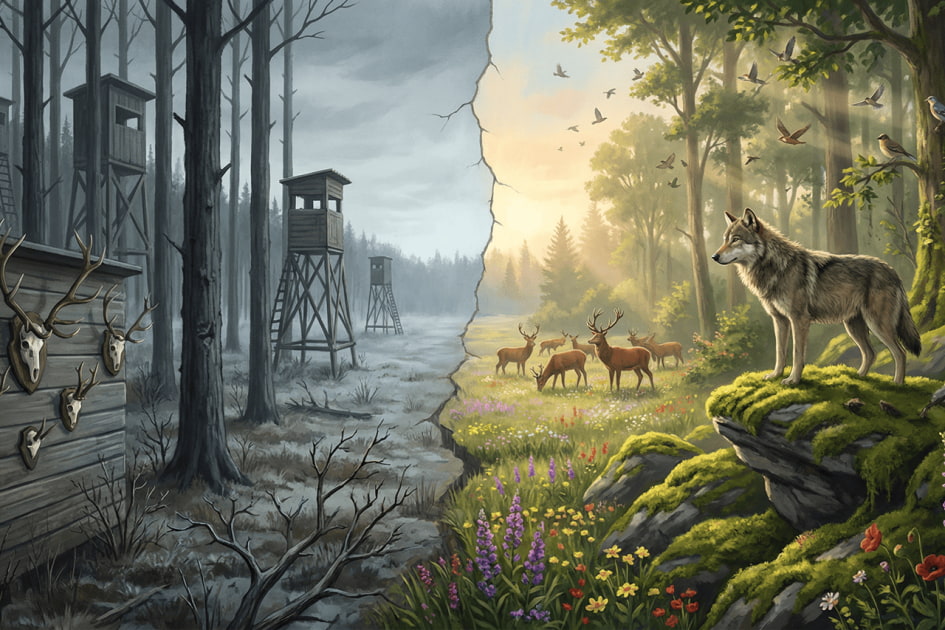
The position of IG Wild beim Wild: IG Wild beim Wild rejects recreational hunting. Our model is the canton of Geneva, which has managed without recreational hunting since 1974: without hunting seasons, without hunting dogs, without driven hunts, without high seats, without the animal cruelty and crime that go hand in hand with hunting season elsewhere. What has worked there for over fifty years disproves every position paper by JagdSchweiz. An association that bases its policy on claims it refutes in its own documents is not a professional organisation, but a factory for misinformation.