What is the state of the Alps' iconic animal?
The Alpine ibex, iconic symbol of the Alps, faces new challenges. Climate change and recreational hunting are increasingly threatening populations.


The Deutsche Wildtier Stiftung calls for transparent monitoring results for chamois.
The Alps are one of the most popular travel destinations in Germany. Around 100 million tourists visit the Alpine arc every year, complete with rustic snacks, summit crosses, and Alpine cyclist sightings.
One creature that now shows itself only very rarely is the chamois. And yet summer would be an ideal time to catch a glimpse of these wild mountain goats. The iconic animal of the Bavarian Alps can be spotted far less often than it was 20 years ago. Nobody really knows how many animals still live in the mountains. One thing is clear, however: hunting continues regardless — and in the Bavarian Alps it is especially intensive.
Anyone who does not know how many chamois exist should not really be permitted to hunt them at all. As with our European neighbours, hunting quotas should only be set after a survey of the living animals has been carried out.
Dr. Andreas Kinser, Deputy Head of Nature and Species Conservation at the Deutsche Wildtier Stiftung
The obligation to monitor chamois populations arises from the EU's so-called Habitats Directive.Rupicapra rupicapra falls under its Annex V and may only be hunted if its conservation status is classified as favourable. The Habitats Directive also requires that the conservation status of the population is monitored systematically and regularly — with regard to both quantity and quality. «This means that it is not only the number of animals that matters, but also the age and social structure, which is so important in the case of the chamois», says Kinser. Unlike roe deer or red deer, these indicators are actually relatively easy to record for chamois, since the animals can be spotted fairly readily by experts during daylight hours in the tree-free high-altitude zones.
In fact, the Bavarian State Forests, which are responsible for 80% of all chamois habitats in the Bavarian Alps, only began a chamois monitoring program last year under pressure from wildlife conservation advocates. The results of these surveys have not yet been published. »Transparency is important not only in the actual survey process, but above all in the results«, says wildlife biologist Kinser.
In order to assess the age and social structure that is so vital for chamois — and thus their conservation status — the census data must be made available at the regional level. »If the figures remain hidden, this suggests a rather unfavorable conservation status for chamois in the Bavarian Alps.»
Find out more about chamois and the conflict in Bavaria, as well as the chamois habitat study, here:https://www.deutschewildtierstiftung.de/naturschutz/gaemse-der-konflikt-in-bayern
More on the subject of recreational hunting: In our dossiers on the criticism of recreational hunting gather fact-checks, analyses and background reports. The scientific evidence is presented in the overview Studies on the Effects of Recreational Hunting.
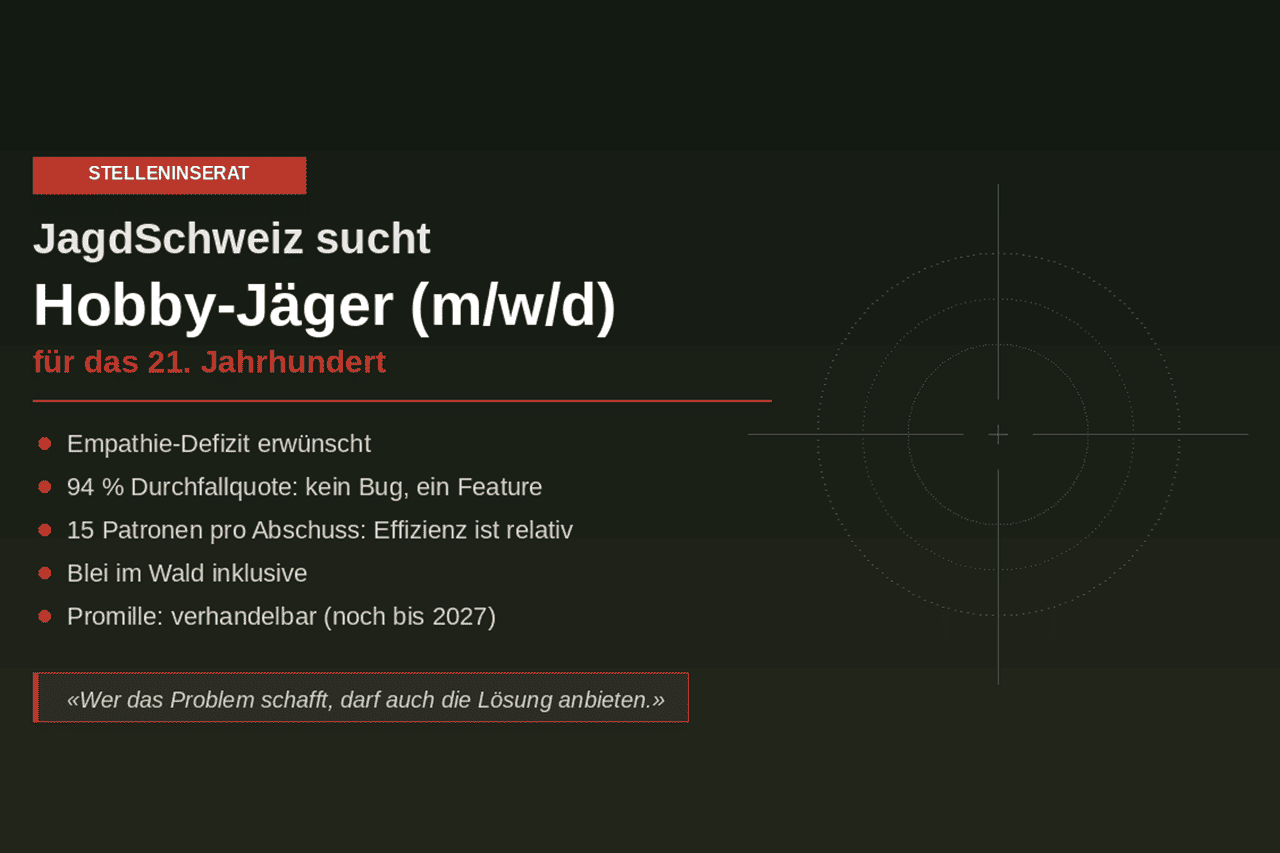
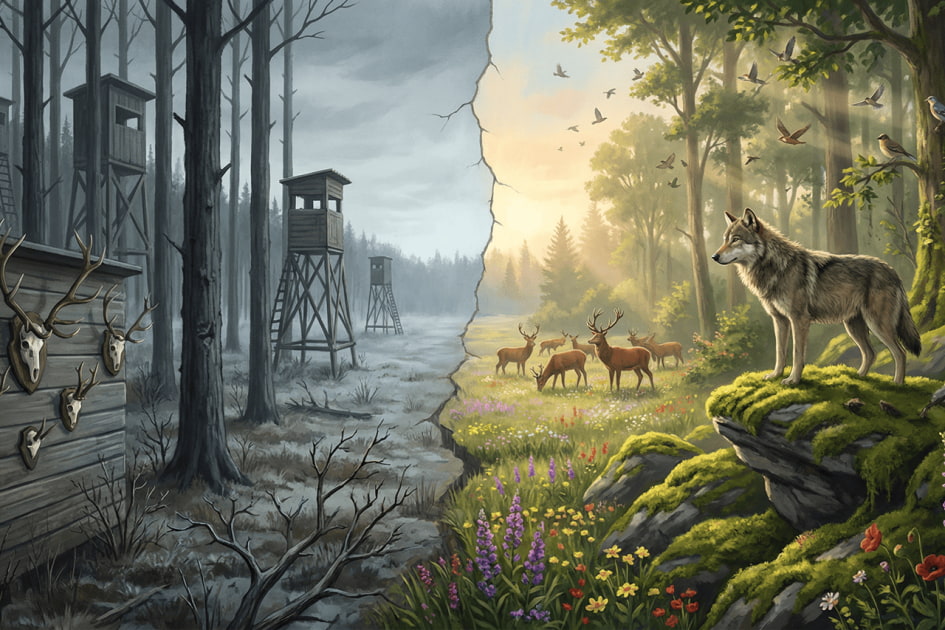
The position of IG Wild beim Wild: IG Wild beim Wild rejects recreational hunting. Our model is the canton of Geneva, which has managed without recreational hunting since 1974: without hunting seasons, without hunting dogs, without driven hunts, without high seats, without the animal cruelty and crime that go hand in hand with hunting season elsewhere. What has worked there for over fifty years disproves every position paper by JagdSchweiz. An association that bases its policy on claims it refutes in its own documents is not a professional organisation, but a factory for misinformation.