Hibernation is probably one of the best-known methods by which animals survive the cold months.
For example, marmots, dormice, hedgehogs and bats drastically lower their body temperature for this purpose, according to the Nature Conservation Union Germany, with bodily functions coming almost to a standstill.
The term “hibernation” is therefore also misleading. “The animals are not sleeping. They are in a kind of physiological near-death state,” explains biologist Thassilo Franke from the natural history museum Biotopia in Munich. At regular intervals, the animals must therefore interrupt hibernation and switch to genuine sleep in order to supply nerve cells with oxygen and remove metabolic waste products, says Klaus Hackländer of the German Wildlife Foundation.
Resting
Brown bears, squirrels and badgers, by contrast, enter only a winter rest. This means they do not reduce their metabolism as drastically. According to wildlife biologist Hackländer, most of them are intermittently active and go in search of food. The brown bear, on the other hand, spends several months sleeping in northern regions and lives solely on its fat reserves during that time. “What is interesting is that its muscle mass and bones do not break down despite the long resting period,” says Franke.
Stockpiles
Other animals hoard food for hard times. One example is the spotted nutcracker, which feeds on the seeds of the Swiss stone pine in the mountains. It creates thousands of hiding places over the course of winter — and in doing so contributes to the spread of the stone pine. For the stone pine cones do not open on their own.
The seeds need the spotted nutcracker to free them from the cone and then often disperse them kilometres away. In the hiding places that it forgets over winter or that are left untouched for other reasons, the seeds can then germinate. “The spotted nutcracker is therefore also the forester of the stone pine forest,” says Franke.
Diet
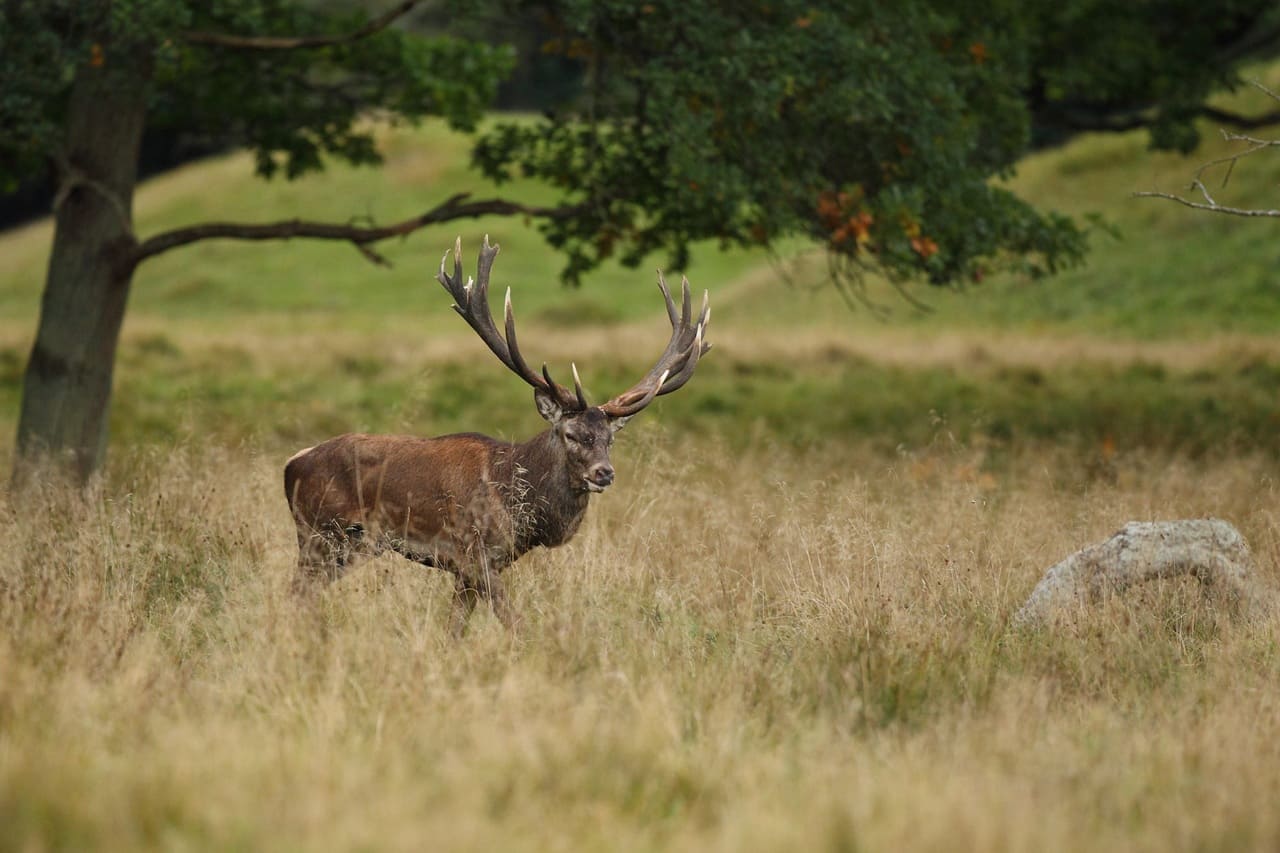
In contrast, roe deer, red deer and wild boar depend on finding food in winter, explains biologist Angelika Nelson from the Landesbund für Vogel- und Naturschutz in Hilpoltstein, Bavaria. However, since food is often less abundant, roe deer, for example, use a trick to manage with less. “The rumen shrinks by 30 percent of its volume,” says Franke.
Other animals switch their diet entirely and must adapt their digestive tract accordingly. The bearded reedling normally eats insects, but in winter it feeds on hard reed seeds. To do so, it essentially converts its stomach into a grain mill, explains Franke. The bearded reedling pecks up many small pebbles while its stomach wall thickens at the same time. “In spring, the stomach then transforms back again.” It is similar with the capercaillie, which feeds on hard-to-digest spruce needles in winter. It massively enlarges its appendix, because the microorganisms contained within help it with digestion.
Shrinking
Especially small animals must expend more energy in the cold to maintain their body temperature. Shrews, moles and weasels therefore use a trick to conserve vital energy: they shrink.
It is particularly striking in the case of the common shrew, which reduces its weight in winter by almost one fifth, says behavioural neurobiologist Moritz Hertel of the Max Planck Institute for Biological Intelligence at the Seewiesen site near Starnberg. “Calcium is drawn from the bones, which causes them to become more flexible,” the expert explains. “We observe a reversible osteoporosis.” For in spring, the animals grow back again.
Frost Protection
Because water freezes at low temperatures, some animals have a natural form of frost protection. Amphibians such as frogs burrow into the ground in winter or seek out another sheltered spot. At temperatures below zero degrees, they fall into a state of winter torpor, says biologist Nelson.
As cold-blooded animals, their body temperature depends on the ambient temperature. “Below zero degrees, there is therefore a risk that the fluid in the cells and intercellular spaces will freeze,” says Nelson. Amphibians prevent this with the help of glycerol, which acts like an antifreeze.
Migration
Another very well-known overwintering strategy is bird migration. The short-distance migrants travelled to the Mediterranean region during the cold season, while the long-distance migrants flew as far as sub-Saharan Africa, says Nelson.
«Many migratory birds are insectivores.» The journey, which can span many thousands of kilometres, is extremely dangerous. This is why milder winters are quickly leading to adaptations in migration routes. For instance, the Eurasian blackcap has been wintering in England since the 1980s, while the black redstart and the common starling now partly remain in southern Germany.
| You can help all animals and our planet with compassion. Choose empathy on your plate and in your glass. Go vegan. |