Honey: Superfood Thanks to Bees
The bees fly and produce delicious honey. But not all honey tastes the same — there are numerous varieties.

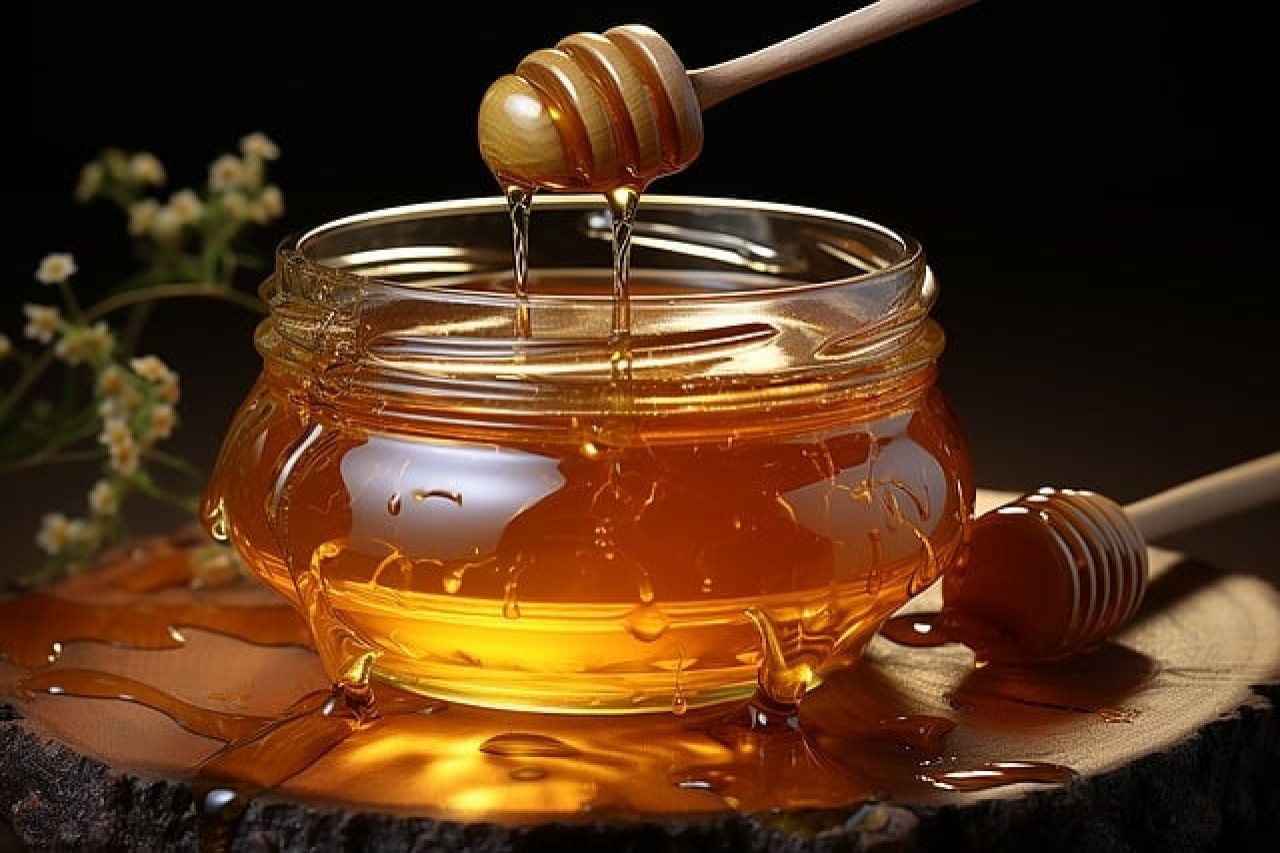
Honey is not just honey — there are many different types of honey.
Broadly speaking, a distinction is made between blossom honey and forest honey. Blossom honey is collected in spring, when plants are in full bloom.
Forest honey, on the other hand, is harvested in summer. It is obtained from honeydew, a product of certain tree aphids.
In addition, there are many varietal honeys worldwide: honeys in which the nectar comes predominantly from a single plant species. These include, among others, rapeseed honey, acacia honey, chestnut honey, and fir honey.
The Doping of Antiquity
Honey was already used as a food by humans in the Stone Age. At that time it was obtained from wild bees. The keeping of bees for honey production was probably first practised in the 7th millennium BC in Anatolia, present-day Turkey.
At the ancient Olympic Games, honey water was regarded by athletes as a means of enhancing performance — the doping, so to speak, of ancient Greece.
Soothes Sore Throats
Honey has a mildly anti-inflammatory effect and is therefore often used to relieve sore throats during colds. Dissolved in hot milk, honey has a soothing effect and is also a pleasurable treat for the palate.
To preserve honey's aroma and prevent the loss of its nutrients, it should be stored in a cool, dark, and dry place. Because honey also readily absorbs foreign flavours, it must be kept tightly sealed and away from strongly scented foods such as cheese or coffee. If these tips are followed, honey will keep for years.
| You can help all animals and our planet with compassion. Choose empathy on your plate and in your glass. Go vegan. |