High survival rates explain wolf expansion
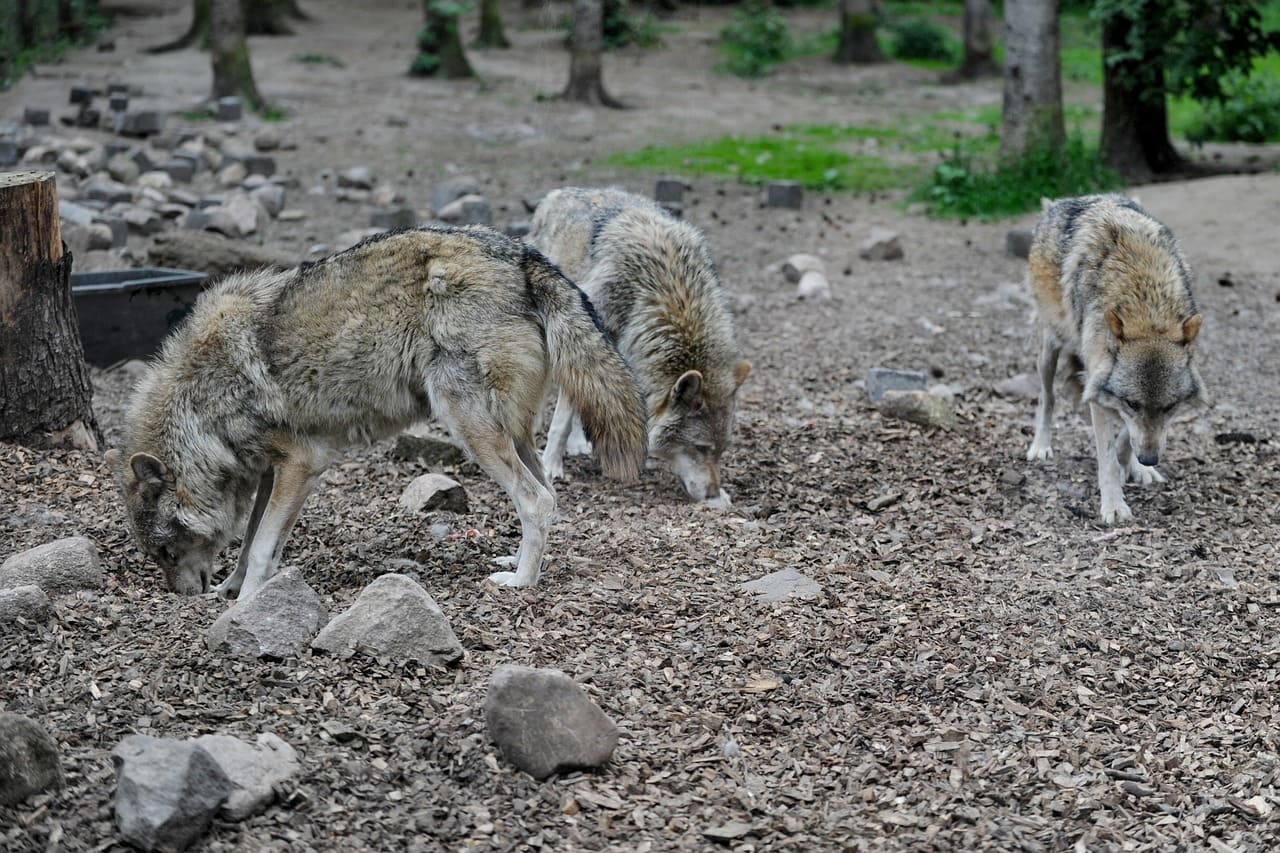
Since wolves returned to Germany just over 20 years ago, they have been spreading rapidly across many parts of the country. The rapidly increasing number of wolves was due to high survival and reproduction rates in areas with suitable environmental conditions.

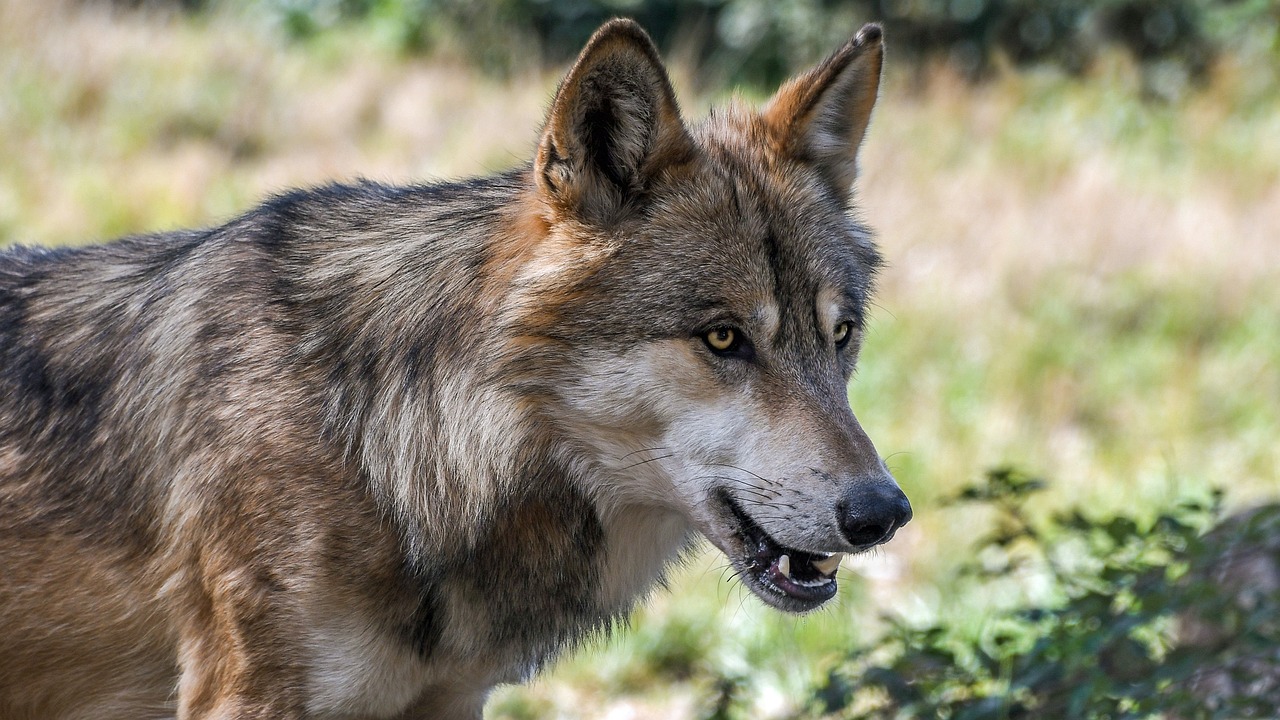
The probability of survival for wolves during the analysis period was higher than anywhere else in the world.
However, the expansion phase will end once the carrying capacity of the habitat is reached — at which point a decline in survival rates is also to be expected, according to the research team in a new article in the journal «Wildlife Biology».
Survival rates in international comparison
Young wolves in Germany showed an annual survival probability of 75 percent during the first two decades since the beginning of Germany’s recolonisation, while adult animals showed a rate of as much as 88 percent. For young wolves up to the age of 2 years, the survival rate was dependent on the suitability of the habitat — the less suitable it was for wolves, the lower their chances of survival; for adult wolves, this correlation could not be demonstrated by the research team led by the Department of Ecological Dynamics at the Leibniz-IZW. “Using survival analyzes with statistical modelling methods, we were able to determine the mean survival time of a wolf in Germany as 146 weeks, or approximately three years,” says Prof. Dr. Stephanie Kramer-Schadt, head of the department at the Leibniz-IZW and professor at the Technical University of Berlin. The highest documented age of a wolf in the study dataset was almost 13 years.
«The survival rates of the German wolf population were very high compared to other regions, even among the highest worldwide», Kramer-Schadt continued. «This indicates that the wolves settled in habitats that were very well suited to them during the 20 years studied. The strict legal protection also contributed to this.» Areas that qualify as suitable are those that offer sufficient cover — for example through forests — and retreat spaces located as far as possible from roads. These spaces enable the wolf to avoid human contact. When wolves settle in less suitable habitats, this has a negative impact on their own survival and reproduction. «While adult animals can still survive well and establish territories in less suitable areas, the lower survival rate of juvenile and sub-adult animals, as well as the lower number of offspring per litter, slows population growth and thus the spread of the species.» When the optimal habitats are occupied, population growth will slow down, according to the researcher. The natural self-regulation is a central factor.
Reproductive success and habitat quality
In the study, the team also determined the reproductive performance of a total of 201 female wolves from 165 territories that were part of the long-term dataset analyzed from 2000 to 2020. «We were able to analyze data from female wolves that demonstrably produced offspring — at an average age of 2.8 years», says IZW researcher and lead author of the paper Dr. Aimara Planillo. «The analyzes also show a higher reproductive success in females with more experience and in better suited habitats, where they produced offspring for up to five years.» In summary, the models show that above all a well-suited habitat as well as the reproductive experience of the female also have a positive effect on the number of offspring per litter, which in Germany averages four offspring.
Studies in other countries and regions show how high the survival rate for adult wolves in Germany is by comparison. Other non-hunted populations also exhibit high rates for adult wolves, such as 78 percent in the USA or 82 percent in the Alpine region, though these do not reach the 88 percent recorded in Germany; this is because the population in Germany is still an expanding one.
Causes of death: Traffic and illegal killings
Previous scientific studies by the Leibniz-IZW showed that the recolonization of Germany by the wolf is not a steady, continuous process, but one shaped by changing conditions. In the early phases, wolves select the best territories, while their requirements demonstrably decrease in later phases approaching habitat saturation.
The wolf population in Germany is fundamentally healthy. Human-caused deaths such as traffic collisions or illegal killings are responsible for the overwhelming majority of wolves found dead. Data from the now 1’000 wolves dissected at the Leibniz-IZW from Germany show that around three quarters of dead wolves die as a result of traffic collisions. In 13.5 percent of all wolves examined, evidence of a criminal offense such as illegal shooting was found, though the animals did not always die as a result.
HOBBY HUNTER RADAR
On the trail of concealed animal welfare offenses, poaching and/or criminal activity? Report suspicious cases to us! Help with the great hobby hunter radar.