Hobby Hunters as Victims? Criticism of Hunting and Statistics from France
In France, the hunting lobby is presenting 229 reports as evidence of an alleged wave of violence against hobby hunters. At the same time, hobby hunters kill millions of wild animals every year and endanger people and their pets.

In France, the hunting lobby is raising the alarm: hobby hunters are allegedly becoming targets of “violence” with increasing frequency.
The hunting portal Chassons.com reports on 229 “signalements” — that is, reports of alleged incidents — submitted to the “Observatoire des violences faites aux chasseurs” between 1 June 2024 and 31 May 2025. This “observatory” is operated by the Fédération nationale des chasseurs (FNC), France’s central hunting association.
The message: hunting is not the problem, but rather the victim. Yet a closer look at the figures, sources, and blind spots reveals above all one thing: what is being constructed here is a victim narrative that diverts attention from the actual violence of hunting — against animals, the environment, and other people.
229 Reports – What Lies Behind Them?
According to the FNC, exactly 229 “actes malveillants anti-chasse” were reported during the 2024/2025 period. 65 of these reports led to a formal complaint with the police, representing just under 28 percent. In previous years, according to the FNC’s own data, this proportion stood at below 15 percent.
The FNC breaks down the reported incidents as follows:
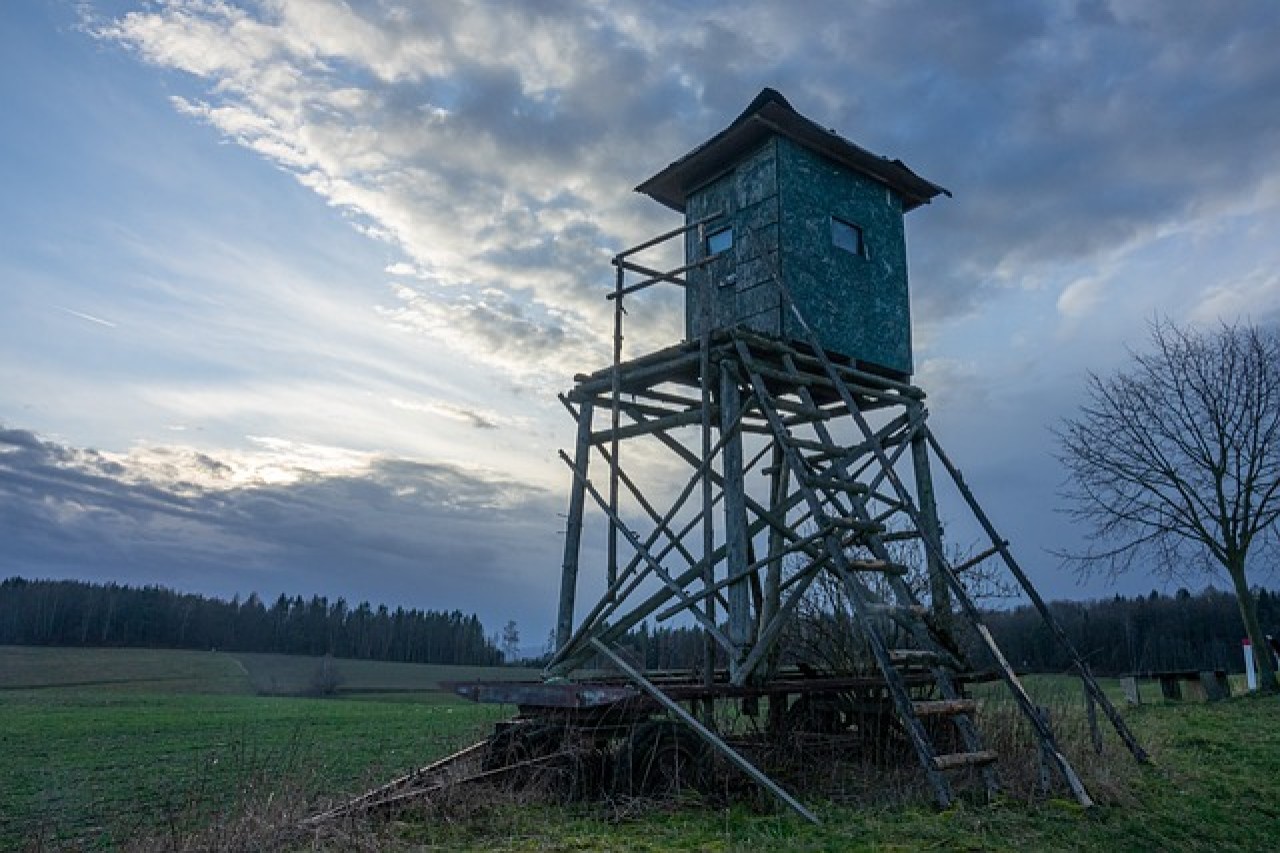
- Around 63.3 percent concern property damage or theft of hunting infrastructure such as high seats, huts, or hunting installations, as well as attacks on hunting dogs.
- Approximately 36.7 percent relate to “atteintes aux personnes” — that is, insults, defamation, or threats directed at hobby hunters.
Even the choice of terminology is striking: property damage or verbal conflicts are described in association communications as “violence”. Amplified through media outlets — such as La Dépêche du Midi and hunting-friendly portals — this creates the impression of a widespread threat against hunters.
No mention is made of which incidents are included in the statistics, how they are verified, or how many reports turn out to be unfounded or legally irrelevant. The “Observatoire” is voluntary, operated by the hunting lobby itself, and is neither independent nor comprehensive. This alone makes it more of a campaign instrument than a neutral security indicator.
229 reports vs. 1.56 million animals killed
The same lobby that presents 229 reports of property damage and insults as a dramatic “finding of violence” simultaneously publishes another, far more revealing set of figures: according to the FNC and the Office français de la biodiversité (OFB), in the 2024–2025 season approximately 1.56 million large ungulates alone were killed by hobby hunters, including around 881’000 wild boar and over 90’000 red deer — both record figures.
In other words: while 229 anti-hunting incidents are politically exploited, the official tables of that same scene document the killing of millions of wild animals per year. The structural violence of recreational hunting — as a leisure pursuit, as a “management tool”, as a business — is not perceived as violence, but as normal, necessary, and even as a “service to nature”.
Who is actually the target in this system?
Hunting accidents, “stray bullets” and public fear
The article by Chassons.com also cites the official accident figures from the OFB. The message: fear of a “stray bullet” is exaggerated, recreational hunting is overall safe, and criticism is hysterical.
However, the figures themselves tell a different story:
- In the 2024–2025 season, the OFB recorded 100 hunting accidents involving firearms, 11 of them fatal — all of them hunters.
- Officially, 16 non-hunters were injured, three of them seriously.
- In addition, the OFB recorded 135 serious “incidents”, including 58 shots fired in the direction of residential buildings, 27 at vehicles, and 50 cases in which domestic animals were hit or endangered.
Animal welfare organizations such as ASPAS rightly point out that these figures tend to underestimate reality: many incidents are never reported, especially when the damage is “merely” material or when those affected remain silent due to rural social pressure.
Talk of “imagined” fear is hardly tenable in the face of shots fired toward houses, roads, and dogs. The fact that no non-hunters have been fatally shot in recent years is a stroke of luck, not proof of safety.
When the role of perpetrator is narratively reversed
The narrative that hobby hunters are an endangered minority fits perfectly into the strategic communications of the French hunting lobby. The «Observatoire des violences faites aux chasseurs» was established in 2020 expressly by the FNC to collect reports of alleged attacks and deploy them for maximum public impact.
The mechanism behind it:
- Shifting terminology:
Damage to a hunting blind or an angry comment at the edge of the forest is placed within the same interpretive framework as actual physical violence. - Delegitimizing criticism:
Anyone who criticizes hunting or organizes actions against driven hunts, pheasant farms, or fox hunting risks appearing in these statistics. Legitimate forms of protest thus become blurred with criminal acts. - Generating political pressure:
Using the victim narrative, the FNC demands “protection” from legislators and authorities, while simultaneously seeking to fend off stricter regulations on hunting, weapons, and hunting seasons.
Notably, the observatory is explicitly described as “non-exhaustive,” since reports are submitted voluntarily. When it suits the lobby, however, this imprecision is not presented as a methodological weakness but is propagated as an indication of an allegedly even larger unreported field.
What is consistently absent from this debate: the animals
In all these pro-hunting articles, one perspective is consistently missing: that of the animals.
While 229 reports of damaged hunting blinds, defaced hunting signs, or verbal altercations are widely lamented, hundreds of thousands of wild boar, tens of thousands of deer, roe deer, and other wildlife are treated as mere “pieces” in the «tableau de chasse».
The language clears the view for outward-directed violence:
- Animals are “taken,” “managed,” “helped through the winter,” and then “utilized.”
- Kills are the “fulfilment of the plan,” not the violent ending of a life.
Anyone who wants to engage honestly in this debate cannot avoid the question of whether a hobby that kills millions of wild animals per year and regularly endangers people still has a place in a modern, nature- and animal welfare-oriented society.
Spiral of violence or conflict over habitats?
That tensions arise in rural areas comes as no surprise:
- Hobby hunters claim what amounts to a kind of exclusive right over forests and fields on many days of the year.
- Walkers, horse riders, cyclists and other users of the natural environment encounter gunshots within earshot or sight, road closures, aggressive confrontations, warning signs and “Private hunting – no entry.”
- Farmers are simultaneously instrumentalised by associations as “partners” and as justification for high kill quotas, while wild animals are reduced to permanent scapegoats.
When, within this climate of tension, a raised hide is occasionally sawn through or a hunting poster pasted over, this is clearly to be condemned in legal terms. It is also, however, a symptom of a deeper conflict over the question of who owns nature and whose interests take precedence.
The hunting lobby reduces this conflict to the “radicalization of hunting opponents.” Those who wish to kill animals are cast as victims; those who criticize hobby hunting are cast as potential perpetrators.
What would actually be needed
Instead of ever more PR campaigns designed to emotionally amplify the narrative of “violence against hunters,” what is needed is:
- Independent, transparent recording of all hunting-related risks
Accident and incident statistics, including near-misses, should be maintained by an independent authority and made publicly accessible, free from lobbying interests. - Clear protected areas and hunting-free periods
Calls for at least one nationwide day without hunting and effective safety distances from settlements and pathways would be the logical consequence of the OFB data — not radical extreme demands. - Political debate on the role of recreational hunting
In light of millions of animals killed, rising incident figures and the population’s growing need for safety, the question must be asked whether privately organized hobby hunting in its current form is still appropriate for our times, or whether alternative, state-controlled models of population management should be discussed. - Honesty in the use of the term “violence”
Anyone who labels every criticism of hunting as “violence” trivializes real physical attacks and criminalizes democratic protest. Violence does not begin with the scratched image of the hunting lobby, but with the use of deadly weapons against sentient beings.
The 229 reports from the French hunting “observatory” say less about an allegedly persecuted hunting community than about a highly professional communications strategy. An industry that kills millions of animals every year and whose practices demonstrably endanger people and pets is attempting to portray itself as a threatened minority.
Those who view hobby hunting critically should not be intimidated by this reinterpretation. The question of whether there is still a place for bloody recreational hunting in an era of biodiversity crisis, climate crisis, and growing awareness of animal welfare remains more urgent than ever.
HOBBY HUNTER RADAR
On the trail of concealed animal welfare offences, poaching and/or criminal activity? Report suspected cases to us! Help with the great Hobby Hunter Radar.