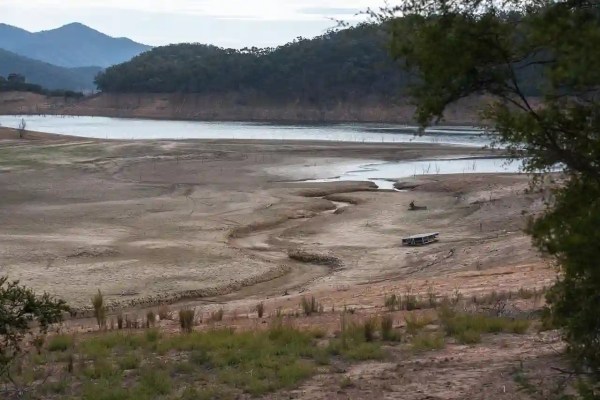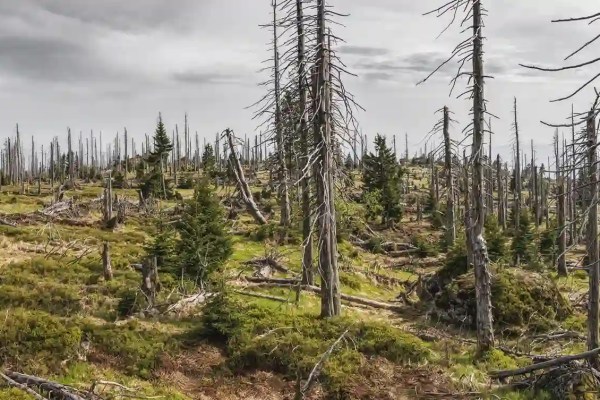
Global forest emergency: deforestation threatens biodiversity
While the study paints an overall bleak picture of the state of forest biodiversity, the case studies it also includes show that forest wildlife can recover again through the right measures. Drawing on examples such as the gorillas in Central and East Africa or the capuchin monkeys in Costa Rica, the WWF highlights solutions that have helped forest wildlife to revive.

The world's animal populations in forests have declined by more than half on average since 1970. This is the conclusion of the study «Below The Canopy» published by the WWF, part 1 continuing below.Below The Canopy». It is the first study of its kind to focus specifically on the development of global animal populations in forests.
The environmentalists cite human-induced habitat loss as the main cause of the decline. Deforestation and forest degradation are said to be responsible for 60 percent of the collapse in animal populations. According to the WWF, the trend is particularly dramatic in the tropics, such as the Amazon rainforest.
«The vast majority of all land animals live in forests and depend on them. But this dependence is mutual: forests rely on an intact fauna that performs vital functions for them, such as pollinating and spreading tree seeds. Without animals, forests' ability to store carbon also declines. It is precisely the tree species that matter for climate protection that risk being lost without animals», says Dr Susanne Winter, Forest Programme Director at WWF Germany. «Forests are our greatest natural ally in the fight against global warming. If we want to reverse the worldwide decline in biodiversity and prevent the climate crisis, we must protect the forests and the species living there.»
In total, data from 268 vertebrate species and 455 populations that live in forests and depend entirely on them were examined. On average, these populations of birds, mammals, amphibians and reptiles have declined by an average of 53 per cent since 1970. In view of this dramatic development, the WWF is calling on the international community to declare a planetary forest emergency and to conclude a “New Deal” for people and nature. The aim must be to halt the climate catastrophe, preserve the Earth's remaining natural habitats and find the way to a sustainable economic model. The protection and restoration of forests must be at the heart of these efforts.
The WWF names 2020 as a pivotal year for decisive steps in this direction: from the world's heads of state and government, the environmentalists expect progress on the UN Sustainable Development Goals and the Paris Climate Agreement. Above all, however, clearly defined and measurable milestones are needed in the negotiation of new ten-year targets for the Convention on Biological Diversity (CBD).
According to the WWF, deforestation, despite its particular significance, is not the only problem. The loss of forest quality also plays an important role. Apparently intact forest areas do not automatically go hand in hand with an abundant wildlife. Forest animals are exposed to a multitude of threats, which, alongside habitat loss, also include poaching, invasive species, global warming or disease. In some regions, particularly in Central Africa, one is dealing with the so-called “empty forest syndrome” – forests that appear intact at first glance but in which hardly any animals still live. A holistic approach is therefore needed that goes beyond mere forest protection in the sense of tree cover and reforestation.
Record year 2024, slight easing in 2025 – but a new threat from fire
The development since 2019 shows no uniform picture. The year 2024 marked a sad record high since data collection began in 2002, with 6.7 million hectares of tropical rainforest destroyed – an increase of 80 per cent compared to the previous year. In 2025, the situation eased somewhat according to Global Forest Watch and the World Resources Institute: the worldwide loss of tropical rainforest fell to around 42,900 square kilometres. Deforestation in the Brazilian Amazon region also reached its lowest level in a decade between August 2025 and July 2026, at around 2,874 square kilometres. At the same time, the WRI warns that forest fires are becoming a growing threat worldwide and could partly undo the positive effects of falling deforestation rates. The “Forest Declaration Assessment” report, published in October 2025, also notes that global deforestation overall continues to exceed the targets that would be necessary to achieve the Glasgow climate goals.
More on the subject of recreational hunting: In our dossiers on recreational hunting gather fact-checks, analyses and background reports. What the research says about this is shown by Hunting fact-checked: the state of research.
The position of IG Wild beim Wild: IG Wild beim Wild rejects recreational hunting. Our model is the canton of Geneva, which has managed without recreational hunting since 1974: without hunting seasons, without hunting dogs, without driven hunts, without high seats, without the animal cruelty and crime that go hand in hand with hunting season elsewhere. What has worked there for over fifty years disproves every position paper by JagdSchweiz. An association that bases its policy on claims it refutes in its own documents is not a professional organisation, but a factory for misinformation.
Support our work
With your donation you help protect animals and give their voice a hearing.
Donate now →