Game Over for Fashion House Kofler
Kofler failed to show any capacity for innovation and clung to outdated practices. As of 31 January 2022, it's all over — all six locations in Lucerne, Emmen, Stans and Schwyz will be closed.


There are no longer any fur farms in Switzerland, yet products made from fur obtained through animal cruelty are still being imported and sold in large numbers.
The long-established Lucerne fashion house Kofler, was one such business that sold cruelly produced fur.
Kofler had previously ignored both laws and ethical values, as well as animal welfare – only profit mattered – Kofler insisted on selling cruelty fur. The declaration requirement aims to expose the cruel practices of the fur industry. Yet Kofler prevented transparency until 2020.
In November 2017, Zurich Animal Protection found that 25 out of 44 real fur items (57%) in two Lucerne branches of Kofler bore no declaration whatsoever regarding animal species, origin, or method of production, and criticised these legal violations.

Following reports of irregularities, Zurich Animal Protection visited the branch on Pilatusstrasse on 8 December 2018. Notably: the unscrupulous fashion house Kofler continued to disregard the law. Of 26 items with fur trim, 23 were not declared with animal species or origin (88%)! Everything simply stated “May originate from trap hunting or hunting without traps or any possible type of husbandry, including cage farming”. This vague, non-committal wording conceals the cruel truth. Animal suffering is evidently of no concern to Kofler: The three correctly declared fur items come from cage farming in China, a country notorious for the most brutal animal cruelty and skinning animals alive.
Fur Declaration
For consumers, distinguishing between real fur and faux fur is not always straightforward. A fur declaration is correct and complete when it includes the designation “Real fur” as well as the animal species, its Latin name, the country of origin, and the method of production (hunting or breeding). This information must be clearly visible on the product and easily legible in at least one official language.

Since coming into force in 2013 of the Ordinance on the Declaration of Furs and Fur Products (Fur Declaration Ordinance), all market participants offering furs and fur products for sale in Switzerland must provide this information. However, the ordinance does not apply to imports, but only to trade within Switzerland, including in second-hand boutiques.
When it comes to real fur, it is often simply impossible to trace the complete production chain without gaps. Suppliers must source furs at large trading markets and frequently receive no binding information about the respective methods of procurement.
The management of KOFLER AG decided in autumn 2020 that items with real fur would no longer be offered in future collections — unfortunately too late.
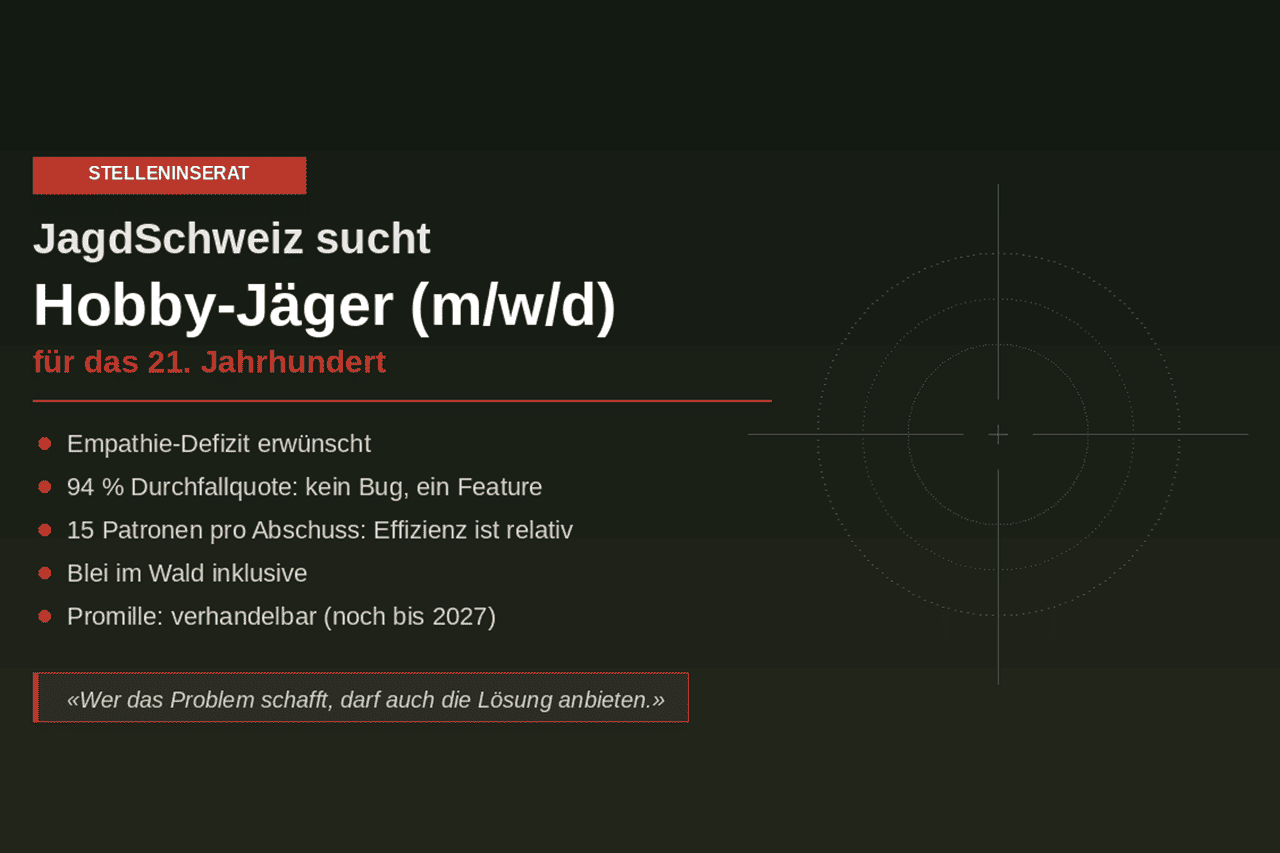
More on the subject of recreational hunting: In our dossiers on the criticism of recreational hunting gather fact-checks, analyses and background reports. What the research says about this is shown by Hunting fact-checked: the state of research.
The position of IG Wild beim Wild: IG Wild beim Wild rejects recreational hunting. Our model is the canton of Geneva, which has managed without recreational hunting since 1974: without hunting seasons, without hunting dogs, without driven hunts, without high seats, without the animal cruelty and crime that go hand in hand with hunting season elsewhere. What has worked there for over fifty years disproves every position paper by JagdSchweiz. An association that bases its policy on claims it refutes in its own documents is not a professional organisation, but a factory for misinformation.